Kevin Warsh sworn in as Fed chair at pivotal moment for US economy

Kevin Warsh Assumes Fed Chair Role Amid Economic Uncertainty
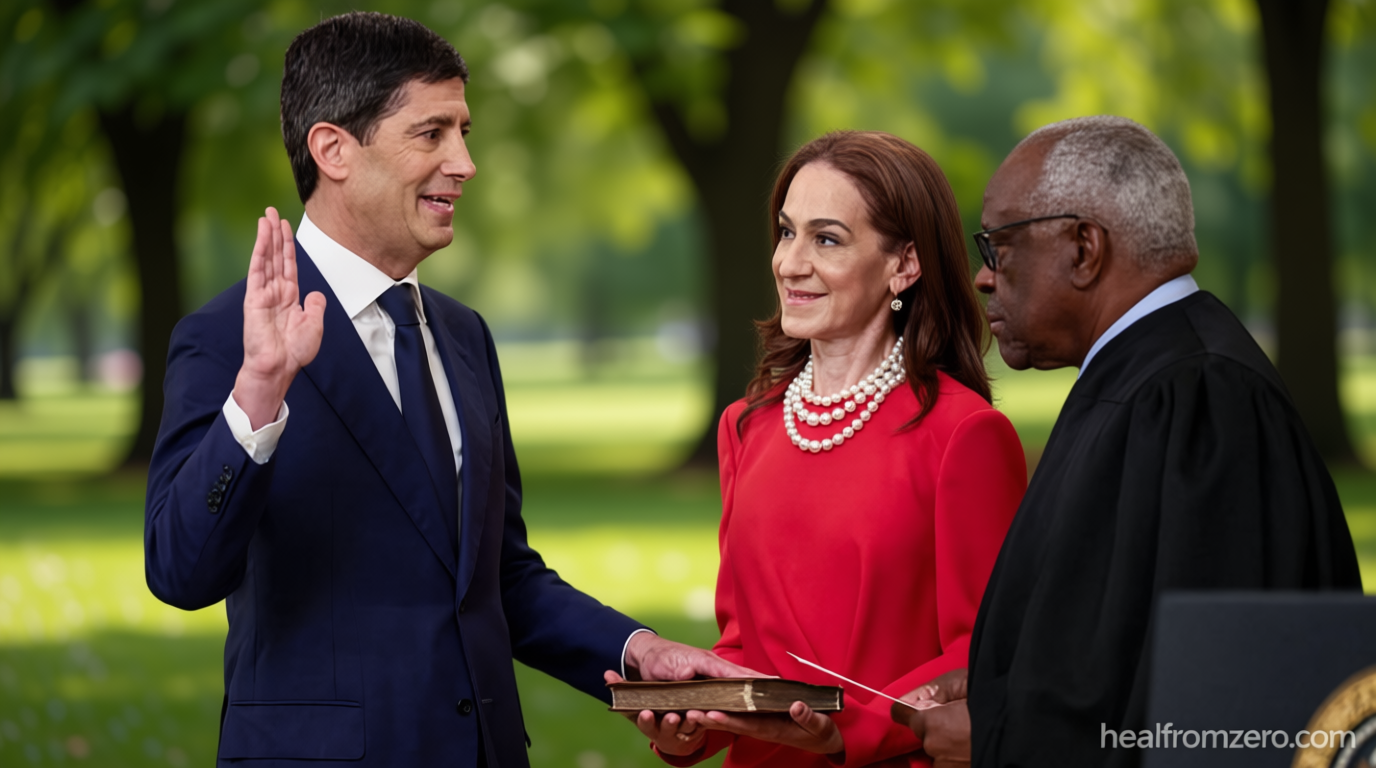
Kevin Warsh sworn in as Fed chair – On Friday, Kevin Warsh took the oath of office at the White House, assuming the role of Federal Reserve Board Chairman. This marks a significant transition in leadership, as he replaces Jerome Powell, who has held the position for four years. The timing of Warsh’s appointment is critical, with the U.S. economy facing a complex mix of challenges including inflationary pressures, ongoing geopolitical tensions, and fluctuating financial markets. Additionally, the Federal Reserve’s independence has come under increased scrutiny from political figures, adding another layer of complexity to his new responsibilities.
A President’s Confidence in a New Era
President Donald Trump, who nominated Warsh in January, expressed strong support for his new role during remarks in the East Room. “I expect he will go down as one of the truly great chairmen of the Federal Reserve that we’ve ever had,” Trump stated, highlighting Warsh’s perceived capabilities. The president praised the appointee for his broad expertise and widespread respect, noting that he is “capable of addressing a wide range of issues while maintaining the highest standards of integrity.”
Warsh’s selection has been framed as a strategic move by Trump, who previously advocated for rate cuts to stimulate growth and reduce the government’s borrowing costs. However, the president emphasized that Warsh must prioritize independence, urging him to “do your own thing” and focus on economic stability rather than political influence. “Don’t look at me, don’t look at anybody,” Trump said, “just do a great job.”
Warsh’s Vision for a Reformed Fed
Following his swearing-in, Warsh outlined his priorities, emphasizing a shift toward a more reform-driven approach. “I will lead a Federal Reserve that learns from past successes and mistakes,” he stated in a brief address, “ensuring we move beyond static frameworks while upholding rigorous standards of performance.” His remarks underscored a commitment to both lowering inflation and fostering sustainable economic growth.
Warsh has also articulated plans to streamline the Fed’s operations, including reducing public communications from officials about interest rate expectations. This strategy aligns with his broader goal of focusing the central bank on its core functions, such as price stability and maximum employment. “The Fed lost its way in recent years,” Trump added, “becoming distracted by concerns far removed from its primary mission.”
Current Economic Challenges
The economy Warsh now oversees is in a state of flux, shaped by multiple factors. The ongoing conflict between the U.S. and Iran has intensified oil prices, contributing to a sharp rise in gasoline costs. Mortgage rates have also climbed to their highest level in nine months, reflecting broader concerns about borrowing costs and consumer spending. Inflation, which has surged to its highest point in three years, continues to strain household budgets and complicate the Fed’s monetary policy decisions.
Despite these challenges, the U.S. consumer has shown remarkable resilience, maintaining spending levels even as prices rise. This strength has helped shield the economy from a potential downturn, but affordability issues remain a growing source of frustration. Recent surveys indicate that consumer sentiment has reached an all-time low, with Americans expressing more dissatisfaction than during major crises such as the Iraq War, 9/11, the Great Recession, and the aftermath of the pandemic.
Policy Dilemma and Political Pressure
Warsh faces a pivotal decision: should the Fed maintain its current rate stance or adopt a more aggressive tightening strategy to combat inflation? This choice will determine the trajectory of the economy, balancing short-term relief for consumers against long-term stability. Trump, who has consistently pushed for rate cuts, has voiced his expectations, though he now encourages Warsh to act independently.
While Trump criticized former chair Jerome Powell for not lowering rates quickly enough, calling him a “numbskull” and “average mentally person,” the president also acknowledged the need for a balanced approach. The Federal Open Market Committee, which sets interest rates, will play a key role in this process, evaluating economic conditions rather than direct political pressure. However, the Fed’s actions will inevitably carry political implications, especially as the midterm elections approach.
Warsh’s Independent Leadership
Warsh has repeatedly stressed his dedication to leading the Fed with autonomy, a stance that aligns with Trump’s vision for the central bank. “I will be focused on ensuring that the Fed operates independently,” he said, emphasizing the importance of maintaining clear standards of performance. This independence is crucial in a climate where the central bank’s decisions are closely watched and often debated in public discourse.
The shift in policy direction has been notable. In March, Fed officials had projected a rate cut later in the year, but recent assessments of energy price spikes and geopolitical instability have prompted a reassessment. Many policymakers now favor holding rates steady, with some even considering the possibility of raising them if inflation proves difficult to control. This evolving stance highlights the challenges of navigating an uncertain economic landscape.
As Warsh prepares for his first meeting as Fed chair, scheduled for June 16-17, the weight of his responsibilities becomes evident. His proposed reforms, including a more transparent approach to communications and a narrower focus on core responsibilities, aim to restore public confidence in the Fed’s ability to manage the economy effectively. The success of these initiatives will depend on his ability to navigate both internal debates and external pressures, ensuring that the central bank remains a stable force in times of turmoil.
Legacy and Expectations
Warsh’s tenure is expected to shape the Fed’s approach to economic management, with potential long-term consequences for the U.S. financial system. His emphasis on learning from past experiences suggests a pragmatic strategy, blending innovative thinking with a commitment to traditional principles. “I want to ensure the Fed is focused on its primary mission,” he stated, underscoring the need for a return to fundamentals in a rapidly changing world.
Yet, the path forward is fraught with challenges. The Fed must address inflation while supporting growth, a delicate balance that requires careful calibration. Warsh’s decisions will be scrutinized not only for their economic impact but also for their political ramifications. As the U.S. economy continues to grapple with rising costs and geopolitical uncertainty, the central bank’s role as a stabilizing force remains more important than ever.
Trump’s endorsement of Warsh signals a belief in his leadership, but the president’s own rhetoric has created a unique dynamic. While he encourages independence, his public comments on the Fed’s performance suggest a desire to influence its direction. This duality—of political support and operational autonomy—will define Warsh’s early days in office, as he works to reconcile these expectations with the Fed’s mandate.
Ultimately, Warsh’s success will hinge on his ability to navigate this complex environment. With inflation at a three-year high and consumer sentiment at a historic low, his leadership will be tested by the need to balance immediate concerns with long-term goals. The Federal Reserve’s credibility depends on its capacity to act decisively, and Warsh’s tenure will be a key chapter in the ongoing story of economic stewardship in America.