Putin pays his first visit to Pacific island chain claimed by Japan, drawing a protest from Tokyo

Putin Visits Kuril Islands for First Time, Tokyo Protests
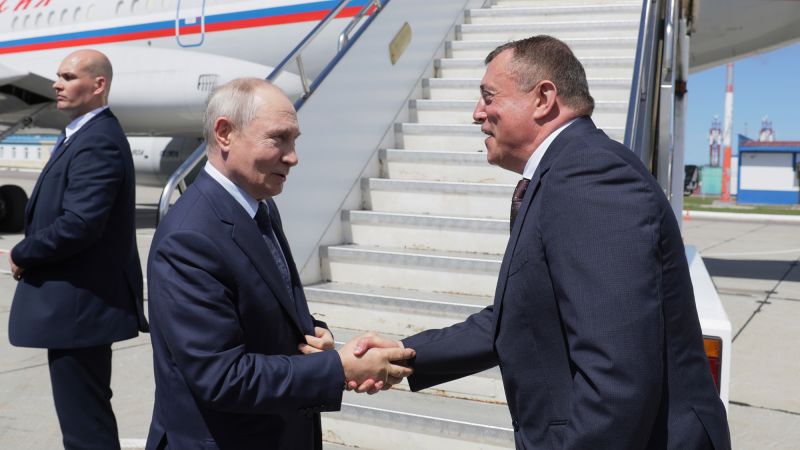
Healfromzero.com – Russian President Vladimir Putin pays his first visit to the Kuril Islands, a Pacific archipelago at the center of a decades-long territorial dispute with Japan. The historic journey, which concluded on Thursday, has drawn an official diplomatic protest from Tokyo and reaffirms Moscow’s firm stance on sovereignty over the island chain. During his stop on Iturup, one of the southernmost disputed islands, Putin participated in several official engagements that underscored the region’s strategic and economic value. The president toured a local fish processing plant, visited a medical facility, and inspected a school, showing attention to the daily lives of island residents. Throughout the trip, Putin spoke with local inhabitants and held talks with Valery Limarenko, governor of Russia’s Sakhalin region, which administers the Kuril Islands.
A Century of Territorial Dispute
The Kuril Islands have been contested between Russia and Japan since the end of World War II. Japan asserts legitimate territorial rights to the four southernmost islands of the chain, which it calls the Northern Territories. These islands—Iturup, Kunashir, Shikotan, and the Habomai islets—were transferred from Japanese to Soviet control in the final weeks of the war, a territorial change that has never been formally settled through a peace agreement. The lack of a peace treaty between the two nations remains one of the most significant diplomatic gaps in post-war international relations. While most of Japan’s wartime adversaries signed peace agreements after the conflict, the Soviet Union and Japan have continued to operate under a state of technical hostilities, despite more than seven decades passing.
Japanese Protest and Historical Precedent
The diplomatic response from Japan was immediate and clear. Japanese Foreign Minister Toshimitsu Motegi issued a formal statement expressing his country’s position regarding Putin’s visit to Iturup, which Japan calls Etorofu.
“The Northern Territories, including Etorofu (Iturup) Island, are Japan’s inherent territory both historically and from the perspective of international law,” Motegi declared in his official statement.
This is not the first time Japan has registered objections to Russian leadership visits to the disputed territory. In 2021, when Russian Prime Minister Mikhail Mishustin traveled to Iturup, Tokyo issued a similar protest, demonstrating the consistency of Japan’s diplomatic position on the issue.
Military and Diplomatic Dimensions
Beyond the symbolic significance of Putin’s visit, the journey carries important military and strategic implications. Over the past several years, Moscow has systematically strengthened its military presence on the Kuril Islands, deploying additional troops, modernizing infrastructure, and conducting regular military exercises in the region. These developments have been widely interpreted as Russia’s way of reinforcing its territorial claims and signaling that it has no intention of returning the islands to Japanese control. The diplomatic efforts to resolve the dispute have spanned multiple decades without achieving tangible results. Various proposals have been put forward, including the possibility of joint economic development of the islands or a phased transfer of sovereignty, but none have gained sufficient momentum to overcome the fundamental disagreements between the two nations.
Regional Context and Broader Significance
Putin’s visit to the Kuril Islands comes amid a broader tour of Russia’s eastern territories. In the days preceding his arrival on Iturup, the Russian president had been visiting various regions across Siberia and the Russian Far East, areas that are increasingly important to Moscow’s strategic calculations in the Asia-Pacific region. Before reaching Iturup, Putin made a stop on Sakhalin Island, where he participated in the concluding phase of military drills conducted by Russia’s Pacific Fleet. This sequence of events highlights the interconnected nature of Russia’s eastern defense strategy and its emphasis on the Pacific theater. The visit also carries implications for regional security dynamics, particularly as Russia has been strengthening its military posture in response to Western sanctions and geopolitical tensions. The Kuril Islands, situated at a strategic crossroads between Russia, Japan, and the broader Pacific region, have become increasingly significant in this context. For Japan, the visit serves as a reminder of unresolved territorial questions that continue to shape bilateral relations.
Frequently Asked Questions
Which islands does Japan claim from Russia? Japan claims four islands: Iturup (Etorofu), Kunashir, Shikotan, and the Habomai islets, collectively known as the Northern Territories.
Why is there no peace treaty between Russia and Japan? The two nations have never signed a formal peace treaty since World War II, leaving them in a state of technical hostilities despite the passage of more than 70 years.
What did Putin do during his visit to Iturup? Putin toured a fish processing facility, visited a hospital, inspected a school, and held discussions with local residents and Valery Limarenko, the Sakhalin region governor.
Has Japan protested before Russian visits to the Kuril Islands? Yes, Japan issued a similar protest in 2021 when Russian Prime Minister Mikhail Mishustin visited Iturup.
What is the strategic importance of the Kuril Islands? The islands are located at a crossroads between Russia, Japan, and the Pacific region, making them valuable for military positioning and economic development.