NASA’s new ‘discovery machine’ is launching to unravel the invisible universe

NASA’s New Discovery Machine Launches to Map the Invisible Universe
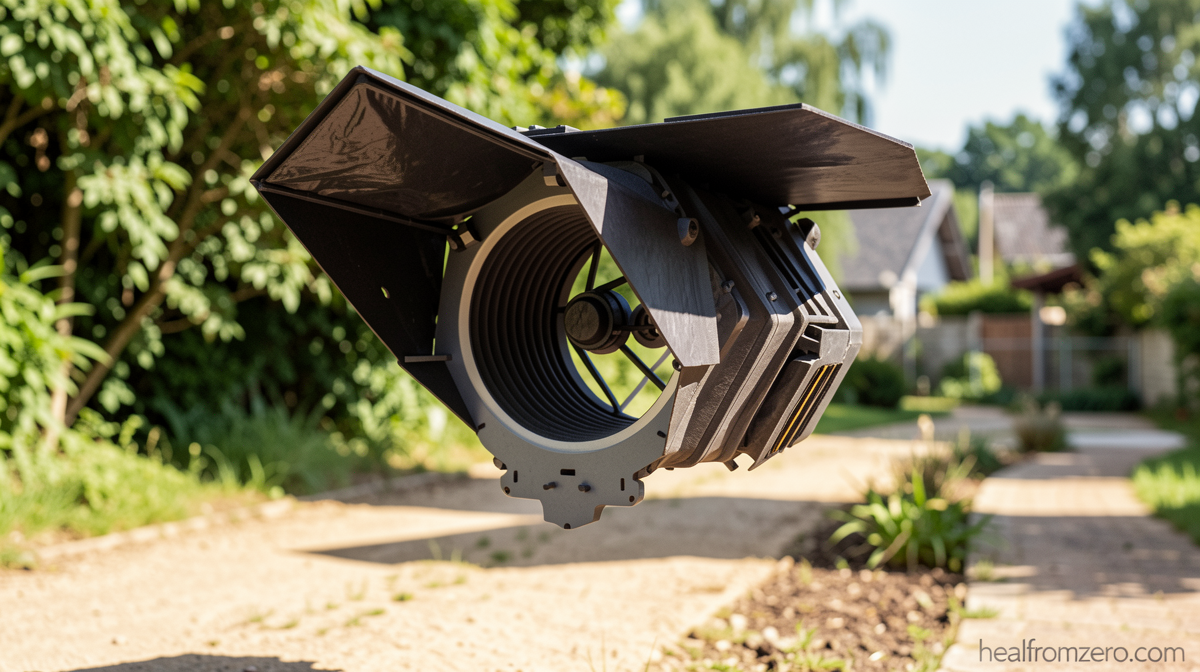
Healfromzero.com – Sunday morning at Kennedy Space Center in Florida will send NASA’s new discovery machine hurtling into deep space atop a SpaceX Falcon Heavy rocket. The Nancy Grace Roman Space Telescope — a bus-sized observatory built to chase the faintest signals in the sky — is cleared for liftoff no earlier than 7:26 a.m. ET, kicking off a five-year campaign aimed at charting the structure and evolution of the cosmos in ways no prior instrument has allowed.
The completed telescope was formally presented to the scientific community on April 21 at NASA’s Goddard Space Flight Center in Maryland. Its primary targets are phenomena that have evaded direct detection for decades: dark energy, the unknown force accelerating the expansion of space, and dark matter, the invisible scaffolding binding galaxies together while resisting every attempt at direct observation.
Throughput No Predecessor Can Match
What sets Roman apart from earlier space observatories is raw surveying capacity. Its scanning speed surpasses Hubble’s by a factor exceeding 1,000, and its wide-field instrument sweeps a patch of sky more than 100 times wider than anything Hubble ever captured. Neither Hubble nor the James Webb Space Telescope can replicate the breadth and depth of data Roman will generate.
“Together, the three missions will complement each other, giving us a more complete picture of the cosmos and advancing our understanding of the universe,” said Dr. Nicky Fox, associate administrator for NASA’s Science Mission Directorate.
During an August 5 briefing, Dr. Shawn Domagal-Goldman, director of the Astrophysics Division at NASA, offered a forest analogy to explain the instrument’s reach. He compared Roman’s capability to standing at the edge of an enormous woodland and simultaneously resolving the full canopy, individual leaves, and perched birds. “Of course, this isn’t a forest we’re talking about; it’s the known universe, and those birds and trees are supernova galaxies, planets and stars,” he explained.
What the Observatory Will Find
Across its operational lifetime, the telescope is expected to catalog previously unseen galaxies, identify exoplanets orbiting distant stars, and detect rogue planets — free-floating worlds that never settled into orbit around any sun. Dr. Julie McEnery, the mission’s senior project scientist, frames the effort as the largest planetary census ever attempted across the Milky Way, with the potential to reveal tens of thousands of worlds unknown to science.
First science images are anticipated by January, after which the observatory will commence its unprecedented wide-area surveys.
From Liftoff to Working Orbit
Following launch, Roman will spend roughly three months coasting to its working position approximately one million miles (1.6 million kilometers) from Earth. Engineers will use that transit to commission the spacecraft — exercising each instrument in the vacuum of space and deploying the high-gain antenna responsible for downlinking data to ground stations.
The volume of information flowing back will be staggering. Jeremy Perkins, Roman telescope integration and test scientist at Goddard, put the scale in familiar terms: the observatory is designed to transmit roughly one terabyte of data per day, equivalent to streaming one million songs from a million miles away.
A Decade of Development and a $4.3 Billion Investment
The telescope entered active development approximately ten years ago, though the scientific community had championed the concept as a priority roughly sixteen years before that. Total program cost is estimated at $4.3 billion. Its namesake, Dr. Nancy Grace Roman, laid the intellectual groundwork decades earlier as NASA’s first chief of astronomy in the 1960s, instrumental in establishing the case for placing telescopes above Earth’s distorting atmosphere. She is widely credited as the “mother of the Hubble Space Telescope.”
“Although she’s often most associated with those first space telescopes, it’s really our full fleet that she deserves credit for,” Domagal-Goldman said. “Every time we build a new space telescope, we add capabilities we didn’t have before and that adds to her legacy. The Nancy Grace Roman Space Telescope is no exception.”
Dominic Benford, Roman program scientist at NASA, has been involved with projects tracing back to the original concept for more than twenty years. He frames the telescope’s value not merely as an instrument upgrade but as a tool for asking questions no one has yet thought to ask.
Frequently Asked Questions
When does the Roman Space Telescope launch? Sunday morning, no earlier than 7:26 a.m. ET, from Kennedy Space Center in Florida aboard a SpaceX Falcon Heavy rocket.
How long will the mission last? The primary science campaign is planned for five years, preceded by roughly three months of transit and commissioning to the working orbit.
How much data will the telescope return? Approximately one terabyte per day, downlinked via a high-gain antenna deployed during the initial transit phase.
What is the total cost of the program? The estimated total program cost is $4.3 billion, covering roughly a decade of active development following about sixteen years of earlier concept work.
What will Roman observe that Hubble or Webb cannot? Its survey speed exceeds Hubble’s by more than 1,000× and its field of view is over 100× wider, enabling wide-area mapping of dark energy signatures, rogue-planet detection, and a galaxy-scale planetary census impossible for narrower instruments.