
Germany warns of ‘new threat’ after explosives-packed drone targets airport
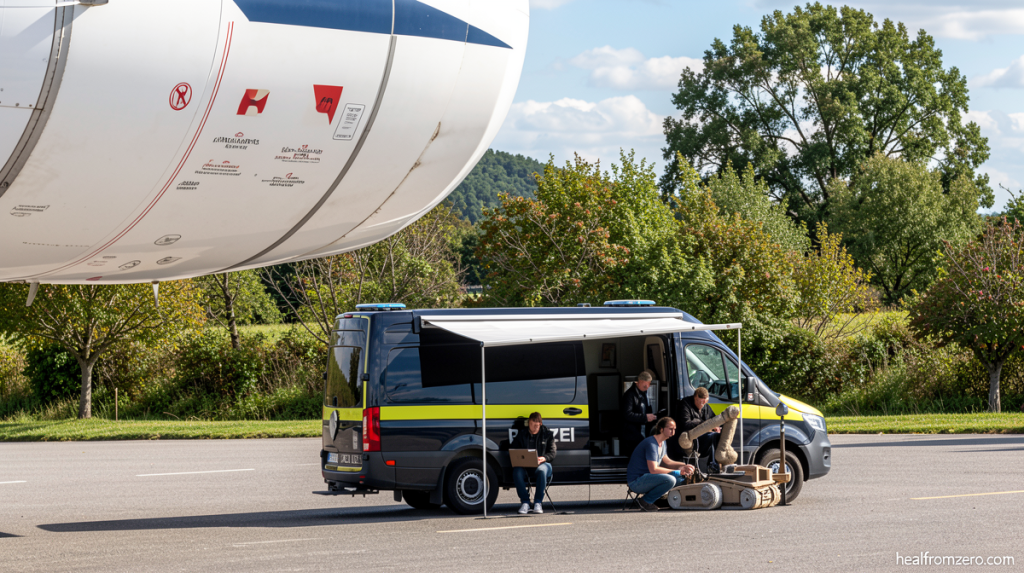
Explosive Drone Incident Signals Shift in European Security Landscape
Healfromzero.com – German authorities have identified a potentially transformative security challenge after discovering an explosive-laden drone at one of Europe’s busiest cargo airports. The incident at Leipzig/Halle Airport has prompted Interior Minister Alexander Dobrindt to characterize the event as a “new threat scenario” for the nation, marking a significant escalation in how Germany perceives aerial threats to critical infrastructure.
The discovery occurred overnight into Wednesday, when the presence of the armed drone forced an immediate suspension of all flight operations at the facility. Counterterrorism investigators are now examining whether foreign actors may have orchestrated the incident, with preliminary assessments suggesting the operation was professionally planned rather than executed by amateurs.
Minister Outlines Evolving Threat Profile
During a news briefing on Wednesday, Dobrindt explained that while drone-related incidents are not entirely unprecedented, the combination of explosives and an airport setting represents something new. “Drone sightings, drone threats including in a hybrid context, are something we know from the past,” he told reporters. “That a drone armed with explosives is at an airport is a new threat scenario.”
Drone sightings, drone threats including in a hybrid context, are something we know from the past. That a drone armed with explosives is at an airport is a new threat scenario.
The interior minister noted that the incident appears connected to broader geopolitical competition, stating, “We are dealing with a competition here which may also include foreign powers.” This assessment comes as German security officials increasingly view commercially available drones as potential tools for espionage, sabotage, and hybrid warfare operations.
Incident Details and Investigation Findings
German authorities announced the discovery of the drone carrying an explosive device near the airport’s south runway, the primary area for cargo operations. A specialized bomb disposal robot was deployed to the scene, where technicians successfully removed the detonator attached to the drone. Visual documentation of the operation showed the robot positioned close to a Ukrainian cargo aircraft.
Complicating the situation, a second unidentified flying object collided with a cargo plane that had aborted its landing due to the runway closure. The aircraft sustained only minor damage and diverted safely to Hannover Airport. Police confirmed the collision occurred after the pilot initiated emergency procedures following the runway shutdown.
According to German newspaper Bild, investigators believe a technical malfunction likely prevented the explosive device from detonating. The newspaper also reported that security officials suspect the second flying object may have functioned as a surveillance drone, potentially equipped with a camera designed to record an attack. German authorities have not yet officially confirmed these details.
Leipzig/Halle’s Strategic Importance
The choice of location for this incident carries particular significance. Leipzig/Halle Airport ranks among Europe’s premier cargo hubs, having hosted Ukraine’s Antonov Airlines transport aircraft since Russia’s full-scale invasion in 2022 destroyed the carrier’s home airport. The facility’s role in supporting Ukrainian logistics operations may make it a target of interest for various actors.
The airport’s prominence in European cargo operations means that disruptions here have ripple effects across continental supply chains. Security officials have emphasized that the incident reflects a broader pattern of unauthorized drone activity near military facilities, industrial sites, and other critical infrastructure throughout Germany.
European-Wide Drone Concerns Mount
The Leipzig/Halle incident joins a growing list of drone-related disruptions across Europe. Flights have been halted at multiple airports, NATO airspace has been violated in both Poland and Romania, and underwater communication cables in the Baltic Sea have experienced unexplained disruptions. These events have sparked fears of coordinated sabotage operations targeting European infrastructure.
Russia has not publicly claimed responsibility for any of these incidents, but security agencies across the continent have warned of an escalating threat from Moscow. This concern has accelerated efforts to substantially strengthen European defenses against hybrid warfare tactics.
Broader Geopolitical Context
The timing of these incidents coincides with heightened warnings from Western intelligence services. In December, the incoming head of Britain’s foreign intelligence service MI6, Blaise Metreweli, cautioned that the United Kingdom is “now operating in a space between peace and war” with “the front line everywhere.” He emphasized that nations continue to face “the menace of an aggressive, expansionist and revisionist Russia, seeking to subjugate Ukraine and harass NATO.”
We all continue to face the menace of an aggressive, expansionist and revisionist Russia, seeking to subjugate Ukraine and harass NATO.
As investigators continue their examination of the explosive drone at Leipzig/Halle, the incident serves as a stark reminder that traditional security paradigms must evolve to address threats from increasingly accessible and versatile aerial platforms. The professional execution of this operation suggests that drone-based attacks may represent only the beginning of a new chapter in European security challenges.
Related Reading
Frequently Asked Questions
What is Germany warns of new threat after?
Germany warns of new threat after is the main topic of this guide. The article explains the context, practical details, and next steps readers should understand.
Why does Germany warns of new threat after matter?
Germany warns of new threat after matters because readers are looking for a useful answer, not just a short summary. Good content should match search intent and help them decide what to do next.