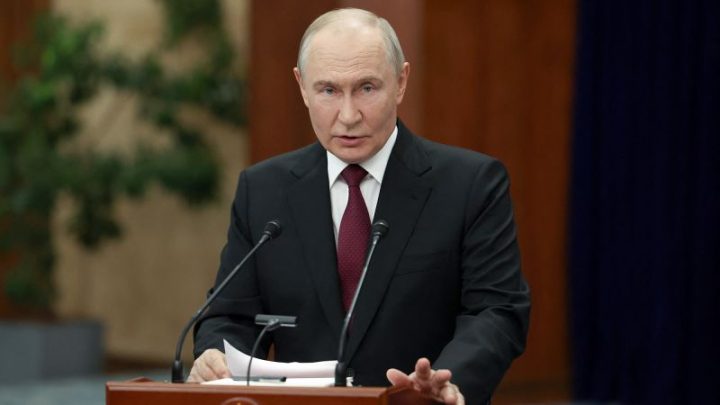
Germany blames Russia for drone attack on Leipzig airport

Daftar Isi
Germany Escalates Diplomatic Pressure on Moscow After Drone Found at Leipzig Cargo Hub
Healfromzero.com – Europe’s growing anxiety over covert Russian operations received a sharp new chapter when Berlin formally attributed a drone discovered at one of the continent’s busiest freight airports to the Kremlin. The revelation, delivered alongside a package of punitive diplomatic measures, marked the most direct German accusation yet against Moscow since the full-scale invasion of Ukraine began in February 2022.
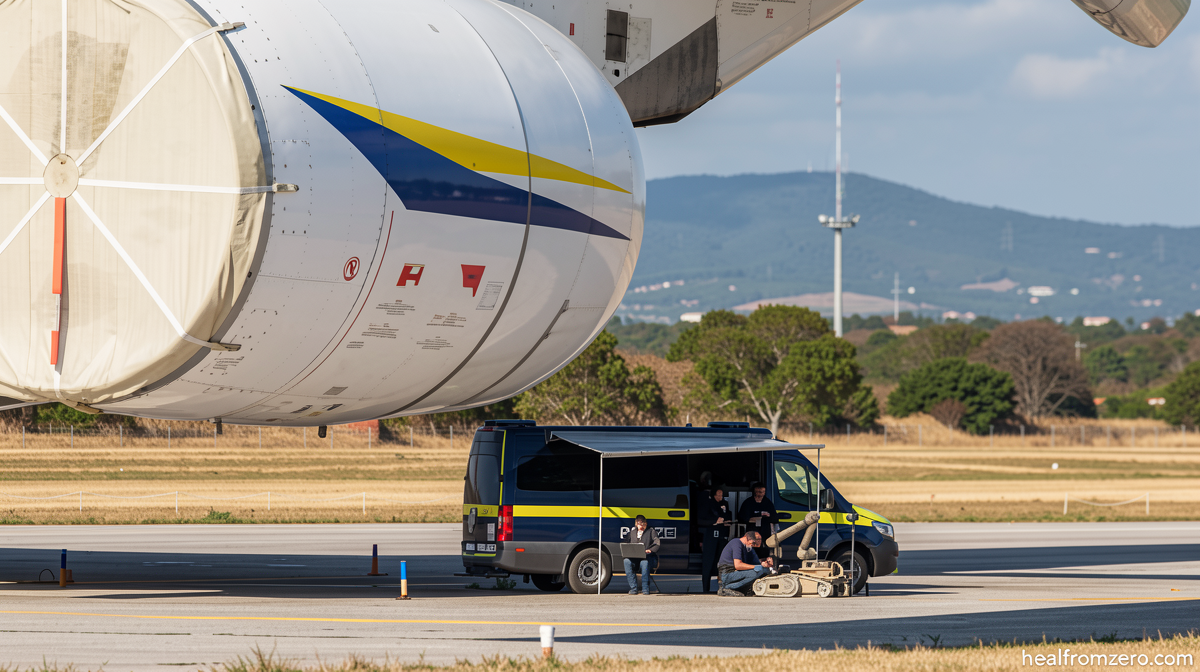
The incident traces back to August 5, when personnel at Leipzig/Halle Airport detected an explosive-laden drone inside a restricted zone adjacent to the south runway — the strip primarily used by cargo operations. A bomb-disposal robot was brought in to neutralize the device, and its detonator was carefully extracted. Photographs released from the scene placed the robot in close proximity to a Ukrainian cargo aircraft parked nearby.
A US defense official stationed in Europe confirmed that American intelligence assessed the drone as belonging to a Russian intelligence service and that it carried military-grade explosives. The finding placed the event squarely within the pattern of hybrid operations that Western agencies have long attributed to Moscow.
Germany Raises Threat Level and Closes Russian Diplomatic Posts
Interior Minister Alexander Dobrindt announced on Tuesday that Germany was elevating its national threat assessment from “general” to “high,” a significant recalibration of how the government views the security environment surrounding its territory.
“We are not at war, but we are a daily target of hybrid attacks,” Dobrindt told reporters.
Foreign Minister Johann Wadephul simultaneously ordered the shutdown of two Russian diplomatic and cultural presences: the consulate in Bonn and the Russian House, a long-standing cultural center in Berlin. Additional tightening of entry controls for Russian nationals entering Germany was also announced, signaling a broader hardening of the border posture.
EU and NATO Back Berlin’s Response
European Commission President Ursula von der Leyen indicated that EU foreign ministers would present a coordinated “clear response” to Moscow later in the week, including “additional sanctions.” The statement positioned the Leipzig incident as a trigger for a bloc-level escalation rather than a purely bilateral matter.
NATO Secretary General Mark Rutte voiced support for Germany’s steps and reaffirmed the alliance’s posture toward Ukraine.
“NATO will continue to strengthen our ability to deter and defend all Allies against any threat – including malign actions like those seen in Leipzig,” Rutte said, adding that the alliance’s commitment to Ukraine remained “unwavering.”
Moscow Pushes Back
The Kremlin dismissed the German accusations as manufactured justification for politically motivated actions. Foreign Ministry spokeswoman Maria Zakharova framed the closure of the Russian House as long-sought retribution.
“The Russian House has long haunted them,” Zakharova said. “That’s why they were looking for something to latch onto. Moscow will respond to all anti-Russian decisions.”
On the same day the drone was found, a second aerial object struck a cargo aircraft in the vicinity of the airport, inflicting minor damage. The plane completed its flight and landed safely in Hannover, though the coincidence of two incidents within hours deepened suspicions of a coordinated operation.
German media subsequently reported that a third drone had been located in a field near the airport roughly a week after the initial discovery, fueling speculation that multiple devices were deployed as part of a single planned operation. The German Federal Prosecutor’s Office, which is prosecuting the matter, declined to provide further detail, citing an active investigation.
Why Leipzig Matters
Leipzig/Halle is among the busiest freight airports in Europe and has served as the European base for Ukraine’s Antonov Airlines cargo fleet since Russia destroyed the airline’s home facility at Hostomel, northwest of Kyiv, in the opening days of the 2022 invasion. The airport thus functions as a critical logistical lifeline for Ukrainian military and humanitarian supply chains, making any threat to its operations a matter of strategic consequence well beyond German borders.
Dobrindt characterized the discovery as a qualitative shift in the threat landscape.
Related Reading
Frequently Asked Questions
What is Germany blames Russia for drone attack?
Germany blames Russia for drone attack is the main topic of this guide. The article explains the context, practical details, and next steps readers should understand.
Why does Germany blames Russia for drone attack matter?
Germany blames Russia for drone attack matters because readers are looking for a useful answer, not just a short summary. Good content should match search intent and help them decide what to do next.