Ancient DNA reveals clues about mysterious ‘Golden Man’ and rise of the Scythian elites

Daftar Isi
Hereditary Power in the Steppe: Ancient DNA Exposes the Bloodlines Behind Scythian Elite Rule
Healfromzero.com – For centuries, scholars pieced together the social architecture of the Scythians — the mounted nomads who swept across the vast grasslands of the Eurasian Steppe throughout the Iron Age — largely from the material wealth left behind in their burial mounds. What those mounds revealed was a society sharply divided between a warrior aristocracy and everyone else. Now, a landmark genetic study published in Science Advances has confirmed something long suspected but never proven: that the highest ranks of Scythian society were passed down through bloodlines, binding distant kin into a single network of inherited authority.
A Genetic Signature of Aristocracy
The research team analyzed DNA from 85 individuals drawn from multiple burial sites across the steppe region. Of those, 38 came from elite tombs and 47 from non-elite contexts. When the scientists compared the two groups, a clear pattern emerged. Iron Age populations overall were far more genetically mixed than their Bronze Age predecessors, reflecting centuries of migration and intermarriage across the steppe. Yet within that diversity, the elite genomes stood apart. They carried elevated levels of runs of homozygosity — stretches of adjacent genetic markers that signal recent common ancestry — and their overall genomic profiles were noticeably more uniform than those of ordinary members of the same communities.
In the authors’ words, the data were “highlighting the potential role of the elites in maintaining continuity during the time of intense genetic mixture.” In practical terms, this means that while the broader population was absorbing new genetic input from neighboring groups, the ruling families were insulating themselves through endogamous marriage, preserving a distinct biological identity across generations. The implication is stark: social stratification of this kind had no parallel in the preceding Bronze Age, making the Iron Age Scythian elite a genuinely new form of hereditary governance.
The Golden Man, Re-Examined
No individual better embodies the Scythian aristocratic ideal than the figure known since the 1970s as the “Golden Man.” His kurgan — a monumental burial mound excavated in 1969 at a site in present-day Kazakhstan — dates to roughly 400 BC to 300 BC and contained an extraordinary assemblage: iron weapons, bronze artifacts, a silver bowl, and more than 4,000 gold ornaments. Despite the gendered nickname assigned by early excavators, the biological sex of the young adult interred there had never been definitively established.
For the new study, researchers examined DNA markers spanning the entire genome of the Golden Man, applying statistical imputation methods to reconstruct segments where the ancient material was too degraded to read directly. The reconstructed profile indicated that the individual was almost certainly genetically male. Further comparison against other Scythian genomes placed him within a southern sub-group known as the Saka, a distinction that carries significant implications for understanding regional variation within the broader Scythian cultural sphere.
Mounds, Mummification, and the Logistics of Elite Death
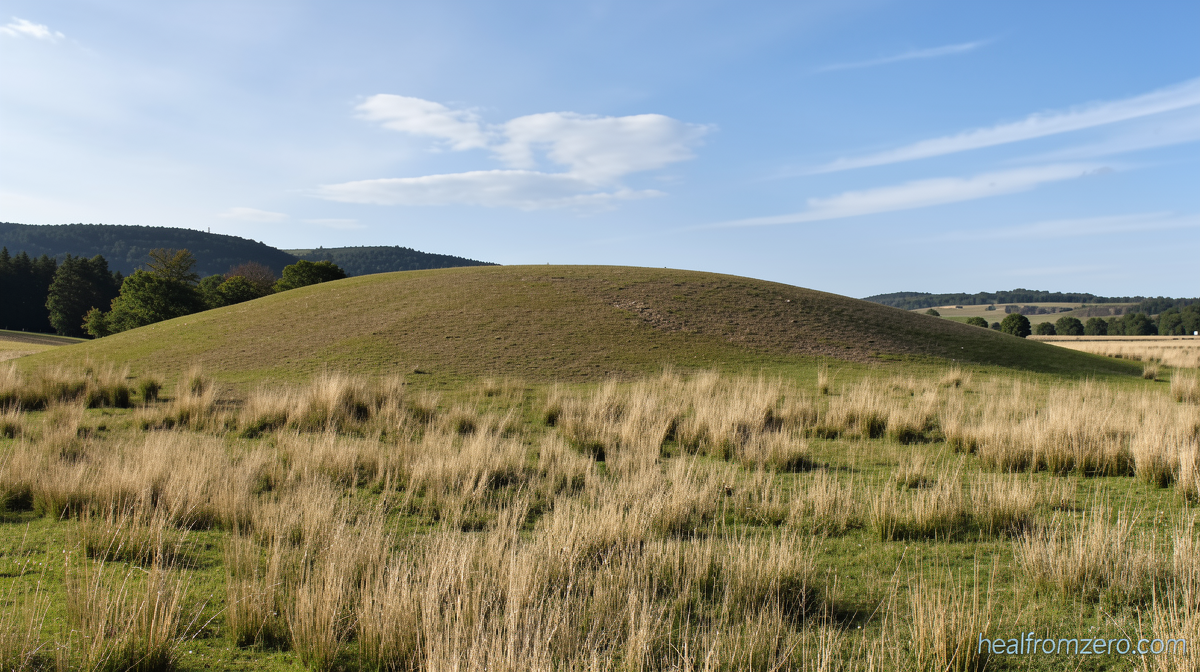
The physical scale of elite Scythian burial was staggering. Kurgans associated with high-status individuals could rise to 49 feet (15 meters) in height and span 345 feet (105 meters) in diameter. Their internal architecture typically included corridors, subterranean catacombs, and side chambers housing the remains of sacrificed animals or deceased relatives. Skeletal material recovered from these structures frequently bore traces of mummification or postmortem trepanation — the surgical removal of brain tissue through a drilled cranial opening.
Ainash Childebayeva, senior author of the study and assistant professor of anthropology at the University of Texas at Austin, explained the practical logic behind such preservation techniques. Elaborate mound construction and the transport of bodies to designated burial locations could take considerable time, during which decomposition would render the remains unsuitable for interment.
“It would make sense if one had to build a need to bury this individual, or if they had to be transported to a specific location where they would be buried,” Childebayeva told CNN.
Dynastic Bonds Across the Steppe
Perhaps the most striking finding was the geographic reach of elite kinship. In one documented case, the kurgans of an elite man and his grandchildren were located at separate cemeteries separated by more than 60 miles (nearly 100 kilometers). The combination of confirmed biological relatedness and the extraordinary richness of both burials pointed, in the researchers’ assessment, to a functioning system of dynastic rule in which close relatives shared access to elite status regardless of where they were ultimately laid to rest.
The case grew more pointed when the team noted that one of the grandchildren receiving an elite burial had been only one year old at death.
“And to me that was also a sign that this status was hereditary,” Childebayeva said. “If the status”
The sentence trails off in the available reporting, but the point stands: a toddler granted the full panoply of aristocratic burial rites could not have earned that distinction through personal achievement. It was conferred by birth.
Independent Assessment
Alicia R. Ventresca-Miller, associate professor of anthropology at the University of Michigan and associate curator of archaeological sciences at the university’s Museum of Anthropological Archaeology, was not part of the research team but weighed in on its significance.
“This paper does a fantastic job of integrating genetic, archaeological, and textual findings to support their interpretations of lineage-based status,” she said.
She added, in an email exchange, that the confirmation of a lineage-based elite system represented “a very important finding, as wealth was passed down across generations.” The new data extend that observation beyond material wealth into the realm of political authority itself, suggesting that power in Iron Age Scythian society operated along the same hereditary channels as gold and livestock.
Why It Matters
The findings reshape how historians and archaeologists model steppe political organization. Prior to this study, arguments about Scythian governance relied heavily on Greek literary descriptions and the distribution of grave goods. Genetic evidence now supplies an independent, biological line of inquiry that corroborates — and in places sharpens — those older interpretations. The existence of a hereditary ruling class, maintained through deliberate endogamy and enforced across vast distances, places the Scythian Iron Age aristocracy in a different category from the more fluid, less genetically bounded leadership structures of the Bronze Age. It also invites comparison with other steppe polities, from the later Xiongnu to the Mongol Empire, where dynastic continuity was likewise a defining feature of elite rule.
For the Golden Man himself, the study closes a decades-old question about his sex while simultaneously embedding him within a broader web of kinship that stretches across the southern steppe. He is no longer merely a spectacular find of gold and iron; he is a node in a hereditary network, his status written not only in ornament but in his genome.
Related Reading
Frequently Asked Questions
What is Ancient DNA reveals clues about mysterious?
Ancient DNA reveals clues about mysterious is the main topic of this guide. The article explains the context, practical details, and next steps readers should understand.
Why does Ancient DNA reveals clues about mysterious matter?
Ancient DNA reveals clues about mysterious matters because readers are looking for a useful answer, not just a short summary. Good content should match search intent and help them decide what to do next.