An unusual strategy helps some tropical butterflies live 25 times longer than their relatives

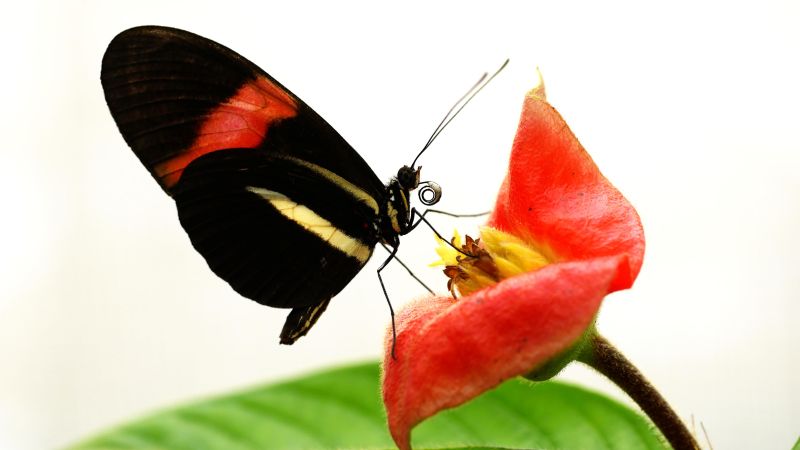
An Unusual Strategy Helps Some Tropical Butterflies Live 25 Times Longer Than Their Relatives
An unusual strategy helps some tropical – For years, scientists have puzzled over the short-lived nature of most butterfly species, which typically survive only a few weeks before their final metamorphosis. However, a recent study published in the journal *Nature Communications* has uncovered that certain tropical butterflies defy this pattern, living significantly longer than their kin. Researchers have identified a unique trait in the Heliconius genus, which inhabits the dense rainforests of South and Central America, that may explain their extended lifespan. This discovery could provide valuable clues about aging processes in both insects and humans.
Heliconius Butterflies: A Tale of Two Lifespans
The Heliconius genus encompasses a range of butterfly species with remarkably varied lifespans. While some members, like the Dione juno, live just 14 days after emerging from their chrysalises, others, such as Heliconius hewitsoni, can survive for 348 days—nearly 25 times longer. This disparity raises intriguing questions about the evolutionary adaptations that allow certain species to thrive beyond their peers. According to the study, additional Heliconius species exhibit lifespans between 106 and 277 days, further highlighting the genus’s diversity in aging patterns.
“We observe dramatic differences in lifespan across the animal kingdom—adult mayflies, for instance, live only a day, while some whales and sharks can survive for centuries,” said Dr. Jessica Foley, the study’s lead author and a postdoctoral scholar at Tufts University’s Jean Mayer USDA Human Nutrition Research Center on Aging. “Understanding the evolutionary drivers behind these variations might offer insights into healthy aging for humans.”
Foley and her team hypothesized that the prolonged lives of some Heliconius species could be linked to their dietary habits. Unlike most butterflies, which rely solely on nectar for energy during adulthood, these long-lived specimens have evolved to consume pollen. This shift in diet, the researchers suggest, may provide them with additional nutrients that support extended survival. To test this theory, the team examined the relationship between Heliconius and their food sources, analyzing how nutrient intake influences longevity.
From Nectar to Pollen: A Dietary Divide
Most adult butterflies feed exclusively on nectar, using carbohydrates as their primary energy source. However, Heliconius butterflies have adapted to incorporate pollen into their adult diets, a behavior that seems counterintuitive given their small size. Pollen contains lipids and amino acids, which are not typically found in nectar. These nutrients are essential for reproductive functions and may also play a role in immune system support. The researchers found that Heliconius species that consume pollen tend to live longer than those that rely solely on nectar, suggesting a potential link between diet and lifespan.
Despite this dietary distinction, the exact mechanisms behind the Heliconius longevity puzzle remain unclear. Some scientists have speculated that the insects’ enhanced nutrient intake allows them to conserve energy more efficiently, while others argue that physiological changes, such as slower metabolic rates, could be responsible. The study aimed to investigate these possibilities by comparing the aging patterns of Heliconius species with and without pollen in their diets.
Unraveling the Secrets of Extended Life
The researchers compiled an extensive dataset, combining observations from commercial butterfly farms, mark-release-recapture studies, and controlled laboratory experiments. By analyzing these sources, they were able to track the entire life cycle of the Heliconius butterflies, a process that takes about a year. This comprehensive approach allowed them to identify patterns that might not be apparent in shorter-term studies. The findings revealed that even when pollen was removed from their diets, Heliconius butterflies still outlived their non-pollen-feeding relatives, indicating that their extended lifespan may be due to more than just nutrition.
One of the study’s most innovative aspects was the use of a device called “The Pullinator” to measure age-related decline in the butterflies. This tool, which features a perch lined with sandpaper, assesses grip strength as an indicator of physical health. By using this method, the researchers could quantify how aging affects the insects’ mobility and resilience. The results showed that Heliconius butterflies maintained better physical function as they aged compared to their shorter-lived counterparts, suggesting that their longevity is accompanied by slower physiological deterioration.
The study also highlighted the role of lipids in sustaining adult life. While many butterflies exhaust their energy reserves after a brief reproductive period, Heliconius species appear to retain their metabolic efficiency for longer. This could be attributed to the lipids and amino acids derived from pollen, which may help them avoid the rapid decline seen in other insects. However, the exact genetic or biochemical pathways responsible for this adaptation are still under investigation.
Implications for Human Longevity
Dr. Foley emphasized that studying Heliconius butterflies offers a unique opportunity to explore the evolutionary basis of longevity. “The Heliconius genus represents an extreme case of lifespan variation within the insect world, making them ideal subjects for understanding how aging can be modified through diet and physiology,” she explained. The researchers believe that insights gained from these butterflies could inform strategies for human health, particularly in the context of delayed aging and enhanced vitality.
While the study sheds light on the role of diet in extending lifespan, it also underscores the complexity of the aging process. “Even when we removed the pollen, the Heliconius butterflies still lived significantly longer than their relatives,” Foley noted. “This implies that there are additional factors, such as genetic or metabolic mechanisms, at play. Our next step is to uncover these processes and determine how they can be applied to other organisms.”
Heliconius butterflies are not the only species that exhibit extended lifespans. The study also mentioned that the Myscelia cyanaris, a rare butterfly, has a maximum lifespan of 380 days, surpassing even the longest Heliconius species. However, limited data on this species makes it challenging to draw direct comparisons. The Heliconius genus, with its 28 recognized species, provides a more accessible case for studying longevity, as researchers can observe their entire life cycle within a single year.
As scientists continue to unravel the mysteries of Heliconius longevity, they are also redefining the broader understanding of aging in the animal kingdom. The ability of these butterflies to thrive on a pollen-based diet, rather than relying solely on nectar, challenges existing assumptions about the relationship between nutrition and lifespan. By examining these “extreme agers,” researchers hope to uncover universal principles that apply to both insects and humans, potentially paving the way for breakthroughs in the field of healthy aging.