Meet the travelers who vacation in the world’s most treacherous places

Daftar Isi
When the Vacation Destination Is Also the Danger Zone
Healfromzero.com – A new wave of holidaymakers is packing their bags for places most people would only encounter through evening news bulletins. War-torn provinces, irradiated landscapes, and borders that shift with the seasons have become the latest frontier for a niche but growing segment of the travel market. Industry observers call it dark tourism, and its practitioners are not looking for sunbeds or all-inclusive resorts. They are looking for something harder to define: proximity to the places where history stopped being abstract.
From Civil War Picnics to Instagram Feeds
The impulse is older than it appears. In July 1861, hundreds of Washington, D.C. residents loaded their carriages with picnic baskets and opera glasses, then drove out to the Virginia countryside to watch the first major engagement of the American Civil War unfold at Manassas. A writer of the era later labeled the outing “the worst picnic in history.” The custom did not survive the nineteenth century, but the underlying fascination with witnessing catastrophe from a safe-ish distance has resurfaced in a very different cultural register.
Today, dark tourism splits into two broad categories. The first involves traveling to countries that carry active government travel warnings. North Korea, Afghanistan, and Haiti all sit on the US Department of State’s “do not travel” list, yet each draws a steady trickle of visitors who want to see conditions firsthand rather than through a news ticker. The second category targets specific sites where infamous events occurred: Jonestown in Guyana, where a mass murder-suicide claimed over nine hundred lives in 1978, or the execution grounds scattered across Cambodia’s Killing Fields, where hundreds of thousands were killed during the Khmer Rouge regime.
For younger travelers, these grim itineraries also serve a second purpose. A photo of a rusted watchtower in a former labor camp or a drone shot over a scarred battlefield translates neatly into scroll-stopping content. The past becomes a curated performance for Instagram and Facebook, and the traveler’s role shifts from witness to content creator.
“A Completely Different Perspective”
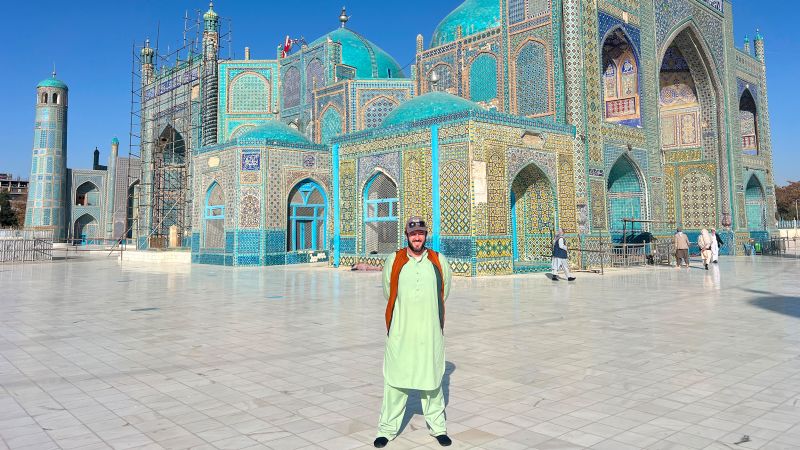
Not every dark-tourism traveler is chasing a viral post. Arnaud Kirby, a frequent long-haul traveler based in Luxembourg, frames his choices in terms of historical inquiry rather than spectacle.
“For me, the main motivation to visit places that are often considered dangerous — such as Syria, Libya or Sudan — is largely connected to my interest in history. Many of these countries have incredibly rich and complex historical backgrounds, and being able to see those places in person gives a completely different perspective compared to simply reading about them.”
Kirby also points to the scarcity of fellow tourists as a draw. Fewer visitors, he argues, means fewer transactional encounters and more genuine contact with residents.
“Being somewhere where there are very few tourists creates a completely different atmosphere. It allows for more authentic interactions with local people and a more genuine experience of the country.”
Chad: Where the Elephant Walked Up to the Car
One of Kirby’s most recent trips took him to Chad, a landlocked nation in central Africa that receives only a handful of international visitors annually. Both the US Department of State and the British Foreign, Commonwealth and Development Office advise against all travel to the country, citing terrorism, civil unrest, crime, kidnapping, and unexploded ordnance. By most conventional travel logic, the itinerary should have been scrapped.
Instead, Kirby spent time in the capital, N’Djamena, and in Zakouma National Park, a savanna reserve in the country’s southeast. He reports encountering none of the hazards the advisories warn about.
“Chad was an amazing experience. What really stood out to me was how friendly the people were. The locals were incredibly kind and welcoming.”
The wildlife, however, delivered an unexpected encounter. At Zakouma, animals had not grown accustomed to tourist vehicles the way they have in more heavily visited parks across East Africa. Kirby recalls a single moment that stayed with him: a lone elephant approaching his vehicle and pressing its trunk against the windshield, as though trying to work out what the metal box was.
“The Murder Rates Show This Over and Over Again”
Will Aswell, a British globetrotter who requested a pseudonym because of ongoing concerns about future travel permissions, has visited Iran, North Korea, Ukraine, and Iraq without feeling genuinely threatened. His reasoning is statistical rather than sentimental.
“You’re much more likely to be attacked in a big US city than you are in any obscure authoritarian country. The murder rates show this over and over again.”
Aswell also describes a deeper intellectual pull: the desire to test media narratives against lived experience.
“There’s definitely an attraction to understand what’s behind many of the news stories, but also to disagree with a lot of the dehumanizing representations of countries that might have a different perspective than the UK and the US.”
He singles out one particular revelation from his time in Muslim-majority nations.
“For example, realizing the depth of kindness and hospitality in the Islamic world, having been told my whole life how bad and evil these countries are, was something that resonated deeply with me. Travel is about understanding and experiencing differences and allowing yourself to be impacted and changed by it.”
The Night in Sinaloa
Optimism about statistical safety does not erase individual risk. In 2025, Aswell was traveling through Sinaloa state in western Mexico, a region long shaped by cartel violence. In the middle of the night, members of the Jalisco New Generation Cartel pulled him from a bus at gunpoint. He says he had to hand over a substantial sum of cash before being released.
“I was stupid to be traveling at night,” he concedes.
The episode underscores a tension at the heart of dark tourism: the very remoteness and low tourist volume that make these destinations feel authentic also mean that rescue infrastructure, diplomatic consular support, and the simple safety-in-numbers effect of a packed resort are largely absent. When something goes wrong, the margin for error is thin.
Why It Keeps Growing
Travel analysts note that the post-pandemic era has accelerated interest in less-traveled, lower-density destinations, and dark tourism rides that current. Social media amplifies the appeal: a single well-timed post from a border checkpoint or a memorial site can generate more engagement than dozens of beach photos. Airlines and small-group operators have responded with tailored itineraries that pair historically significant sites with basic safety protocols, blurring the line between journalism, education, and leisure.
Whether the trend represents a healthy expansion of curiosity or a thin veneer of adventure over genuine risk remains an open question. What is clear is that the traveler who once stayed home and watched the evening news now books the flight, packs the picnic basket, and drives toward the next great battle — or at least the next great story.
Related Reading
Frequently Asked Questions
What is Meet the travelers who vacation?
Meet the travelers who vacation is the main topic of this guide. The article explains the context, practical details, and next steps readers should understand.
Why does Meet the travelers who vacation matter?
Meet the travelers who vacation matters because readers are looking for a useful answer, not just a short summary. Good content should match search intent and help them decide what to do next.