30 years after ‘Into Thin Air’ disaster, Everest has changed. Now the weather isn’t the only big threat

30 Years After ‘Into Thin Air’ Disaster, Everest Has Changed. Now the Weather Isn’t the Only Big Threat
The Storm That Shaped a Mountain
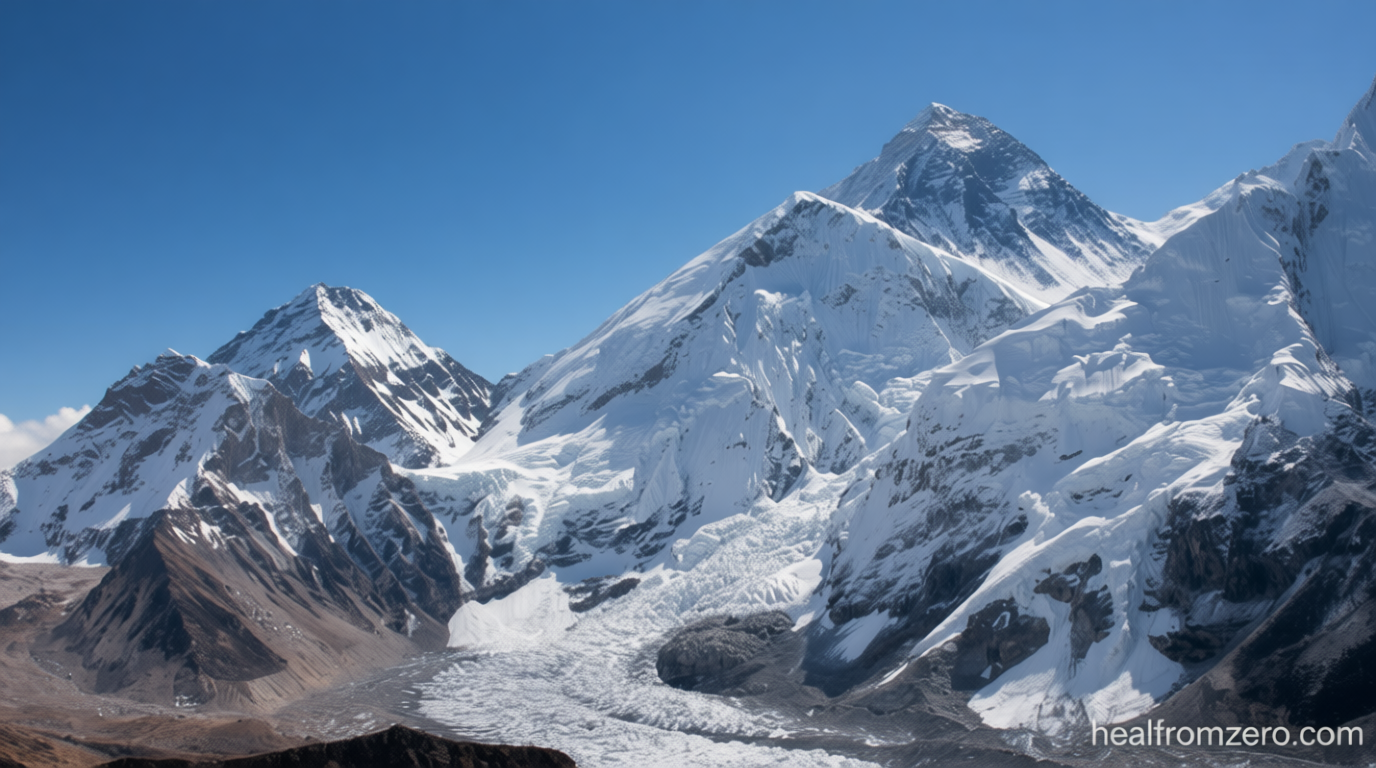
30 years after Into Thin Air disaster – On May 10, 1996, a sudden and violent blizzard gripped Mount Everest, leaving over 30 climbers stranded at altitudes where survival seemed uncertain. The storm, which arrived with little warning, exposed them to frigid temperatures and winds exceeding 70 miles per hour. As the sun set, oxygen levels plummeted, and the climbers—many of whom were exhausted from the arduous ascent—faced a grim struggle for life. This event would later be known as one of the deadliest 24-hour periods on the world’s highest peak, claiming the lives of eight individuals. But it was not just the tragedy itself that captured global attention; it was the aftermath, amplified by media coverage and Jon Krakauer’s bestselling account, Into Thin Air, which transformed Everest into a symbol of both human ambition and vulnerability.
From Remote Peak to Crowded Destination
Everest, once a sanctuary for seasoned mountaineers, began to attract a broader audience after the 1996 disaster. The narrative of survival and sacrifice, as detailed in Krakauer’s book, sparked a cultural shift. Suddenly, the mountain was no longer reserved for elite climbers but accessible to the average person with the right guidance and financial backing. “It was a cultural turning point,” remarked Will Cockrell, author of Everest Inc., as the peak entered the realm of global aspirations. What was once a rare achievement became a common goal, with more people than ever dreaming of standing atop the world.
Before 1996, Everest’s summits were a rarity. In 1953, Tenzing Norgay and Edmund Hillary made the first successful ascent, and it took until 1989 for 270 climbers to reach the top. But by 2026, that number had surged dramatically, with 274 climbers summiting in a single day—setting a new record. This growth was fueled by technological advancements, improved gear, and a thriving industry of Nepali operators who now provide essential services to international climbers. The mountain, once a solitary challenge, has become a bustling hub of activity, where every step of the journey is meticulously planned and executed.
However, this increased accessibility has also brought new risks. While the weather remains a formidable challenge, experts now point to overcrowding, inexperienced tourists, and cost-cutting practices as the most pressing threats. The once-quiet slopes of Everest Base Camp have transformed into a high-altitude metropolis, teeming with climbers, guides, and support staff. Yet, the 1996 disaster serves as a cautionary tale, reminding all that the mountain’s dangers are not confined to its unpredictable elements.
The Rise of Commercial Climbing
The evolution of Everest’s climbing industry can be traced back to 1992, when New Zealand-based Adventure Consultants pioneered the first commercial expedition to successfully summit the peak. This marked the beginning of a new era, where paying clients could be guided to the top. At the time, the idea seemed almost far-fetched, but the success of that mission ignited a surge of interest. “We had no idea how big the industry would become,” said Guy Cotter, CEO of Adventure Consultants and a guide on that historic summit. “We didn’t even look at it as an industry in those days.”
By 1996, the company was part of the growing wave of commercial teams competing for summit spots. The blizzard that struck during their attempt highlighted the risks of relying on standardized procedures without adequate contingency plans. Climbers, guides, and Sherpas were left exposed on the treacherous ridge above the highest camp, where oxygen levels were so low that prolonged exposure could be fatal. Frostbite and hypothermia began to set in, and the situation was dire. Cotter, who was leading an expedition on a nearby mountain at the time, realized his colleagues were in peril. “With binoculars, I could see them up on the summit ridge,” he recalled. “When it looked like things had taken a turn for the worse overnight, I went over to Everest Base Camp to assist the base camp manager and the doctor.”
His actions were critical. Alongside a small team, Cotter and the base camp staff launched a massive rescue operation, coordinating efforts to save those stranded and provide medical care to the injured. “Virtually everybody was up on the mountain,” said Cotter. “We were all totally in shock.” The rescue mission underscored the importance of preparedness and the role of modern technology in mitigating the risks of high-altitude expeditions. Yet, it also revealed the human element of the climb, where decisions made under pressure could determine the outcome of a journey.
The Human Cost of Ambition
Survivor accounts of the 1996 disaster painted a picture of both heroism and tragedy. Some climbers were still pushing forward long after their designated cut-off time of 2 p.m., when returning to base camp before darkness became essential. Ropes that failed to secure climbers properly and bottlenecks caused by slower climbers further complicated the situation. The combination of these factors, along with the brutal weather, led to the loss of eight lives. One of the most poignant stories involved Rob Hall, a co-founder of Adventure Consultants and a renowned mountaineer, who chose to stay with an incapacitated client near the summit. His decision cost him his life, but in his final moments, he managed to make a satellite phone call to his pregnant wife, sharing a message that would echo through the annals of climbing history.
The 1996 event was among the first to gain widespread attention in the internet age. News of the disaster spread rapidly, and the media frenzy that followed transformed it into a global story. The tragedy’s legacy lives on in the stories of survivors, their memoirs, and the 2015 film Everest, starring Jake Gyllenhaal. These narratives continue to shape public perception of the mountain, highlighting the delicate balance between ambition and risk. “The stories of heroism, high-stakes rescues, costly decisions, and the sheer will to survive continue to be pored over and debated to this day,” said Cockrell, emphasizing the enduring relevance of the disaster.
As the industry has grown, so too have its complexities. What began as a niche pursuit has evolved into a global enterprise, with Nepali operators playing a central role in facilitating climbs. Their expertise and dedication have made the journey safer, more efficient, and more accessible. Yet, the increasing number of climbers has also led to a more competitive environment, where the pressure to summit can sometimes overshadow safety protocols. “Now, the greatest threat isn’t the weather, but the convergence of overcrowding and inadequate preparation,” noted Cockrell, reflecting on the changes in Everest’s climbing landscape over the past three decades.
The 1996 disaster remains a pivotal moment in Everest’s history, a catalyst for both innovation and reflection. It forced the climbing community to confront the consequences of commercialization and the need for better risk management. Today, as the mountain continues to draw thousands of climbers each year, the lessons of that day are more relevant than ever. The summit, once a symbol of individual perseverance, now represents the collective ambition of a global audience, driven by the promise of a once-in-a-lifetime experience. But with that promise comes the responsibility to ensure that every climber is equipped to face the challenges that Everest still presents, no matter how much the industry has advanced.