
The best way to watch the World Cup is in Spanish
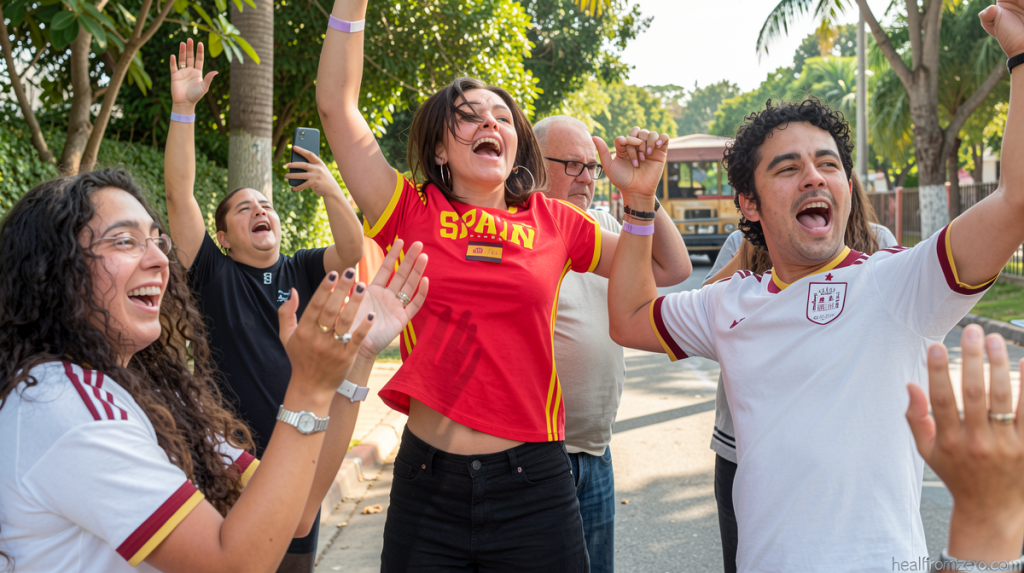
Spanish-Language Broadcasts Captivate New Audiences for 2026 World Cup
The best way to watch the World – A growing number of American viewers are discovering that the most exciting way to experience the World Cup isn’t through traditional English commentary. Telemundo’s Spanish-language coverage has become something of a cultural phenomenon, drawing in audiences who never expected to tune into a Spanish network for soccer. This shift represents more than just a viewing preference—it signals a broader appreciation for Latin American sports culture within the United States.
Unexpected Fans Find Their Way to Telemundo
Giovanni Canales represents this new wave of viewers perfectly. At twenty-four years old, the Rhode Island native grew up watching matches with his father, who once competed for Honduras’s national team. Even though Canales doesn’t actually speak Spanish, he finds himself completely immersed in the energetic atmosphere created by Telemundo’s commentators. The rapid-fire delivery of Spanish-language play-by-play has become its own universal language for him.
He doesn’t even need to keep his eyes glued to the screen. “Sometimes I just doze off if it’s in English,” Canales explained, noting that he can step away without missing crucial moments. He even joked about this habit in a recent social media post.
Meghan Dyer Pavs, a former elementary school educator living near Worcester, Massachusetts, has become something of a Telemundo evangelist. She describes the network’s broadcasts as “the best thing in American culture right now.” Her enthusiasm has been contagious—she successfully convinced her husband and children to switch, and recently converted her college roommate as well.
Record-Breaking Viewership Numbers
The numbers tell a compelling story about Telemundo’s rising popularity. According to recent reports, the network is performing at “more than double” the audience levels it achieved during the 2022 tournament in Qatar. The July 5 matchup between Mexico and England set a new record, attracting 23.2 million viewers according to Variety. Fox Sports, which maintains English-language broadcasting rights, drew approximately 21.7 million viewers for that same contest.
While Fox traditionally outperforms Telemundo in matches without Latin American connections, the gap has narrowed considerably. Diana Moskovitz from Defector observed that the difference is far smaller than many would anticipate. This competitive dynamic has prompted discussions about FIFA potentially bundling English and Spanish broadcasting rights for future men’s tournaments, according to CNBC’s Alex Sherman.
A Deliberate Strategy Pays Off
Telemundo’s success hasn’t happened by accident. The network initiated a targeted campaign months before the tournament began, specifically aiming to attract non-Spanish speakers. A Super Bowl commercial featuring Owen Wilson captured this approach perfectly, showing the well-known non-Latino actor becoming swept up in the passionate energy of Telemundo’s commentators.
During the France-Sweden match last month, one announcer made a special effort by briefly switching to English to acknowledge and thank viewers who don’t speak Spanish. This gesture exemplified the network’s commitment to welcoming a broader audience.
At Socceria, a soccer-themed establishment in Brooklyn, owner Tania Apolinar has noticed the trend firsthand. Hailing from Torreón, Mexico, Apolinar reports that her venue screens approximately 95 percent of matches in Spanish, occasionally experimenting with Fox for games involving non-Spanish-speaking nations. “But then we kind of regret it in the moment,” she admitted. “It’s more fun on Telemundo.”
More Than Just Soccer
For Dyer Pavs, the appeal extends beyond entertainment value. She majored in Spanish during her college years and appreciates the opportunity to practice her language skills while watching. More importantly, she sees it as a way to connect her children—eight and eleven years old—with the vibrant soccer traditions of Latin America.
She challenges the notion that cultural exposure requires expensive travel. “I talk to parents who think that in order to expose them to other cultures, we have to take a $1,000 flight to Paris or whatever,” she said. “But this is American culture. It’s just a different version of American culture on your TV.”
Serious soccer enthusiasts also point to Telemundo’s decision to skip commercials during hydration breaks, known affectionately as “las pausas de hidratación.” This allows viewers to catch unfiltered reactions from players and coaches during tense moments. Some fans also cite Fox’s pro-American perspective and general dislike of analyst Alexi Lalas, who has publicly supported President Donald Trump, as reasons for choosing Spanish-language coverage.
Budget considerations play a role as well. Accessing Fox Sports requires either a cable package, YouTube TV subscription, or a standalone $19.99 monthly fee. Meanwhile, Peacock offers subscription tiers that include live sports coverage at various price points.