US military surveillance blimp supporting CBP is lost at the southern border, wreckage found in Mexico

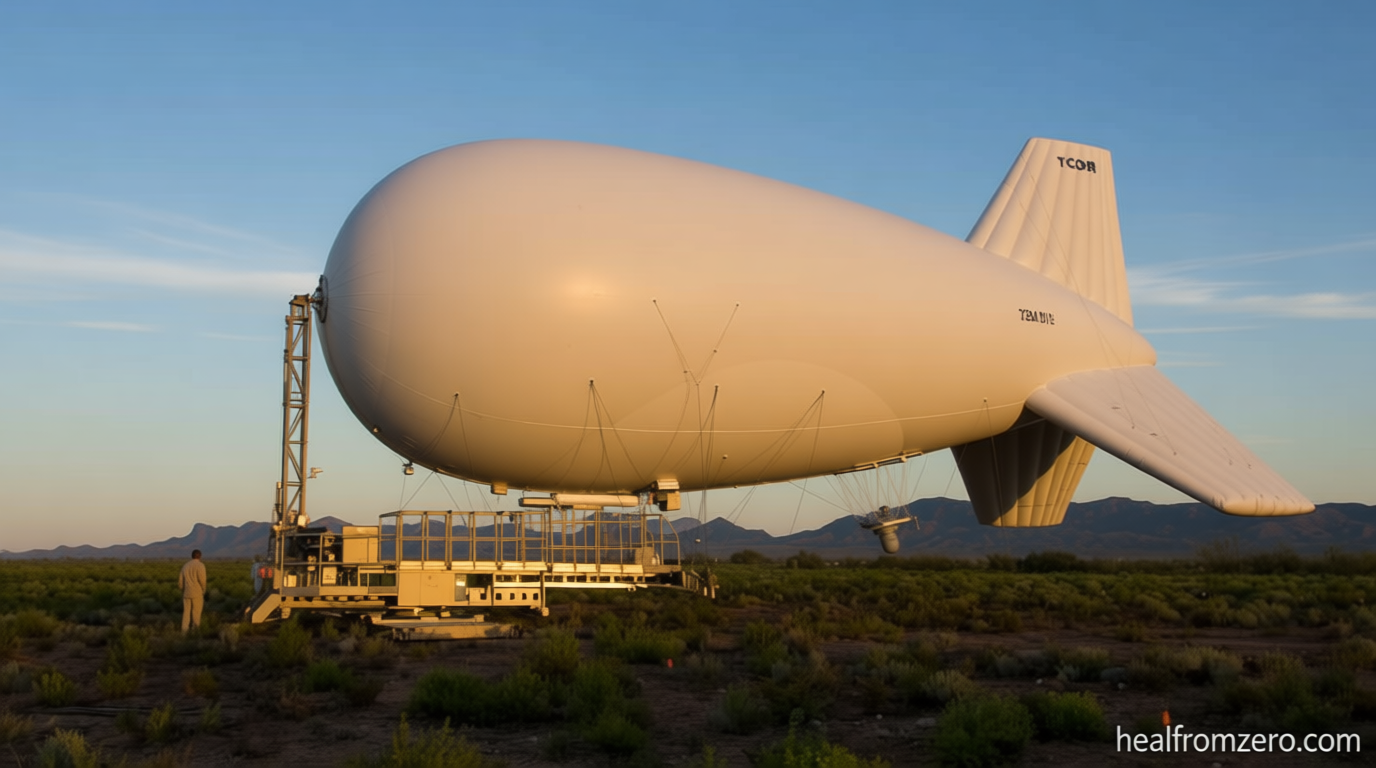
US Military Surveillance Blimp Supporting CBP Lost at Southern Border, Wreckage Found in Mexico
US military surveillance blimp supporting CBP is – On Monday evening, a surveillance blimp operated by military contractors near Laredo, Texas, lost its tether and crashed in Mexico. The incident, which occurred during severe weather conditions, involved a 66-foot helium-filled aerostat used by Customs and Border Protection (CBP) for border monitoring. No crew members were aboard the blimp, and no ground personnel sustained injuries during the event.
Storms and Tangled Cables
According to a statement from the Joint Task Force-Southern Border, the blimp’s tether cable became entangled with other lines amid intense thunderstorms. The spokesperson confirmed that the entanglement led to the loss of control, allowing the aerostat to drift away. The National Weather Service reported that the nearby airport experienced wind gusts exceeding 44 miles per hour during the storm, contributing to the chaos. Operators attempted to untangle the cables, but the blimp “became untethered” and floated into the Mexican territory.
Collaborative Recovery Efforts
While the blimp’s exact location was unclear until its discovery by Mexican forces in a remote area southwest of Laredo, the task force spokesperson stated that both Mexican and US military teams are working together to retrieve the wreckage. This incident highlights the ongoing coordination between the two nations in managing border security assets. The aerostat, described as a “medium aerostat” by officials, was part of a broader network of surveillance systems deployed by CBP and the Department of Defense (DoD).
Contractors and Equipment
CBP relies on contractors to operate various surveillance technologies, including blimps equipped with high-powered cameras and radar systems. These tools are used to detect drones and other aircraft associated with smuggling activities. The current blimp, operated by Pentagon contractors, was part of a program that has seen fluctuations in funding. Despite this, the agency continues to utilize such assets as part of its border security strategy.
Border Patrol has employed small tactical blimps since 2012, but the program has faced challenges due to inconsistent financial support. The Department of Defense played a significant role in funding the development and procurement of over 140 surveillance blimps during the Iraq and Afghanistan wars, according to a 2012 Government Accountability Office report. The report noted that the DoD allocated more than $5 billion to these projects, underscoring their strategic importance in national security.
Previous Incidents and Consequences
Earlier this year, CBP experienced another major incident when a 200-foot aerostat on South Padre Island, Texas, broke free from its mooring and traveled nearly 600 miles before colliding with power lines near Dallas. That event, which occurred in March 2025, demonstrated the potential risks of deploying such large aerial systems. In contrast, the recent blimp loss near Laredo was smaller but still raised questions about the reliability of tethered surveillance operations.
President Donald Trump’s focus on border security has led to increased military involvement in CBP’s operations. This includes the use of advanced technologies like anti-drone laser systems, which were supplied by the Pentagon. In February, the deployment of such a system resulted in the Federal Aviation Administration temporarily closing civilian airspace over El Paso, Texas, due to safety concerns. The incident underscored the unintended consequences of integrating military equipment into border surveillance.
Historical Context and Role of Contractors
The use of blimps in border monitoring is not new. Since 2012, Border Patrol has experimented with smaller, tactical models to enhance situational awareness along the US-Mexico border. However, the reliance on contractors for these operations has created a unique dynamic, with military agencies playing a key role in logistics and technology deployment. The current blimp was managed by Pentagon contractors, highlighting the collaboration between civilian and military entities in securing the border.
While the loss of the 66-foot aerostat was a minor setback, it serves as a reminder of the complexities involved in operating such systems. The entanglement of cables during storms revealed vulnerabilities in the tethering mechanism, prompting discussions about improvements in design and maintenance protocols. Officials have not yet disclosed the specific model of blimp lost, but the incident has reignited interest in the effectiveness and safety of aerial surveillance tools.
Broader Implications for Border Security
CBP, which oversees Border Patrol, remains central to the administration’s efforts to strengthen the US-Mexico border and curb illegal immigration. Trump’s emphasis on hardening the border has led to a surge in military resources, including blimps, drones, and advanced sensors. While these technologies have bolstered monitoring capabilities, they have also introduced new challenges, such as the disruption of civilian airspace and the risk of equipment malfunctions.
The recent blimp incident, combined with the earlier one near Dallas, illustrates the need for continued investment in border surveillance infrastructure. The Department of Defense’s $5 billion commitment to developing blimps during the Iraq and Afghanistan wars has provided CBP with a valuable asset, but the reliance on contractors means that funding and operational support can vary. This unpredictability has led to periods where the program faces delays or technical issues.
As the wreckage is recovered, officials will likely assess the damage and determine if any upgrades are necessary. The coordination between Mexican and US military teams in this effort reflects the growing interdependence in cross-border security initiatives. While the immediate impact of the lost blimp is limited, the incident may prompt a reevaluation of how these systems are deployed and maintained in the future.
Editorial Updates and Partnership Acknowledgment
Editor’s Note: This report was revised to clarify that the blimp in question was operated by military contractors, not directly by the Department of Defense. The correction was made based on additional information provided by the Joint Task Force-Southern Border. Davis Winkie’s coverage for CNN is supported by a partnership between the Outrider Foundation and Journalism Funding Partners (JFP). CNN retains full editorial authority over the content, ensuring accuracy and objectivity in the reporting.
These events underscore the evolving nature of border security, where technology and human intervention play equally vital roles. As the southern border continues to be a focal point for national defense, the lessons learned from the lost blimp may inform future strategies and innovations in surveillance and logistics. The collaboration between US and Mexican forces in this incident also highlights the shared commitment to addressing cross-border challenges, even when they occur in unexpected ways.