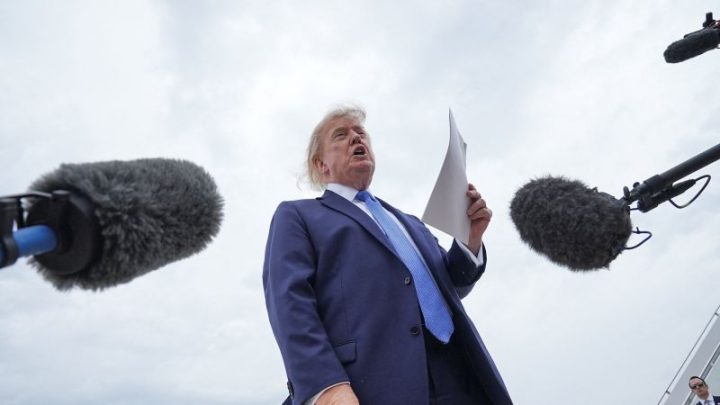
US launches deadly strike on alleged drug boat, believed to be the first in two months

Daftar Isi
US Military Resumes Lethal Strikes on Suspected Drug Vessels After Two-Month Silence
Healfromzero.com – A pair of people died Sunday when American forces fired on a low-profile vessel navigating the eastern Pacific, ending a roughly two-month lull in what has become one of the most consequential — and contested — military campaigns in recent decades. US Southern Command (SOUTHCOM) confirmed the action early Monday, identifying the unit responsible as Joint Task Force Western Hemisphere and describing the target as operating “along established narco-trafficking routes in the Eastern Pacific.”
The strike, carried out on Sunday, represented the first confirmed kinetic engagement of this type since June 21. No official explanation has been offered for why operations in the Caribbean and eastern Pacific went quiet for over sixty days, leaving analysts and lawmakers to speculate about whether the pause reflected a reassessment of strategy, a shift in political priorities, or simply a gap in target availability.
The Scale of Operation Southern Spear
Before the hiatus, the campaign — formally designated “Operation Southern Spear” and launched in September 2025 — had already produced staggering figures. Official announcements and independent tallies of search-and-rescue operations put the total at no fewer than 67 vessels destroyed and at least 221 people killed. Those numbers place the operation among the most lethal interdiction efforts the United States has conducted outside a declared war zone in modern memory.
The administration has framed the campaign in explicitly military terms, telling Congress that the United States is engaged in an “armed conflict” against drug cartels. Under that characterization, individuals killed aboard targeted boats are classified as “unlawful combatants,” a designation that, the government argues, permits lethal force without the need for judicial review. That position rests on a classified finding issued by the Department of Justice, whose contents have not been made public.
Legal and Political Pushback
The constitutional architecture underpinning the strikes has drawn sustained criticism. Several members of Congress, along with a broad coalition of human rights organizations, have challenged the Justice Department’s finding, arguing that suspected drug traffickers should be subject to prosecution under existing interdiction frameworks — the very approach the United States followed before President Donald Trump assumed office. Critics contend that labeling civilian maritime suspects as combatants effectively strips them of due-process protections and converts a law-enforcement function into a military one.
Law enforcement veterans and regional-policy experts have voiced additional skepticism about whether the campaign is producing meaningful structural change in the hemisphere’s drug trade, or whether it is merely generating a high body count without disrupting the logistics networks that sustain cartel operations.
Commander Donovan Reaffirms the Mission
In a statement posted to X on Monday, SOUTHCOM Commander Gen. Francis L. Donovan underscored what he described as an unbroken institutional commitment to dismantling narco-trafficking infrastructure:
“We are committed to imposing total systemic friction on narco-terrorists – disrupting their operations, dismantling their leadership, and eliminating cartel terror across the region.”
Donovan went on to characterize the Sunday engagement as a demonstration of force:
“This operation is a powerful demonstration of our lethal precision, overwhelming capability, and absolute resolve to protect the U.S. homeland.”
Notably, the Pentagon’s inspector general office reported on May 20 that the official mission statement for Operation Southern Spear remains classified, a fact that has complicated congressional oversight and public accountability for a campaign already producing hundreds of deaths.
Sen. Kaine’s Direct Challenge to the White House
Earlier this month, Sen. Tim Kaine, a Virginia Democrat who serves on the Senate Armed Services Committee, conveyed to the White House — following what he described as “a careful review” of classified material made available to him — that the strikes have likely killed individuals with no connection to narcotrafficking. Kaine urged the president to examine the circumstances surrounding each engagement and to halt what he termed an “illegal, costly and ineffective” operation.
Kaine’s intervention is significant both for its specificity and for the fact that it comes from a sitting member of the committee that oversees military operations. It underscores a growing divide within the political establishment over whether the administration’s interpretation of the armed-conflict doctrine can withstand scrutiny if challenged in court or in the Senate floor.
What Comes Next
The resumption of strikes raises immediate questions: Will the tempo of operations return to the pre-June pace, or will the military adopt a more measured cadence? Will the Justice Department’s classified finding be subjected to formal review, or will it remain sealed indefinitely? And will Congress move to codify — or constrain — the legal basis for treating maritime interdiction as combat?
For the families of those killed aboard the vessels targeted since September 2025, and for the communities along the Caribbean and Pacific coasts where cartel logistics operate, these questions are not abstract. They determine whether a person found on a small boat in international waters is a suspect to be brought before a judge, or a combatant to be eliminated without trial. The answer, for now, rests in a classified file that no member of the public has been permitted to read.
Related Reading
Frequently Asked Questions
What is US launches deadly strike on alleged?
US launches deadly strike on alleged is the main topic of this guide. The article explains the context, practical details, and next steps readers should understand.
Why does US launches deadly strike on alleged matter?
US launches deadly strike on alleged matters because readers are looking for a useful answer, not just a short summary. Good content should match search intent and help them decide what to do next.