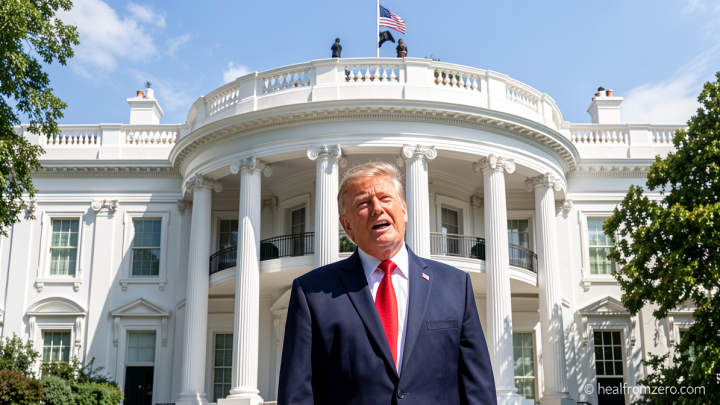
Trump asks Supreme Court to let him build ballroom, citing national security needs and architectural values

Trump Asks Supreme Court to Let Him Build White House Ballroom
Healfromzero.com – Trump asks Supreme Court to let him proceed with the controversial White House ballroom project, arguing that national security needs and constitutional authority justify moving forward despite lower court injunctions. The emergency petition, filed Friday, marks the first time one of Trump’s signature initiatives has reached the nation’s highest court, testing executive power over federal property.
The filing follows a series of judicial setbacks for the administration. Lower courts have consistently held that Congress must authorize the transformation of White House grounds before the president can act unilaterally. The most recent setback came last week when the Washington, DC, Court of Appeals ruled that Trump exceeded his authority by advancing construction at the former East Wing site without legislative approval.
Security Arguments Take Center Stage
US Solicitor General John Sauer’s petition emphasizes that the ballroom serves a critical protective function beyond architectural ambition. The filing highlights multiple attempts on Trump’s life over recent years as evidence that the structure is “absolutely required” for presidential safety. Sauer’s argument frames the president not as a mere occupant but as the constitutional head of the Executive Branch with inherent authority to secure the White House.
“The President of the United States of America is not a tenant, but rather the sole, elected head of the Executive Branch, and Congress has authorized him to renovate, secure, and protect the White House and its grounds, as other Presidents have been allowed to do, without exception,” Sauer wrote in the petition.
The solicitor general characterized the lower courts’ injunction as exceeding judicial boundaries, calling it “judicial overreach beyond the proper province of the federal courts.” This framing suggests that the separation of powers doctrine favors executive discretion in matters of presidential security.
Architectural Evolution and Construction Progress
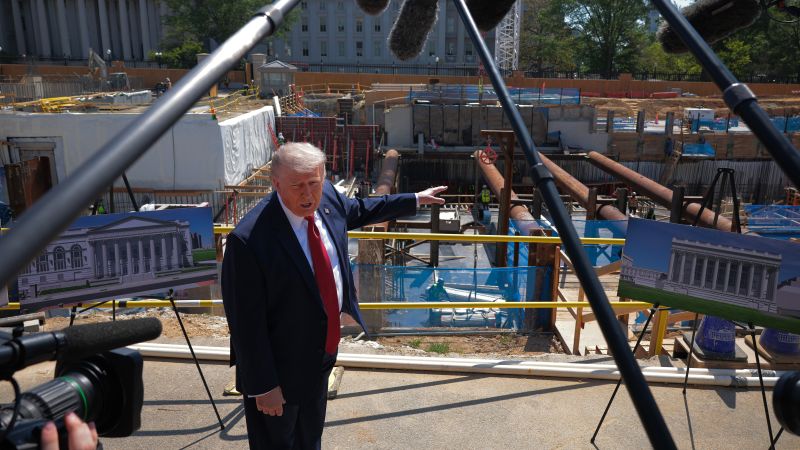
The Supreme Court filing includes updated renderings revealing stylistic modifications to the ballroom design. Most notably, the exterior now features at least two large presidential seals rendered in gold, signaling the structure’s symbolic importance. Above-grade construction commenced in spring and has advanced substantially, with photographs showing concrete support columns, metal rebar, and a towering crane dominating the site.
The ballroom’s scale dwarfs the existing White House complex. According to lead architect Shalom Baranes, the sprawling project encompasses approximately 89,000 square feet—substantially larger than the Executive Mansion’s 55,000 square feet. Trump has maintained personal oversight of design decisions, from floor plans to marble selections, reflecting his commitment to the project’s completion by summer 2028, an accelerated timeline that precedes his anticipated departure from office.
Legal Challenges and the Preservation Movement
The National Trust for Historic Preservation initiated the legal challenge last year, arguing that Congress never surrendered comprehensive authority over White House modifications to the executive branch. The DC Circuit’s August 7 ruling, delivered in a 2-1 decision, echoed this position, stating that “whether or not a massive ballroom should be constructed is for Congress to decide and is not a matter for Executive self-help.”
“The National Trust has shown, compellingly, that Congress has not ceded unfettered authority to the Executive Branch to dramatically redesign, reshape, and reconstruct the White House – the People’s House – to fit a particular President’s desires,” the appeals court concluded.
Despite the injunction, both lower courts permitted construction of an underground bunker beneath the ballroom to continue. The administration argues this carveout proves insufficient, with Sauer noting that “the entire ballroom structure is designed to shield the military installation beneath it.” Halting above-ground work, the filing contends, would stall vital security infrastructure and endanger both the current president and future occupants.
Broader Implications for Executive Power
This case arrives amid a wave of litigation challenging Trump’s approach to governance. Lower courts have scrutinized numerous initiatives, often expressing skepticism toward arguments defending executive overreach. The ballroom petition thus carries implications extending beyond architectural debate, potentially reshaping how future administrations interpret their authority over federal property.
Frequently Asked Questions
What is Trump asking the Supreme Court to do?
Trump asks Supreme Court to let him proceed with the White House ballroom construction despite lower court injunctions blocking the project. The petition seeks to overturn rulings that Congress must authorize the transformation of White House grounds before the president can act unilaterally.
Why does Trump believe the ballroom is necessary?
The administration argues the ballroom serves critical national security needs, citing multiple attempts on Trump’s life and the structure’s role in shielding an underground military bunker. The filing claims the ballroom is “absolutely required” for presidential safety.
What is the current status of the construction?
Above-grade construction began in spring and has advanced substantially. The project encompasses approximately 89,000 square feet and is on track for completion by summer 2028. Both lower courts permitted the underground bunker to continue despite the injunction on above-ground work.
Who filed the legal challenge against the ballroom?
The National Trust for Historic Preservation initiated the legal challenge last year, arguing that Congress never surrendered comprehensive authority over White House modifications to the executive branch. The DC Circuit’s August 7 ruling supported this position in a 2-1 decision.