Reflecting Pool saga continues with another contractor hired to clean the algae

Reflecting Pool Saga Continues: New Contractor Hired
Healfromzero.com – The Reflecting Pool saga continues into yet another chapter. What began as a restoration effort aligned with the nation’s 250th anniversary has devolved into a prolonged, expensive, and politically fraught ordeal. Last week, the Department of the Interior issued a new contract assigning a different outside firm the task of repairing and maintaining the pool’s sewage and water-purification systems — the latest in a string of interventions that have failed to restore the landmark to working order.
A Renewable-Energy Firm Takes the Contract
American Ag Energy, a Massachusetts company whose primary business is renewable-energy technology, will receive $2.7 million under a one-year agreement to service the pool’s water infrastructure. Contract terms include options for five successive renewal years, which could lift the total obligation to $8.8 million. Interior officials did not answer follow-up questions about how this new arrangement overlaps with work already performed on the site.
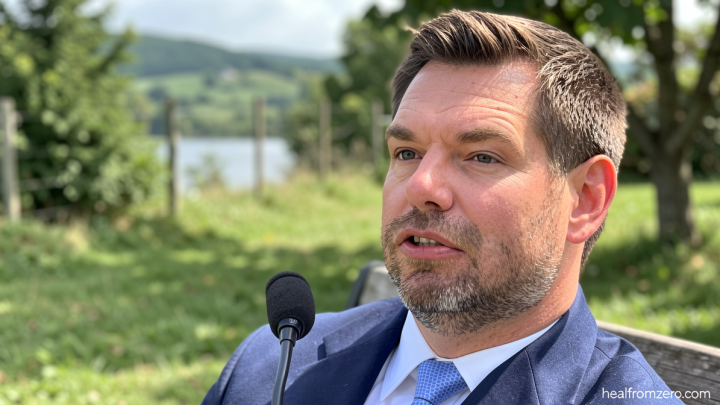
Richard Rosen, the firm’s chief executive, explained that a company director drew his attention to the algae problem, after which he read a news account of the issue. He then reached out to take on the job.
“I realized that I actually knew how to solve this problem,” Rosen said. “They want me to solve it the right way, okay, and they’re doing a very good job, trying to do the right thing and I will be very helpful to them.”
The “they” in that remark refers to the National Park Service, which oversees the memorial grounds. Rosen’s appointment, however, arrives alongside a personal legal history that has attracted renewed public scrutiny.
A Conviction, a Vacatur, and an Open Thread
In the prior year, a court found Rosen guilty of voter fraud after he cast ballots in both Massachusetts and New Hampshire during the 2016 presidential election. The sentence included seven days in jail and the forfeiture of his New Hampshire voting rights. Earlier this year, the state supreme court vacated the conviction, concluding that a superior-court judge had made erroneous evidentiary rulings at trial. Rosen said he is now in mediation with the New Hampshire attorney general’s office; the charges remain eligible for refiling after the case was remanded to Grafton County Superior Court. The AG’s office had not supplied additional detail as of publication.
Escalating Costs and a Lengthening Timeline
Spending has been the project’s most persistent point of contention. Initial projections placed the restoration at roughly $2 million to $3 million. That figure was later revised upward to “less than $20 million.” By the time the newest contract was factored in this summer, cumulative outlays had already exceeded $14 million — more than four times the original low-end estimate — with further obligations potentially looming under the multi-year extension clauses.
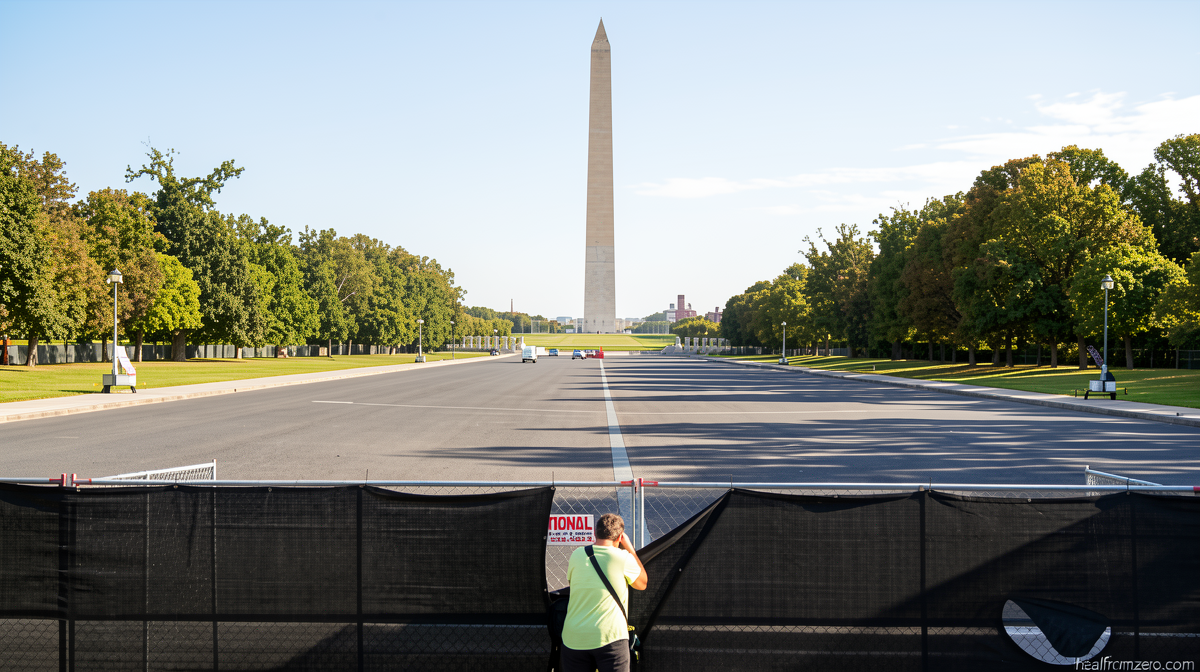
The restoration was launched under an executive order directing that the capital be made “safe and beautiful.” In practice, setbacks have accompanied the project from its earliest stages, and the Reflecting Pool saga continues to generate headlines rather than a functional water feature.
From Liner Failure to Algae to Arrests
In May, the president drove his motorcade across the drained basin to inspect the site. At that point the pool floor had been coated with a liner officials described as “American flag blue.” Once water was reintroduced, algae rapidly turned the surface green. The administration responded by contracting Greenwater Services, an Ohio-based firm whose co-owner, J.J. Cafaro, is a longtime supporter and donor to the president. Under a $1.7 million agreement, Greenwater deployed ozone nanobubbler technology to treat the water. The algae persisted.
Compounding the problem, the blue liner at the basin’s bottom began peeling shortly afterward. The president attributed the damage to vandals. That characterization gained traction this summer when multiple individuals were arrested and charged with damaging the pool. For most of those charged, the offense carried a maximum penalty of a $1,000 fine and 180 days in prison.
The most prominent case involved David Hearn, an Olympic canoeist, who in July faced a felony charge of destruction of property carrying a potential sentence of up to 10 years. The Justice Department subsequently dropped the criminal case against Hearn.
Frequently Asked Questions
Who currently manages the Lincoln Reflecting Pool? The National Park Service oversees the memorial grounds, including the pool. Contract work on water systems is outsourced to private firms under Interior Department agreements.
How much has the restoration cost so far? Cumulative spending surpassed $14 million by mid-summer, well above the original $2–3 million projection. The newest contract alone carries a ceiling of $8.8 million if all renewal options are exercised.
What technology is being used to treat the algae? The prior contractor, Greenwater Services, applied ozone nanobubbler technology under a $1.7 million contract. The new contractor, American Ag Energy, has not publicly detailed its specific treatment approach.
Can visitors still see the pool? The pool has been intermittently drained or filled during the restoration period. Visitors should check National Park Service advisories for current access status before planning a visit to the Lincoln Memorial grounds.