Congress votes to avert government shutdown ahead of midterm elections

Daftar Isi
Lawmakers Sidestep Shutdown Fight to Chase Voters in November
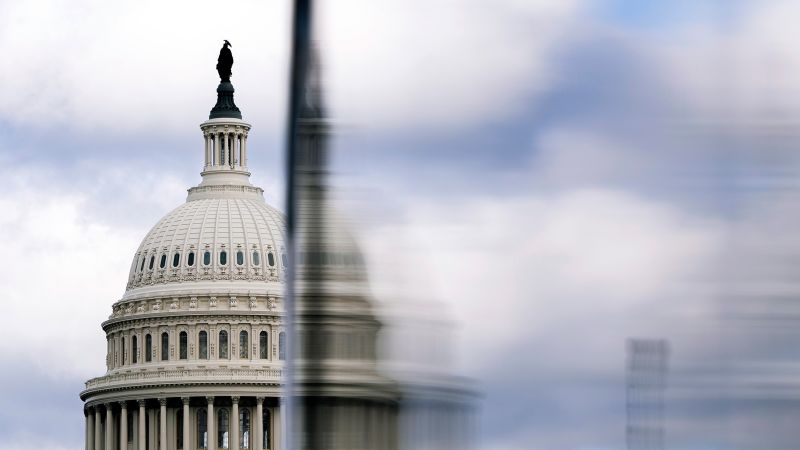
Healfromzero.com – With weeks separating Washington from the November ballot box, members of Congress moved swiftly on Tuesday to keep the federal government funded through December 11, effectively removing the specter of a shutdown from the political landscape during the most consequential stretch of the campaign calendar. The House approved the measure by a wide bipartisan margin, sending it straight to President Donald Trump’s desk for signature. The action extends appropriations past the September 30 expiration date that would otherwise have left thousands of agencies without legal authority to operate.
The vote carried remarkably little drama. No floor speeches stretched into the night. No whip counts circulated with urgency. Instead, the chamber processed the bill in a matter of hours, a pace that reflected a shared desire among both parties to clear the legislative calendar and return to district-level campaigning. For many members, the question was never whether to fund the government but how quickly to finish the procedural choreography so they could be back in their home states before the final advertising blitz of the fall season.
What the Extension Actually Does
The bill in question is a short-term continuing resolution, a legislative instrument that keeps existing agency budgets running at current levels for a defined window rather than authorizing new spending. By pushing the funding deadline to December 11, Congress buys roughly two months of operational continuity. Federal employees retain paychecks, contractors continue receiving invoices, and agencies such as the FAA, TSA, and national parks service avoid the furlough cascades that accompany a lapse in appropriations.
For the average American, the practical effect is invisibility. No airport closures, no delayed passport processing, no suspended Social Security checks. That invisibility is precisely the point: neither party wanted a shutdown to dominate the final weeks of a race in which the composition of both chambers hangs in the balance. A government lapse would have handed opponents a ready-made narrative about fiscal irresponsibility, and both sides preferred to avoid handing that gift to the other.
Where the Senate and House Versions Diverged
The measure the House voted on Tuesday was not the version its own leadership had drafted earlier in the session. Instead, lawmakers took up the Senate’s formulation of the short-term funding package, which that chamber had approved last month before adjourning for August recess. The two texts carried meaningful structural differences.
Most notably, the Senate version omitted line-item funding for Immigration and Customs Enforcement and Customs and Border Protection. Those two agencies already possess dedicated appropriations that run through the end of President Trump’s term, so including them in a continuing resolution would have been redundant. Their exclusion streamlined the bill and removed a potential point of contention over border-enforcement spending levels.
A second distinction involved a temporary moratorium on a proposed administration rule that, in the view of several members, would further politicize the distribution of federal grants. The rule in question would have altered eligibility criteria tied to congressional district allocations, and critics argued that implementing it mid-cycle would tilt resources toward districts favoring one party. The Senate’s temporary block pauses that process until after the election, a compromise that allowed the bill to clear both chambers without a protracted amendment fight.
The Midterm Stakes Behind the Procedure
Control of both the House and the Senate is up for grabs in November. The party that holds both chambers gains agenda-setting power over tax policy, judicial nominations, oversight investigations, and the next round of appropriations. In that context, a government shutdown would have functioned as a forced referendum on fiscal governance, pulling voter attention away from candidate-specific issues and toward institutional dysfunction. By resolving the funding question now, both parties preserve the ability to frame the final weeks around their own policy priorities rather than around the mechanics of keeping the lights on.
The speed of Tuesday’s vote also signals a broader pattern: Congress has increasingly treated short-term funding extensions as routine plumbing rather than as moments of constitutional significance. The legislative calendar, compressed by the election cycle, leaves little room for the extended negotiation that once characterized annual budget fights. What remains is a series of stopgaps, each one a small concession that the next deadline will arrive before a permanent solution is negotiated.
A Congress That Broke Its Own Record
This particular Congress holds the distinction of presiding over the longest government shutdown in American history, a lapse that stretched for weeks and forced furloughs across dozens of agencies. That episode made funding extensions a recurring point of friction throughout the session, with each party accusing the other of using appropriations as leverage for policy concessions. The record-setting shutdown left a residue of institutional fatigue: staff at agencies such as the Department of the Interior, the National Park Service, and the Centers for Disease Control and Prevention still carry the operational scars of that period.
Tuesday’s quiet passage, then, was not merely a procedural formality. It was a collective decision to close a chapter that had consumed disproportionate political capital and to redirect institutional energy toward the question voters will actually answer in November: who controls the levers of federal policy for the next two years.
The vote carried no fanfare, no extended debate, and no public spectacle. What it accomplished was quieter and more consequential: it kept the government open long enough for the electorate to decide who runs it next.
President Trump is expected to sign the measure promptly, completing the legislative loop. Once signed, the extension takes effect immediately, and the September 30 deadline becomes a historical footnote rather than an operational cliff. Agencies will continue operating under existing budget authority through December 11, after which Congress will face the next appropriations decision — one that will arrive, inevitably, in the middle of a new political cycle.
Related Reading
Frequently Asked Questions
What is Congress votes to avert government shutdown?
Congress votes to avert government shutdown is the main topic of this guide. The article explains the context, practical details, and next steps readers should understand.
Why does Congress votes to avert government shutdown matter?
Congress votes to avert government shutdown matters because readers are looking for a useful answer, not just a short summary. Good content should match search intent and help them decide what to do next.