
Progressives look to Colorado as next test of a rising movement
Progressives Look to Colorado as Next Test of a Rising Movement
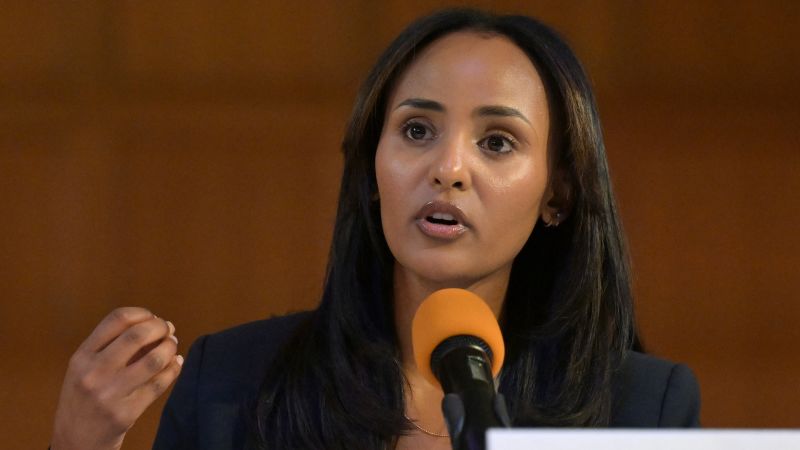
Progressives look to Colorado as next – Colorado’s 1st Congressional District has emerged as a focal point for the expanding progressive movement, following a string of unexpected victories in New York that reignited hopes for a shift in political dynamics. Melat Kiros, a 29-year-old democratic socialist and attorney, is now vying for the Democratic seat currently held by 15-term Rep. Diana DeGette, a race that has drawn significant attention from activists eager to gauge the movement’s strength. Kiros and her allies believe voters in Denver are primed for a change, particularly in light of the Democratic Party’s perceived inability to adequately address key issues facing working-class communities.
Kiros’ campaign is part of a broader strategy by progressive groups to challenge established leaders, leveraging momentum from recent wins. However, as the primary election approaches, some within the party caution against overinterpreting the results. Ted Trimpa, a seasoned Democratic strategist, emphasized that while New York’s success is notable, Denver’s political landscape presents unique challenges. “Mamdani isn’t the messiah for Democrats,” Trimpa said. “If they think he is, they’re wandering around the wrong desert.” His comments underscore a growing concern that the party’s base may not be as unified as the recent victories suggest.
The Colorado race has also highlighted the state’s distinct political environment. Nearly half of its voters are unaffiliated, creating a more fluid electorate that often tilts toward moderate candidates. Despite Democrats controlling both Senate seats and the governorship, the party has historically struggled to dominate the state due to its reliance on centrist figures. This trend, however, is now being questioned as progressive voices gain traction. Gov. Jared Polis, for instance, faced criticism last month after granting clemency to Tina Peters, an election denier linked to efforts to challenge election results. Similarly, the state’s senators, one of whom is running for governor, have drawn backlash for their support of Trump administration appointees.
Within hours of Assemblymembers Claire Valdez and Darializa Avila Chevalier securing wins in their New York primary races, other Justice Democrats-backed candidates began coordinating strategies to support Kiros. The group, which champions progressive candidates opposed to corporate PACs, has been actively mobilizing to amplify its influence. “Every race this cycle has added more momentum to the next,” said Usamah Andrabi, a Justice Democrats spokesperson. “What we’ve been really proud of is how much every candidate of ours who wins tries to pay it forward to the next.” This collaborative approach reflects the movement’s growing organizational power, even as it faces skepticism from traditional party insiders.
DeGette, the incumbent, has encountered primary challenges before, but Democratic strategists in the state suggest this could be her most formidable race in recent years. Both Kiros and DeGette sought ballot access through the party-run caucus system, requiring support from 30% of Democratic activists. While DeGette barely cleared the threshold, Kiros outperformed her, prompting the incumbent to intensify her campaign efforts. “I think this is probably the strongest challenge she’s ever faced, but I also think she’s taking it as seriously as it needs to be,” said an anonymous Colorado Democratic strategist. “I wouldn’t be shocked if either outcome happens.” The race has also drawn a third candidate, University of Colorado Regent Wanda James, who qualified through a petition drive, further complicating the field.
At the heart of the contest is the question of who best represents the Democratic Party’s values in the face of national debates. DeGette, in a statement to CNN, defended her position, asserting she is focused on local concerns. “I’m running hard and talking to voters every day about what matters to families here, not national narratives playing out in other states,” she said. Meanwhile, Kiros has positioned herself as a bold voice on issues like US-Israel relations, a stance that has both energized her base and drawn scrutiny from more centrist Democrats.
Kiros’ progressive platform has been tested in recent months. In 2023, she was fired from a law firm after refusing to remove an open letter that argued student protesters’ calls for Israel’s elimination should not be equated with antisemitism. The letter, which gained traction among younger activists, became a symbol of her willingness to confront mainstream narratives. However, her comments on US-Israel policy have also sparked controversy. For example, she recently faced criticism for declining to label a firebomb attack on supporters of Israeli hostages as antisemitism. The incident, which left one person dead and dozens injured, was linked to Hamas by investigators, though Kiros’ stance has drawn sharp debate within the Democratic Party.
As the primary race unfolds, the 1st District has become a microcosm of the broader struggle between progressive and moderate forces in the Democratic Party. The candidates’ positions on issues like corporate influence, foreign policy, and electoral integrity are shaping the narrative, with Kiros’ unapologetic approach challenging the status quo. While some see her as a symbol of a new era, others remain cautious, noting that Denver’s voters may not yet align with the movement’s radical vision. “This is a test of whether the party can embrace a more progressive direction,” said Trimpa, reflecting the tension between tradition and transformation.
The contest also mirrors a national trend where cities like New York, Seattle, and Washington, D.C., are increasingly electing democratic socialist leaders. Kiros’ campaign in Denver is part of this wave, aiming to prove that the movement can extend beyond urban centers and into key congressional races. Her message resonates with voters frustrated by economic inequality and corporate influence, but the challenge lies in translating this enthusiasm into a tangible electoral victory. As the primary day nears, the stakes are high, with both candidates vying to shape the future of the Democratic Party’s direction in a pivotal state.
The New Power Broker: How Zohran Mamdani Muscled NYC’s Democratic Establishment
Zohran Mamdani’s influence in New York City has been instrumental in the success of progressive candidates, particularly in the recent House races. By endorsing a slate of candidates across multiple districts, Mamdani has positioned himself as a key figure in the Democratic Party’s left wing. His strategy has not only bolstered the movement’s visibility but also demonstrated the power of grassroots organizing in overcoming traditional party hierarchies. Yet, as his impact grows, some are questioning whether his endorsements can sustain momentum beyond the primary stage.
Mamdani’s ability to navigate the city’s political landscape has been a defining feature of his rise. While he has faced criticism for his ideological stance, his support for candidates who prioritize issues like climate action, healthcare reform, and labor rights has resonated with a younger, more activist-oriented electorate. This shift has forced established Democrats to reconsider their approach, as the party’s base increasingly demands leaders who align with their values rather than compromise for broader appeal.
Despite these successes, the Colorado race highlights the challenges of translating momentum into tangible results. Trimpa’s warning that Denver is not New York City underscores the importance of adapting strategies to local contexts. While Mamdani’s influence may have accelerated the movement’s ascent, the outcome in Colorado will determine whether it can maintain that momentum in a more politically diverse state. The race has also drawn attention to the role of independent voters, who may hold the balance of power between progressive and moderate candidates.
From New York to Seattle to DC: A Broader Movement Taking Shape
The victories in New York are part of a larger pattern of progressive gains across the country, with cities like Seattle and Washington, D.C., also seeing the rise of democratic socialist candidates. These wins have emboldened activists who previously felt marginalized by the party’s leadership, creating a sense of urgency to push for more transformative policies. Kiros’ campaign, however, is just one example of how this movement is expanding beyond urban areas, with the 1st Congressional District race serving as a test of its reach into the heart of Colorado’s political terrain.
As the movement gains traction, it is increasingly shaping the Democratic Party’s agenda, challenging long-standing norms of compromise. Kiros’ ability to connect with voters through her direct and unfiltered messaging has set her apart from more traditional candidates. Her focus on issues like economic inequality, climate justice, and anti-war sentiment has appealed to a coalition of younger voters and working-class communities, indicating a broader realignment in the party’s priorities.
Yet, the movement’s success in Colorado hinges on its capacity to translate this energy into a win. The state’s political structure, which has historically favored moderate candidates, presents a unique challenge. DeGette’s campaign, while facing a strong progressive opponent, is leveraging her experience and local ties to counter the momentum. The race is also a reminder that even in states with progressive leanings, the path to victory is never guaranteed. As the primary approaches, the candidates’ ability to navigate these dynamics will determine the future of the Democratic Party in Colorado—and perhaps beyond.
“I think voters have realized that the party and leadership are failing to meet this moment in a meaningful way, and it’s time for leaders who are actually going to be fighting for the interests of working people,” said Melat Kiros. “This isn’t just about winning a seat—it’s about reshaping the conversation around what it means to be a