Pete Buttigieg returns to first-in-the-nation South Carolina with a fresh appeal to Black voters

Daftar Isi
Buttigieg Targets South Carolina’s Black Electorate as 2028 Primary Calendar Takes Shape
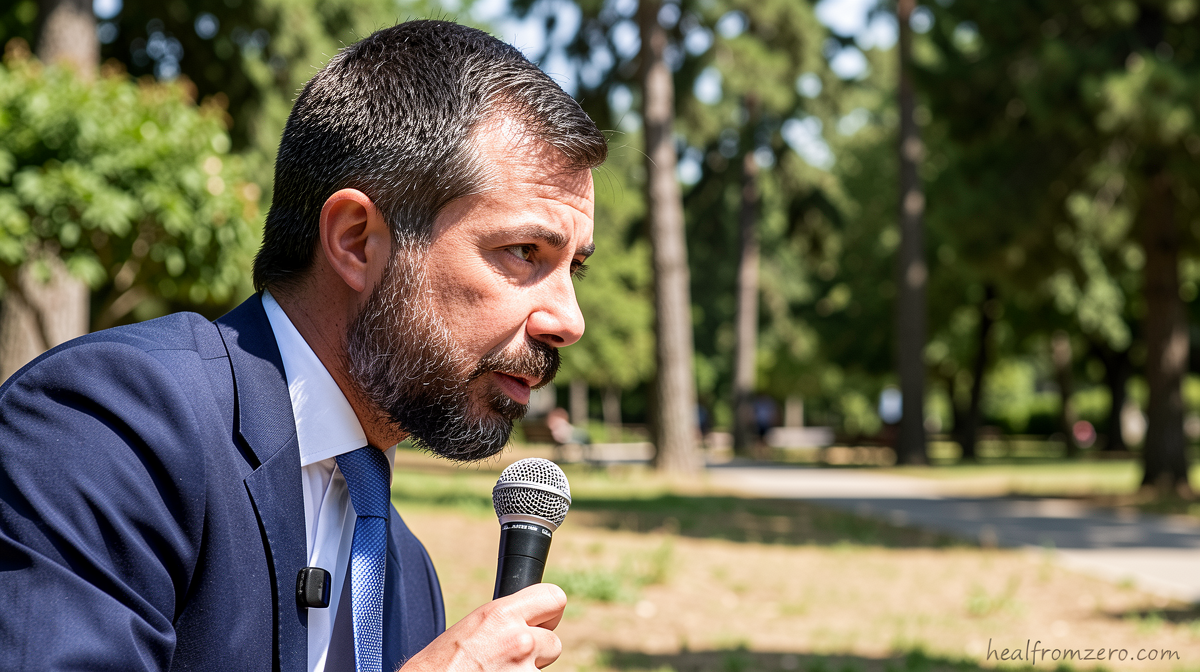
Healfromzero.com – The Democratic National Committee’s August 15 decision to retain South Carolina as the nation’s first presidential primary state has transformed the Palmetto State into a proving ground for would-be candidates. Pete Buttigieg, now a private citizen after leaving the Biden administration’s transportation portfolio, made his first major post-government visit to the state this weekend, threading a schedule through Florence, Columbia, and surrounding communities with one clear objective: rebuilding relationships with Black voters who watched his 2020 campaign stall and ultimately collapse within their borders.
A Day Built Around Black Political Power
Florence, a compact city in South Carolina’s Midlands with deep roots in the state’s civil rights history, hosted the bulk of Buttigieg’s weekend programming. He opened with a morning address to party activists, framing Republican redistricting efforts not as routine map-drawing but as something far more deliberate.
“The culmination of a generational project to dismantle Black representation.”
That framing positioned him squarely within the ongoing national debate over how gerrymandering and voter-access restrictions intersect with racial representation in Congress. Afterward, he sat down for a roundtable at a historically Black college, where the conversation turned to his long-stated position on reparations for slavery — a policy stance that remains a dividing line within the Democratic coalition.
The evening brought him before a storied NAACP branch in Florence, where he drew explicit parallels between the current political moment and the civil rights confrontations that played out in Orangeburg during the 1960s.
“The mid-2020s does not represent our nation’s first experience with corruption and self-dealing, with bigotry and exclusion, with inequality and injustice, with undemocratic behavior or with political violence.”
He stressed that those earlier struggles unfolded “not on some distant shore, but in places like Orangeburg,” anchoring his argument in local geography rather than abstract history.
Economic Anxiety Versus Democratic Defense
With a midterm election approaching and both parties locked into cost-of-living messaging, Buttigieg used the platform to push back against what he characterized as a Democratic tendency to sideline structural questions about democracy in favor of narrower economic complaints. He invoked the legacy of Martin Luther King Jr. and Rev. Jesse Jackson to argue that Americans
“can — and we must — do both.”
The remark lands in a moment when internal party debates over whether to lead with inflation relief or with institutional-integrity messaging have grown increasingly public. By naming both tracks simultaneously, Buttigieg positioned himself against what he framed as a false choice.
The 2028 Question Hangs in the Air
Asked directly after his Florence speech whether he would seek the presidency again, Buttigieg deflected, telling reporters he is “totally focused on 2026.” Yet the weekend carried unmistakable signals of a longer horizon. Homemade signs reading “PETE” and “2028” appeared as he took the stage. Surveying the crowd, he remarked he should “come here more often.”
The speculation drew a pointed response from across the candidate field. Izzy Gardon, spokesperson for California Governor Gavin Newsom — himself a potential 2028 contender — posted on X on Sunday: “First time in SC in 3 years? Nice!” The sarcasm underscored how closely rivals are now monitoring each other’s state-by-state movements.
Buttigieg’s weekend also included a private meet-and-greet in the Columbia area hosted by former Columbia Mayor Stephen Benjamin, followed by Sunday worship at Brookland Baptist Church. The itinerary read less like a single-event appearance and more like a sustained engagement strategy.
Why South Carolina Still Decides
The state’s weight in the nominating process is not incidental. Its large Black electorate — concentrated in the Lowcountry and Midlands — has historically served as an early filter for candidates seeking broad Democratic coalitions. The DNC’s decision to keep South Carolina first in line amplifies that filter effect, making the state’s Black voters effectively the first major constituency a candidate must persuade before any other primary.
For Buttigieg, the stakes are personal as well as political. His 2020 run, which won the Iowa caucuses on a predominantly White demographic, found its ceiling in South Carolina. After Rep. Jim Clyburn, a powerful local Democrat, endorsed Joe Biden and injected momentum into the former vice president’s bid, Buttigieg’s campaign lost its remaining viability in the state and ultimately in the race. That episode left a durable impression among Black voters who saw a candidate unable to convert name recognition into electoral support.
Marlon Kimpson, a Black former state senator who backed Biden in the 2020 primary, offered a measured assessment of the changed landscape. He acknowledged that Buttigieg now enters any contest with name recognition and a favorable starting position.
“The Pete Buttigieg of 2020 is not the Pete Buttigieg of 2026. He has name recognition, he’s no longer introducing himself. I think people generally like Pete, and that’s a big deal in an open race because he starts out at a plus.”
Kimpson then pivoted to what he saw as the unresolved questions: Buttigieg’s economic agenda as it would affect ordinary South Carolinians, with particular emphasis on the African American community, and the depth of political infrastructure the former transportation secretary has actually deployed within the state.
Among the weekend attendees, enthusiasm was visible. Karen Ench, a 64-year-old retiree, arrived at the Florence speech wearing a “Pete Buttigieg 2028” shirt. Reflecting afterward, she said she believed he was “really taking it much more serious” and concentrating on areas where his 2020 effort fell short.
What Comes Next
The weekend marks the opening move in what Buttigieg’s team appears to be treating as a multi-state, multi-month effort to re-establish credibility with the Black electorate before any formal announcement. Whether that effort succeeds will depend less on the rhetoric delivered in Florence and more on the sustained, on-the-ground political work that follows — the kind of infrastructure building that Kimpson and other local operatives will be watching closely as the 2028 calendar tightens.
Related Reading
Frequently Asked Questions
What is Pete Buttigieg returns to first?
Pete Buttigieg returns to first is the main topic of this guide. The article explains the context, practical details, and next steps readers should understand.
Why does Pete Buttigieg returns to first matter?
Pete Buttigieg returns to first matters because readers are looking for a useful answer, not just a short summary. Good content should match search intent and help them decide what to do next.