No, Iran is not winning: In Act IV of the war, it’s losing its leverage in Hormuz

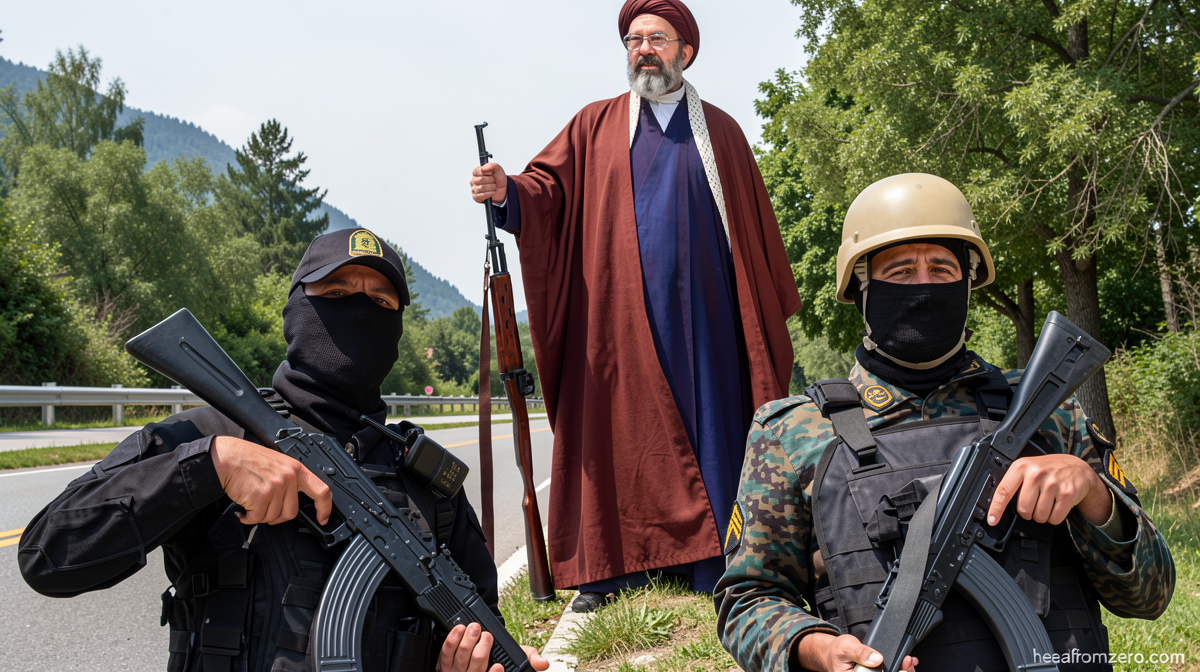
Iran’s Hormuz Leverage Is Collapsing
Healfromzero.com – No Iran is not winning, despite what a persistent narrative has suggested over the past several months. The argument ran like this: Washington and Jerusalem dropped thousands of tons of ordnance across Iranian territory, Tehran refused sweeping concessions, its government remained intact, its ballistic missile arsenal still overhangs neighboring capitals, and—most critically—the Islamic Republic kept the ability to choke the narrow waterway through which roughly one-fifth of the world’s daily oil supply transits. President Trump himself warned during the summer that a prolonged closure of the strait could tip the global economy into depression. On the surface, that calculus made Tehran look like the victor of a war it never formally declared.
Yet the arithmetic of leverage has inverted sharply since mid-July, and the latest economic and military data tell a far less flattering story. What began as a contest of endurance has become, for Iran, a contest of survival. No Iran is not winning in the fourth act of this conflict.
Four Acts of a Six-Month War
The campaign that unfolded between February and August followed a recognizable dramatic arc. Act one launched on February 28 with a sustained barrage of precision airstrikes, followed by roughly six weeks of high-intensity operations that degraded much of Iran’s command hierarchy and air-defense network. Act two commenced with the April 7 ceasefire and a subsequent round of negotiations that produced a memorandum of understanding on June 17, signed by Trump and Iranian President Masoud Pezeshkian. Act three arrived weeks later when Tehran resumed targeting commercial vessels transiting the strait, triggering another cycle of retaliatory strikes. It was during that phase that voices in Washington and allied capitals began arguing the United States had exhausted its options and should effectively cede control of the waterway to Iran.
Act four, however, has rewritten the script entirely. Beginning in mid-July, Washington reimposed a military blockade on Iranian ports and tightened sanctions on the country’s oil exports. Simultaneously, American naval forces intensified operations to clear shipping lanes and escort commercial tankers through the strait. The cumulative effect has been a functional embargo on Iranian crude shipments while global energy flows have stabilized. Oil transit volumes through the strait have recovered to approximately two-thirds of their pre-war levels—a figure that underscores how quickly the pressure differential has flipped.
An Economy Under Siege
The numbers from Tehran’s own institutions paint a grim picture. The International Monetary Fund projects that Iran’s gross domestic product will shrink by more than five percent this year, while headline inflation is approaching seventy percent. The rial has depreciated sharply against major currencies, and retail prices for staple foods and fuel have climbed steeply. An official from Iran’s Labor Ministry recently estimated that over one million jobs vanished during the first three months of the war alone. These are not abstract macroeconomic indicators; they translate directly into household hardship, social unrest, and a shrinking fiscal base from which the state must fund both governance and military operations.
Before the conflict began, the regime already faced an unprecedented wave of domestic dissent. Thousands of Iranians were reportedly killed in street protests demanding political reform and economic relief. The initial military campaign removed most of the country’s senior leadership, which in turn empowered the Islamic Revolutionary Guard Corps to consolidate authority through further repression. But the Guards, for all their institutional reach, require resources to govern by force. A sustained military embargo on Iran’s primary export artery is a pressure they have never had to absorb.
Since the 1979 Revolution, Iran has never faced a comprehensive quarantine on its economic lifeline through the Strait of Hormuz. Previous sanctions regimes constrained trade but did not physically interdict the flow of tankers through the waterway. What Tehran confronts now is something qualitatively different: a naval cordon that simultaneously blocks its own exports while protecting rival shipping.
The strategic calculus has inverted. Pressure now compounds on Iran, not on the United States. The path out of this predicament is, in principle, straightforward: Tehran could cease threatening vessels in the strait and formally abandon what remains of its uranium enrichment program—a concession that Trump has repeatedly signaled would end the blockade and restore normal trade flows. Whether the regime’s internal dynamics permit such a concession remains the central question of the coming weeks.
Frequently Asked Questions
Why does the Strait of Hormuz matter so much to global markets? Roughly one-fifth of the world’s daily oil supply transits the strait, making it the single most concentrated chokepoint in global energy logistics. Even a partial disruption sends prices spiking and forces buyers to reroute through longer, costlier pipelines.
What changed in mid-July that shifted leverage away from Iran? Washington reimposed a military blockade on Iranian ports, tightened sanctions on oil exports, and intensified naval escort operations for commercial tankers. The combined effect was a functional embargo on Iranian crude while global transit volumes recovered to about two-thirds of pre-war levels.
How severe is the economic damage inside Iran? The IMF projects a GDP contraction exceeding five percent for the year, headline inflation approaching seventy percent, and over one million jobs lost in the war’s first quarter alone. The rial’s sharp depreciation has compounded the cost-of-living crisis for ordinary households.
Is this situation historically unique for Iran? Yes. Since the 1979 Revolution, no prior sanctions regime has physically interdicted tanker traffic through Hormuz while simultaneously protecting rival shipping. The current naval cordon represents a qualitatively new form of economic pressure on the Islamic Republic.