Election denier Tina Peters released from prison

Election Denier Tina Peters Released from Prison
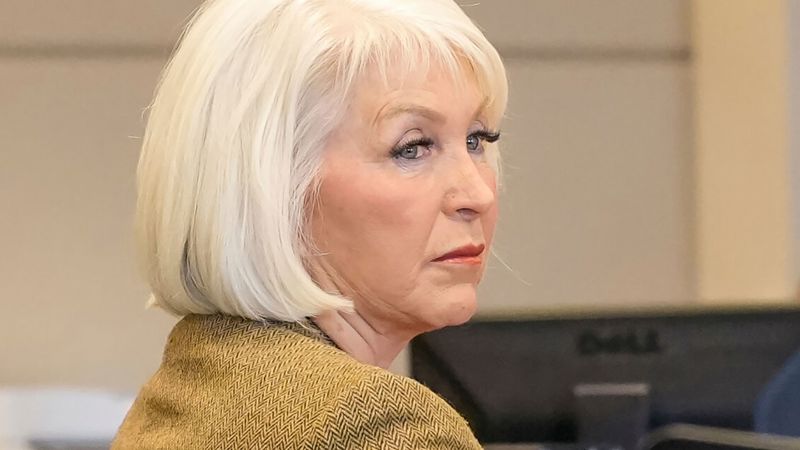
Election denier Tina Peters released – On Monday, Tina Peters, a prominent election denier, was released from a Colorado prison, according to officials. This development followed a controversial commutation granted by the state’s Democratic governor, who reduced her sentence by half just weeks prior. Peters, a former Republican county clerk from Mesa County, had been serving nearly nine years in prison for felony charges related to her role in a conspiracy to tamper with voting systems in an effort to support baseless claims of widespread voter fraud in the 2020 election.
The conviction came in 2024 after Peters was found guilty of conspiring with other election deniers to infiltrate her county’s voting infrastructure. Prosecutors argued that her actions were part of a broader campaign to undermine public confidence in the electoral process. She had been sentenced to almost nine years for these offenses, a punishment that was later cut to 4.5 years by Governor Jared Polis. By the time of her release, Peters had already served approximately one year and eight months of her reduced sentence, thanks in part to Colorado’s parole policies.
Her early release has become a symbolic victory for the election conspiracy movement, which has rallied around her case as a testament to the alleged efforts to suppress the 2020 election results. Until Monday, Peters was the last individual incarcerated for actions tied to Trump allies’ attempts to challenge the legitimacy of the election. Polis, a Democrat whose term concludes next year, announced the commutation on May 15, citing a recent appeals court ruling that found the trial judge had violated Peters’ First Amendment rights by penalizing her for speech related to the 2020 election. However, his decision was also justified by a series of claims that some critics argue were misleading or false.
“It was a straightforward decision because, after reviewing the facts, and reading the Appeals Court decision, I concluded that her sentence was simply too long,” Polis wrote in a Substack post on Sunday, where he criticized Peters’ actions.
Peters’ case has drawn sharp criticism from a bipartisan coalition of election officials, state prosecutors, and lawmakers. The Colorado Democratic Party even censured Polis for setting a “dangerous and disappointing precedent” with the commutation. Despite the backlash, Polis maintained that his decision was grounded in legal reasoning and not influenced by external pressures, such as those from former President Donald Trump. Trump, who closed a Colorado climate lab and denied federal disaster assistance, had previously granted a symbolic federal pardon to Peters, but she remained under state supervision.
Peters is currently appealing her conviction, asserting that she is innocent of the charges. In a recent interview, her lawyer, Peter Ticktin, pointed out that her acknowledgment of wrongdoing in the clemency application was more about admitting a procedural lapse than expressing genuine remorse. “She basically was admitting to the fact that she could have done it better,” Ticktin said. “It’s very hard to be someone who has real contrition. There’s a difference between regret and contrition.”
While in custody, Peters continued to promote her theories about the 2020 election through social media platforms, often with the help of allies. She claimed that Dominion Voting Systems’ machines had the capability to “flip votes,” a claim that has been repeatedly debunked by experts. Her actions during incarceration were part of a broader strategy to sustain public support for her narrative, even as she walked out of La Vista Correctional Facility in Pueblo, Colorado. Soon after her release, she appeared on Steve Bannon’s podcast, reiterating her belief that Democrats had cheated in the election.
“I know that the Democrats are going to cheat, and no one’s really addressing the problem that I spent my time in prison as retribution for,” Peters stated during the interview. “That was exposing the election machines that allow the votes to be flipped.” Her comments highlight the central role her conspiracy theories played in the alleged efforts to distort the 2020 election results. These claims, though widely discredited, were the driving force behind her decision to breach her county’s voting equipment in 2021.
Polis’ letter granting clemency emphasized Peters’ “taking responsibility for your crimes,” a sentiment he also reiterated in a CNN interview the same day. Yet, the governor’s position contrasts with that of her legal team, which argues that her admission of wrongdoing was more of a tactical concession than a sign of contrition. “She’s also expressed contrition now with this statement,” Polis told CNN, but Ticktin remains skeptical, insisting that Peters’ statements were not a true reflection of her feelings.
As her release garners attention, the political implications of the case remain significant. Trump’s continued support for Peters and the broader election denial movement underscores the ongoing influence of his rhetoric on state-level politics. The decision to commute her sentence has been viewed as a strategic move to bolster his narrative, even as critics argue it weakens the rule of law. Peters, however, remains focused on clearing her name, stating that she will “make sure that my actions always follow the law” moving forward.
The case has also sparked broader debates about the balance between free speech and electoral integrity. While Polis cited the appeals court ruling as a key factor, some legal analysts question whether the First Amendment justification was sufficient to justify such a drastic reduction in her sentence. As Peters steps into the spotlight once more, her continued advocacy for election conspiracy theories serves as a reminder of the enduring impact of her actions on the political landscape.