Whole grains are good for your heart. How do you know if you’re eating enough?

Daftar Isi
Whole grains are good for your heart: How much is enough?
Healfromzero.com – Whole grains are good for your heart, and adding them to everyday meals may be a practical way to support cardiovascular health. A review of clinical research found that eating about three servings a day was associated with modest improvements in several measures linked to heart and metabolic health.
The analysis, published in the European Heart Journal, reviewed dozens of studies examining the effects of whole-grain foods. Benefits appeared at roughly 90 grams a day, or about three servings. That amount could include a bowl of oatmeal and two slices of whole wheat bread. Eating four to six servings a day was associated with stronger results in some studies.
What the research found
Participants in the reviewed trials consumed three to six servings of whole grains for periods ranging from two weeks to two years. Researchers reported small improvements across about a dozen health markers, including total cholesterol, LDL cholesterol, blood pressure, body weight and waist circumference.
Those individual changes were modest, but their overall pattern supports earlier research connecting whole-grain diets with lower risks of heart disease, high blood pressure, high cholesterol and type 2 diabetes. Dagfinn Aune, a research fellow at Imperial College London’s School of Public Health and a coauthor of the meta-analysis, said the findings suggest a likely direct effect from eating whole grains that may reduce cardiovascular risk.
“Likely a causal effect” that “may translate into a reduced risk of cardiovascular disease.”
Whole grains are good for your health as part of an overall dietary pattern, not as a stand-alone solution. Food choices, physical activity, medical history and other lifestyle factors all contribute to heart health.
Whole grains versus refined grains
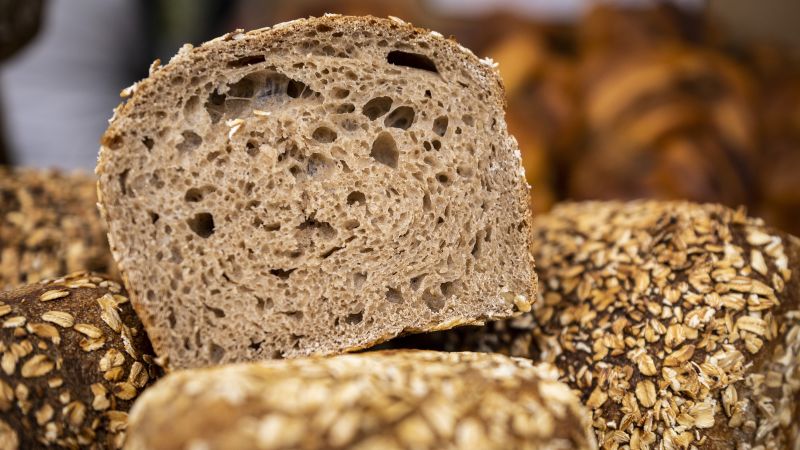
Whole grains retain all of their natural components. Oatmeal, brown rice, quinoa, farro, popcorn and whole wheat bread are examples. Refined grains, such as white rice and foods made with white flour, have had portions of the grain removed. Those removed parts contain much of the fiber and other nutrients.
The most useful change is often replacing a refined-grain food with a whole-grain alternative instead of simply adding more grain foods to the diet. For example, a person might choose brown rice instead of white rice, oatmeal instead of a refined breakfast cereal, or whole wheat bread instead of white bread.
Alice Lichtenstein, a professor at Tufts University’s Friedman School of Nutrition Science and Policy who was not involved in the analysis, noted that the quality of the overall meal remains important.
“If you eat a cinnamon bun made of whole grain, as opposed to a cinnamon bun made with refined grain, I’m not sure you’re going to see a benefit.”
Adding grain foods just to meet a numerical goal can also increase calorie intake if it means eating more food overall. Replacing refined products is generally a more practical approach than piling additional servings onto the plate.
A realistic daily goal
Many Americans do not reach the two to four daily servings of whole grains suggested in the Dietary Guidelines for Americans. One serving can be one slice of whole wheat bread or one-half cup of cooked oatmeal, brown rice or quinoa.
The American Heart Association encourages people to choose whole-grain foods, although a single daily target may not suit everyone. Nutrition needs vary according to body size, genetics, activity level and the rest of a person’s diet.
Whole grains are good for your heart when they are part of a balanced eating pattern that also includes fruits and vegetables and limits saturated fat, added sugars, salt, ultraprocessed foods and alcohol.
Frequently asked questions about whole grains
How can I tell whether a food is truly whole grain?
Look for foods identified as whole grain or whole wheat, and check the ingredient list when possible. Foods such as plain oats, brown rice, quinoa, farro and popcorn are straightforward whole-grain choices.
What are easy ways to eat more whole grains?
Try oatmeal at breakfast, whole wheat bread for sandwiches, brown rice with dinner or popcorn as a snack. Small substitutions can make it easier to build whole grains into meals without dramatically changing what you eat.
Do I need to eat whole grains at every meal?
No. A useful starting point is to replace several refined-grain servings with whole-grain foods over the course of the day. The goal is a sustainable eating pattern rather than perfection at every meal.