RFK Jr. orders passenger from hantavirus-stricken cruise to remain in quarantine in Nebraska, despite CDC recommendation

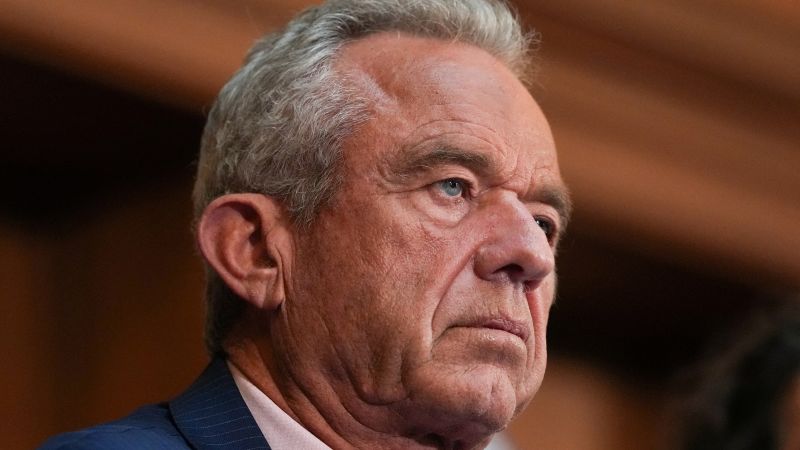
RFK Jr. Orders Hantavirus-Exposed Passenger to Remain in Federal Quarantine Despite CDC Approval
RFK Jr orders passenger from hantavirus – Angela Perryman, a 47-year-old U.S. citizen, has been placed under federal quarantine in Nebraska by Robert F. Kennedy Jr., the Secretary of Health and Human Services, despite being cleared to return home to Florida by a CDC health expert. Perryman expressed frustration over the decision, claiming she feels “in prison” and that the health system has used her as a “prop and a political stunt.” Her case has become a focal point of a growing dispute between federal and state authorities regarding the scope of quarantine measures during the hantavirus outbreak linked to the MV Hondius cruise.
The Quarantine Dispute Escalates
On May 5, Perryman and 17 other U.S. passengers were transported to the National Quarantine Unit at Nebraska Medical Center following exposure to a rare strain of hantavirus. The initial 42-day quarantine period was set to conclude on May 31, but it was extended to June 21 by the Centers for Disease Control and Prevention (CDC). While some passengers opted to stay voluntarily, most left the facility after their home states agreed to take over daily symptom monitoring and 24/7 oversight through the end of June. However, Perryman’s situation remains unresolved, as her state, Florida, has not accepted the federal conditions for her release.
The CDC’s National Center for Emerging and Zoonotic Infectious Disease has been overseeing the case, with Dr. Michael Bell serving as the lead medical reviewer. Bell, in a nine-page report, argued that Florida’s proposed once-daily telehealth monitoring would suffice to protect public health, citing the original intent of the quarantine as preventing transmission. “The testimony at the medical hearing persuaded me that measures CDC is imposing on Ms. Perryman are not the least restrictive available,” Bell stated, emphasizing that the federal requirement for continuous oversight was overly stringent. He recommended that Perryman’s quarantine be transferred to her home state, provided Florida committed to a plan for hospital care if needed.
A Battle Over Public Health Protocols
Despite Bell’s conclusion, Kennedy maintained that the federal quarantine must continue. In a Monday directive, he stated that the conditions of the order remain valid, underscoring the necessity of federal oversight to safeguard both Perryman and her community. The decision came after a medical hearing where Bell’s findings were presented, but Kennedy’s order did not address the specific details outlined in the report. “Having considered the medical reviewer’s findings and recommendation, I find that the requirements for Federal quarantine continue to be met,” Kennedy wrote, asserting that the quarantine is essential for public health.
Florida’s approach to monitoring has been a key factor in the standoff. While the CDC initially approved Perryman’s return to her home state, it required Florida to implement strict measures, including daily health checks and continuous surveillance. Perryman’s state, however, proposed a less intensive plan involving telehealth assessments once per day. This discrepancy has led to a conflict between the federal government and state officials, with Perryman caught in the middle. “In my professional judgment, this less restrictive alternative is adequate to protect public health,” Bell noted in the report, which supported Florida’s proposal. Yet, Kennedy remained unconvinced, insisting that the federal order must stay in place.
Quarantine Requirements and Their Implications
The National Quarantine Unit at Nebraska Medical Center has been managing the situation, with any questions about the orders directed to the CDC. Florida, however, has yet to respond to CNN’s request for comment on the matter. Perryman’s frustration has grown as she questions the consistency of the federal health authorities’ decisions. “If it had been from the beginning that ‘this is the reason that we need to do this, and there is an actual scientific justification,’ then that would have been OK,” she said. She believes the CDC’s repeated changes to the quarantine terms have eroded trust in the agency’s guidance.
Perryman’s case highlights the broader debate over quarantine protocols in the wake of the hantavirus outbreak. While the CDC’s extension of her quarantine was based on risk assessments, the decision has sparked criticism about the balance between public health safety and individual freedoms. Her state’s reluctance to adopt the federal monitoring plan has left her in a limbo, with Kennedy acting as the final authority in the dispute. “At this point, it’s just a state-federal spat, and I’m just a hostage,” Perryman said, emphasizing the personal toll of the bureaucratic conflict.
Expert Testimony and Policy Rationale
The CDC’s medical review process included testimony from Dr. Christopher Braden, the acting director of the National Center for Emerging and Zoonotic Infectious Disease, and Dr. David Fitter, director of the Division of Global Migration Health. These experts provided insights into the hantavirus strain’s virulence and the potential risks associated with premature release of passengers. Braden and Fitter supported the federal government’s stance, arguing that continuous monitoring is necessary to prevent outbreaks in areas with limited healthcare resources.
However, Bell’s analysis challenged the need for such strict measures, pointing out that the risk of transmission had decreased significantly. “The intent of the quarantine order was to ensure the public is not exposed to someone who may be infectious,” he explained, adding that Florida’s plan would achieve this goal without overburdening the individual. The CDC’s acting director, Dr. Jay Bhattacharya, also endorsed the federal quarantine, though his support did not sway Kennedy’s final decision. The HHS spokesperson, Courtney Spencer, clarified that Kennedy had reviewed Bell’s findings and chose to uphold the order, citing the administration’s commitment to public health.
Public Health and Personal Liberty
Perryman’s experience has drawn attention to the tension between federal mandates and state autonomy in managing health crises. She described the quarantine as an infringement on her personal freedom, noting that she has lost trust in the medical community after witnessing multiple promises rescinded. “If there was a scientific reason for this, if I could see that, yes, this actually does further public health, I would have agreed,” she said. Her criticism reflects growing concerns about the transparency and consistency of quarantine policies, particularly in the context of a rare virus.
As the dispute continues, the situation raises questions about the flexibility of quarantine measures and their application across different regions. While the federal government emphasizes the need for standardized protocols to mitigate risks, state officials argue that localized solutions can be equally effective. The outcome of Perryman’s case may set a precedent for future quarantines, influencing how health authorities navigate the balance between precaution and individual rights. For now, she remains in federal custody, awaiting a resolution that could either reaffirm the CDC’s stance or allow her to return home under modified conditions.
The hantavirus outbreak aboard the MV Hondius has been a rare but significant event, with 18 U.S. passengers initially sent to Nebraska for monitoring. As of now, 10 have completed their quarantine at home, but Perryman’s case remains unresolved. Her story underscores the complexities of public health decisions, where scientific evidence, political considerations, and individual rights intersect. Whether the federal government’s strict requirements are justified or if they represent overreach, the case will likely continue to draw public attention and debate in the coming weeks.