
Why America is obsessed with a grandpa in high-waisted pants who is building sidewalks
Why America Is Obsessed With a Grandpa in High-Waisted Pants Who Is Building Sidewalks
The Unlikely Hero of a Viral Infrastructure Campaign
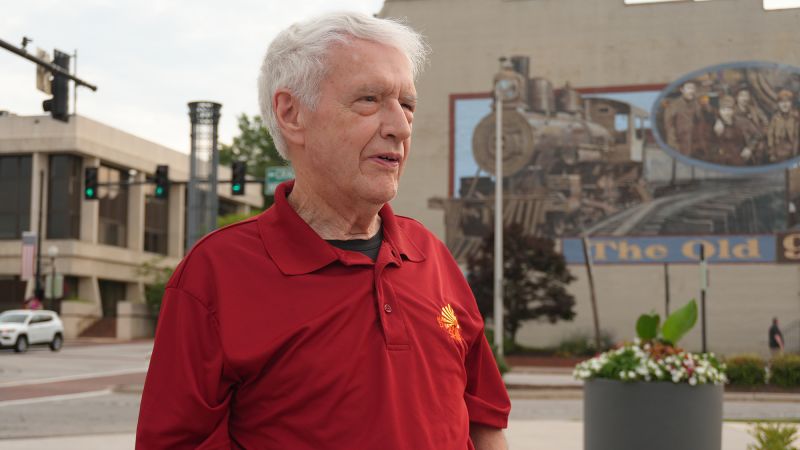
Why America is obsessed with a grandpa – Gary Miller, a 78-year-old councilman from Danville, Virginia, has become an unexpected symbol of effective governance. His four-year journey to install sidewalks along Kemper Road, a historically underserved Black neighborhood, has captured the public’s imagination. The cardiologist-turned-politician’s efforts, initially driven by a personal fear of traffic accidents, have now sparked a national conversation about infrastructure neglect and the power of grassroots action.
“I go that way and go after dark,” Miller said. “I was honestly afraid I was going to hurt somebody.”
Miller’s concern began with a simple scenario: a child trying to cross a busy street to reach the grocery store. This moment of vulnerability became the catalyst for a movement that transcended his local role. His campaign, which prioritized pedestrian safety, was not just about sidewalks—it was about reclaiming public spaces for communities that have long been overlooked in urban planning.
A Viral Victory in a City Designed for Cars
The story gained traction after Miller’s re-election campaign video went viral on social platforms. In it, he walks across a road without a sidewalk, his gray slacks tucked high above his waist, a turquoise Under Armour polo visible, and slip-on leather moccasins on his feet. The footage highlights the stark contrast between his personal dedication and the city’s infrastructure shortcomings. “When you think about public safety, the first thing to come to your mind may not be sidewalks,” he says to the camera. “A street with a sidewalk is a safer street and a healthier neighborhood.”
The video’s impact was immediate. Within days, it had amassed over four million views on TikTok and X, with hundreds of thousands of likes on Instagram. Commenters praised Miller’s simplicity and relatability, with some humorously suggesting he was “biblically accurate” in his waistline or hiding sidewalks in his pants. These remarks underscore a broader sentiment: Americans are craving leaders who prioritize tangible, everyday solutions.
“What happened here?” Miller asks, arms spread wide, as he steps off a sidewalk into a grassy lot.
Miller’s campaign is emblematic of a growing frustration with bureaucratic inertia. In a country where infrastructure projects often take years to materialize, his swift action on Kemper Road stood out. The Danville Metropolitan Planning Organization’s 2025 safe streets plan noted that roads in socioeconomically disadvantaged areas are particularly hazardous, with 81% of fatal and serious injury incidents occurring there. Miller’s work on these streets has become a beacon of hope for residents who feel their needs are sidelined.
Style Meets Substance in a Political Landscape in Need
While the video’s message resonated, its aesthetic appeal played a significant role in its virality. Miller’s fashion choices—retro high-waisted pants, a casual turquoise polo, and polished moccasins—created a memorable image. This blend of practicality and charm has positioned him as a relatable figure in an era dominated by polished political messaging. “The American voter cries out for an old man with hiked-up pants who has never once opened ‘The InstaFace’ and just wants to solve something tangible,” one user wrote on X.
His popularity has also drawn attention from national figures. Advocates for transit and housing, including members of the “Yes in My Backyard” movement, have praised Miller’s approach. Some compare his communication style to that of Zohran Mamdani, the telegenic New York City mayor, noting how Miller’s authenticity bridges generational divides. “This man has achieved an incredible form,” another user remarked, highlighting the emotional connection his work fosters.
Reimagining Urban Spaces for Equity and Safety
Miller’s efforts reflect a deeper issue: how cities are often built with cars in mind, leaving pedestrians—especially in poorer communities—vulnerable. Danville, with a population of about 42,000, has seen 12 fatalities and 95 serious injuries annually due to traffic crashes. These numbers are not just statistics; they represent real lives impacted by a lack of infrastructure. Kemper Road, once a neglected thoroughfare, now boasts 1,600 feet of new sidewalks and crosswalks, transforming it into a safer, more accessible space.
His success has inspired similar initiatives across the country. “Sidewalks are an overlooked resource,” said Michael Pollack, a professor at the Cardozo School of Law and author of the upcoming book “Sidewalk Nation.” “They serve as hubs for commerce, speech, and community gathering, yet their maintenance is often left to private owners rather than local governments.” Pollack sees Miller’s campaign as a powerful example of how simple, focused action can address systemic neglect. “The video is some of the best political media I’ve seen,” he said. “It made the importance of sidewalks accessible to everyone.”
For many Americans, Miller’s story is a reminder of what can be achieved when leaders act with purpose. His image—a grizzled elder with a passion for progress—contrasts sharply with the polished, often detached figures who dominate media. This authenticity has made him a rallying point for those disillusioned with traditional politics. “People are desperate for a government that can deliver basic services and infrastructure,” Pollack added. “When someone actually follows through, it becomes a rare moment to celebrate.”
From Local Efforts to National Symbolism
What began as a neighborhood project has now become a national conversation. Miller’s video has not only highlighted the need for safer streets but also revealed a cultural shift in how Americans perceive leadership. In an age where social media often amplifies spectacle over substance, his straightforward approach has struck a chord. “It’s not about grand gestures,” he explained. “It’s about making sure people can walk to the store without fear.”
His work also speaks to the broader challenge of equitable urban development. Danville’s socioeconomically disadvantaged areas, where car ownership rates are lower, suffer disproportionately from poor road design. By addressing these gaps, Miller has demonstrated how infrastructure can be a tool for social justice. His focus on sidewalks, often dismissed as minor, underscores the idea that even small improvements can have transformative effects on communities.
As the nation grapples with the consequences of underinvestment in public spaces, Miller’s story offers a blueprint for change. His ability to blend personal experience with civic action has made him a symbol of what good governance looks like. “He’s not just building sidewalks,” Pollack said. “He’s building trust.”
With his campaign now a national phenomenon, Miller’s message is clear: infrastructure matters, and leaders who prioritize it are worth celebrating. His high-waisted pants and moccasins may have sparked the initial buzz, but the real impact lies in the sidewalks he’s built and the example he’s set for others to follow. In a world where progress feels elusive, Miller’s story is a reminder that even the smallest steps can lead to meaningful change.