
What it takes to be chosen as a World Cup referee – and how to ref the final
The Journey to Soccer’s Grandest Stage: Becoming a World Cup Referee
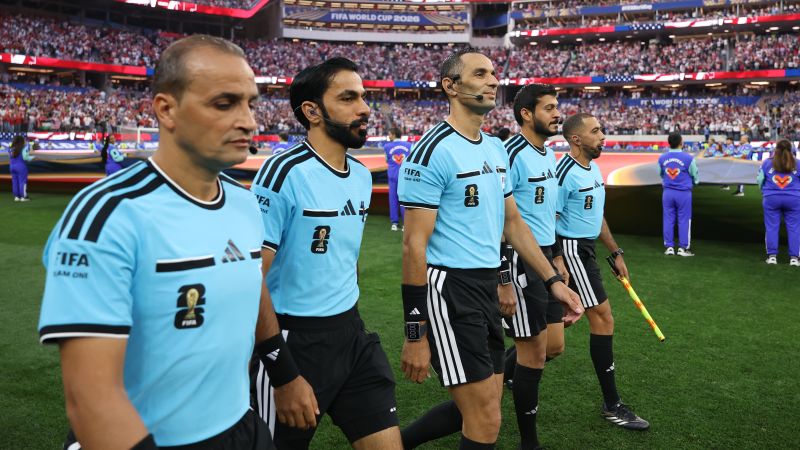
What it takes to be chosen – As the global soccer community gears up for the World Cup, 48 nations are competing for the honor of World Cup glory. Yet behind the scenes, another group of individuals is navigating an equally demanding journey: the referees. This year, 52 main referees, 88 assistant referees, and 30 video assistant referees (VARs) have been chosen to oversee the tournament’s 104 matches. With the expanded format now featuring 48 teams, the 170-person contingent represents the largest World Cup officiating team in history. These officials hail from 50 FIFA member nations, spanning all continental confederations, including eight representatives from the United States. Notably, six female referees are part of the squad, marking a milestone in FIFA’s ongoing efforts to diversify the sport’s leadership.
The path to the World Cup is not merely about technical skill but also about resilience. Referees must endure rigorous evaluations, physical demands, and the psychological toll of high-stakes matches. For example, a Somali official selected to officiate the final was recently denied entry to the United States due to concerns during the vetting process. Such challenges underscore the gravity of the role, where every decision can shape the outcome of a game—and even a nation’s fate.
A Role That Demands More Than Just Expertise
Beyond the technical requirements, the World Cup referee’s journey involves personal sacrifices. Leif Lindberg, a retired assistant referee who served in the 2002 final between Brazil and Germany, recalls how the profession often comes at a cost. “Most referees have been through at least one divorce,” he says. “Many give up family life in one way or another.” Lindberg’s own story highlights the emotional weight of the job: he was on his second marriage when he officiated the 2002 match, a moment that combined professional pride with personal reflection.
According to FIFA, the selection process for this year’s tournament began immediately after the conclusion of Qatar 2022. Candidates must first attend seminars to refine their understanding of the game’s rules, pass fitness tests to ensure they can keep up with the pace of matches, and demonstrate prior experience in FIFA tournaments. Their performances in domestic and international competitions are meticulously tracked over the past three years, serving as a critical benchmark for the final selection. “In every major match before the World Cup, we have one or two observers,” explains Renato Faverani, a former assistant referee who participated in four games at the 2014 World Cup, including the final between Germany and Argentina. This systematic evaluation ensures only the most capable officials are entrusted with the responsibility of officiating the world’s most prestigious event.
“Every one of us was dreaming about officiating the World Cup.” — Leif Lindberg, 2002 World Cup assistant referee
The process is far from arbitrary. Referees at the elite level are often assigned to the same officiating teams across international fixtures, allowing them to be assessed collectively. “After the match, you receive an evaluation, which is then compared with other referee teams,” Faverani adds. This collaborative approach helps identify the most consistent and reliable officials, ensuring fairness across all stages of the tournament.
The Emotional Toll of the Final Decision
Once selected, referees are appointed three to four days before each game based on their recent performance. FIFA also implements a conflict-of-interest rule, prohibiting officials from officiating matches involving their own country. This policy ensures impartiality, particularly during the knockout stages, where outcomes can determine a nation’s success or failure.
For many, the ultimate goal is to referee the final—a dream that comes with immense pressure. Renato Faverani, who was chosen to officiate the 2014 final, recalls the moment he learned of his appointment. “Returning from a practice session near my hotel, I found all the referees gathered in a massive hall. FIFA President Sepp Blatter stood at the front, unfolded a sheet of paper, and began reading names aloud,” he describes. The suspense was palpable as Blatter listed the final’s officials, and when Faverani’s name was announced, the atmosphere shifted. “For two or three hours, it was the best moment,” he says. “Then, the pressure and responsibility arrived. You just hope the match comes quickly because the pressure is very high.”
“It was a very special moment to follow our national team and hope they would lose.” — Leif Lindberg, 2002 World Cup assistant referee
The emotional high of being selected for the final quickly gives way to the demands of the role. Referees must master the Laws of the Game not only in theory but also in practice, often revisiting rules and scenarios days before the first whistle. The stakes are unparalleled, with fans worldwide scrutinizing every decision. As Faverani notes, the final is where the pressure is highest, and the margin for error is minimal. Even a single missed call can spark controversy, especially in high-intensity moments like penalty kicks or last-minute goals.
A Spotlight on Diversity and Dedication
The inclusion of female referees at the World Cup has added a new dimension to the sport’s officiating landscape. In Qatar 2022, FIFA took a historic step by appointing six women to the squad, a move that reflects the organization’s commitment to gender equality. This year’s team continues that tradition, showcasing a more inclusive approach to leadership roles. For instance, in China, fans are rallying around a single referee who represents the country after the national team’s qualification failure. This personal connection highlights the unique challenges referees face, as they often become ambassadors for their home nations during the tournament.
Referees also play a crucial role in maintaining the integrity of the game. The expanded format of the World Cup, with its record-breaking number of teams and matches, has increased the need for a robust officiating system. VARs, for example, have become integral to decision-making, providing a second opinion on critical calls. This technology has transformed the way matches are managed, but it also places additional pressure on referees to adapt to new standards. The blend of traditional officiating and modern technology requires a balance of experience and innovation, ensuring that every game is fair and that the final is decided with precision.
The journey to the World Cup is a testament to the dedication and perseverance of referees. It involves years of training, unwavering focus, and the willingness to make tough calls under immense pressure. As Lindberg reflects on his own experience, he emphasizes the emotional highs and lows of the job: “The noise was incredible” during his debut in 2002, when the stadium was filled with 50,000 fans in red jerseys. Such moments are rare, but for those who achieve them, they represent the culmination of a lifelong pursuit. The final is not just a game—it’s a moment that can define a referee’s career and leave an indelible mark on the world of soccer.
Ultimately, the selection of referees for the World Cup is a meticulous process that blends performance, preparation, and personal sacrifice. As the tournament progresses, the chosen officials will carry the weight of their nation’s hopes, ensuring that every match is judged with fairness and precision. Whether it’s a controversial red card or a pivotal goal, their decisions shape the narrative of the world’s most anticipated sporting event. The path to the final may be arduous, but for those who make it, the reward is nothing short of historic.