Did Iran make out better from the war?

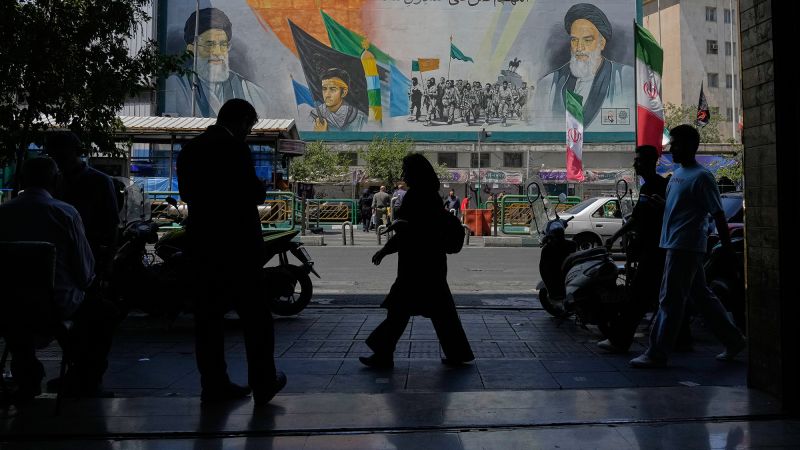
Did Iran make out better from the war?
The Financial Agreement
Did Iran make out better – After months of conflict and a sustained blockade, Iran’s infrastructure and economy have suffered significant damage. Yet, despite these challenges, the nation’s leadership may find itself in a stronger financial position than before the war began. A new 14-point memorandum of understanding between Iran and the United States has been proposed, offering a range of economic concessions. These include the thawing of Iranian assets, reduced sanctions, a substantial cash infusion, and the right to export oil freely. While details of the agreement remain uncertain, US officials plan to finalize it in Switzerland on Friday, signaling a potential shift in the geopolitical landscape.
Among the most critical terms is the restoration of Iran’s primary revenue source: oil exports. With sanctions lifted, the country can now sell its accumulated oil reserves, estimated at tens of millions of barrels, without restrictions. This will allow Iran to regain access to global markets, a move that could stabilize its economy. According to Jorge Leon, a geopolitical analyst at Rystad, the nation may also resume shipping approximately 2 million barrels of oil daily—about a third more than pre-war levels. This increase, combined with the ability to sell oil at fair prices, could provide a much-needed financial boost.
“This sounds like a pretty good deal for Iran,” Leon remarked, highlighting the potential for immediate economic recovery.
Immediate Economic Relief
The agreement aims to address the financial strain caused by US sanctions, which have limited Iran’s ability to conduct international trade. By granting sanctions waivers, the US Treasury will permit Iran to transport, insure, and sell its oil through financial institutions. These waivers, however, are temporary, covering a 60-day ceasefire extension. Homayoun Falakshahi, an oil market analyst at Kpler, warned that international buyers might hesitate to commit without long-term assurances, though the initial steps show promise.
Iran’s access to the Strait of Hormuz is another key provision. The waterway, vital for oil shipments, will now allow toll-free passage for 60 days. This could enable the country to charge tankers around $1 per barrel, generating roughly $2 million per transit. The resumption of oil exports has already begun: this week, Iran successfully shipped 3.8 million barrels of oil through the strait after the US naval blockade was lifted, as reported by TankerTrackers. This early success suggests the agreement’s economic benefits may materialize sooner than anticipated.
Long-Term Implications
A critical component of the deal is the release of Iran’s frozen assets, which are estimated to range between $124 billion and $167 billion. These funds, held in banks worldwide, represent a quarter of Iran’s annual economic output, according to Frederic Schneider of the Middle East Council. The US has agreed to make these assets “fully available” for Iran’s central bank, though the exact timing and scope of their unfreezing are unclear. Iranian officials have emphasized the importance of accessing these funds quickly, but a US representative clarified that release will depend on Iran fulfilling its commitments.
Gregory Brew, a senior analyst at Eurasia Group, noted that a portion of these frozen assets—around $12 billion—are currently held in Qatar. If Iran can secure access to this liquidity, it could accelerate its recovery efforts. The agreement also includes the creation of a $300 billion investment fund, which would be privately financed rather than funded by US taxpayers. This structure is a nod to the Trump administration’s approach, which prioritized reducing reliance on public funding for foreign policy initiatives.
The deal’s success hinges on Iran’s ability to leverage these resources effectively. With the war having destroyed much of its industrial capacity, including steel plants and petrochemical facilities, rebuilding will require significant investment. Adnan Mazarei, a senior fellow at the Peterson Institute for International Economics, warned that the process will be lengthy and resource-intensive. Iranian authorities claim damages exceed $270 billion, but confirming this figure remains a challenge.
The Path to Recovery
If the agreement holds, Iran could quickly restore its cash flow by utilizing the unfrozen assets. The immediate sanctions waivers will enable the country to resume oil exports, which contribute about 50% of its total revenue, per the US Energy Information Administration. However, long-term stability depends on sustained market confidence. Analysts suggest that the deal’s true impact will depend on how quickly Iran can rebuild its infrastructure and attract foreign investment.
President Donald Trump, during a recent G7 meeting, emphasized that the agreement would allow other countries and financiers to support Iran’s economic revival. “No frozen funds will be released without the Iranians implementing their commitments,” a US official stated, underscoring the conditions for financial relief. This conditional approach may pressure Iran to demonstrate progress in areas like nuclear diplomacy and regional stability.
While the agreement offers hope, its success is not guaranteed. The 60-day ceasefire extension provides a window for Iran to stabilize its economy, but prolonged uncertainty could deter investors. Additionally, the agreement’s reliance on private financing may limit its scope, as global markets remain wary of Iran’s long-term reliability. Nonetheless, the potential for economic normalization and the restoration of oil exports represent a significant turning point for the nation.
The war has left Iran in a precarious state, yet the financial incentives outlined in the agreement could pave the way for recovery. By reestablishing oil sales and unlocking frozen assets, Iran may find itself better positioned to rebuild its economy and strengthen ties with international partners. However, the path forward will require careful negotiation and consistent adherence to the terms of the deal.