Judge imposes sweeping emergency order halting DOJ pressure campaign on election officials across the country

Daftar Isi
Federal Judge Temporarily Blocks Federal Pressure on Election Administrators
Healfromzero.com – A federal court order issued Friday night has paused a series of Trump administration actions aimed at election officials nationwide, including demands involving voter-roll removals, ballot handling and access to election materials.
US District Judge Trina Thompson granted a temporary restraining order that limits actions by the Justice Department and the Department of Homeland Security while the dispute proceeds. The order is set to remain in effect through November 16.
Thompson concluded that the administration’s stated effort to identify unlawful voting by noncitizens could disrupt the administration of elections and put eligible voters at risk of losing their ability to cast a ballot.
“Although Defendants claim that their actions are designed to halt unlawful voting by noncitizens, their actions are likely to have the effect of interfering with election administration and disenfranchising lawful voters,”
The ruling applies across the country. During the temporary order, the two federal agencies may not require state or local election offices to separate ballots, remove voters from registration lists or stop processing ballots. The administration also cannot use threats of criminal prosecution, or other conduct that could intimidate or coerce election workers, to force changes to ballot-processing practices based on allegations that particular voters are not eligible.
Limits on prosecution threats and election-material demands
The decision directly addresses the administration’s repeated position that election officials could face federal criminal consequences if they fail to do enough to prevent illegal voting. Thompson wrote that officials who lawfully distribute, process or count ballots during the 2026 midterm election are not committing a federal crime merely because the government alleges that a registered voter is ineligible.
“When state and local government employees perform the work of distributing, processing, or counting ballots or otherwise administering the 2026 midterm election” in accordance with the law, “they do not violate federal criminal law even if a particular ballot belongs to a registered voter alleged by Defendants to be ineligible to vote.”
The judge also imposed a reporting requirement involving federal efforts to obtain election-related materials. The administration must notify her of search-warrant applications, grand-jury subpoenas and other requests for ballots or election records connected to lists it has assembled identifying people it claims may be ineligible to vote.
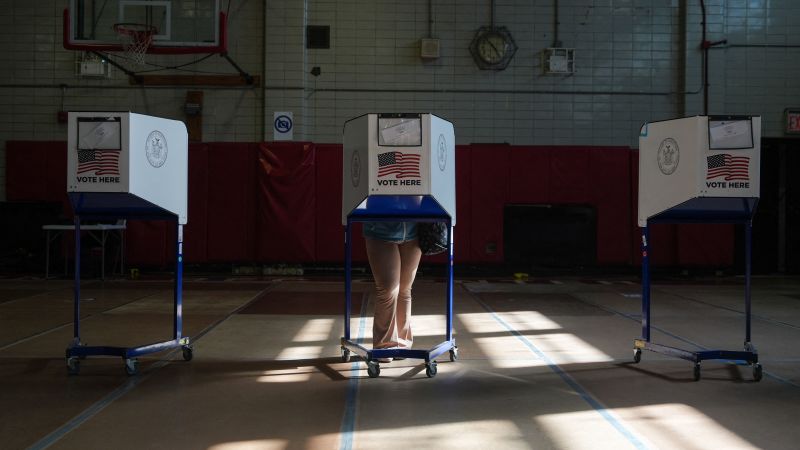
The practical effect is to preserve existing state and local procedures while the court considers broader legal questions. Election offices are responsible for the day-to-day work of maintaining voter registrations, issuing ballots, receiving them and counting them under state law. The order prevents federal agencies from compelling abrupt changes in those processes for the short period covered by the restraining order.
Challenge centers on voter-list matching
The case was filed in the Northern District of California by labor unions and civil-rights organizations, including the NAACP and the League of United Latin American Citizens. The plaintiffs argue that the recent federal conduct violates the Voting Rights Act and improperly intrudes on the authority states hold over election administration.
At the heart of the dispute is a Department of Homeland Security data-matching program. The operation has compared state voter-registration lists with federal records in an effort to identify suspected noncitizens on voter rolls.
Election officials have challenged the reliability of the resulting lists, saying they include US citizens as well as people who may be inaccurately flagged. Those concerns matter because a mistaken designation can affect a person’s registration status or ballot treatment. Multiple courts are now examining the federal approach in cases filed during recent weeks.
The administration has described its campaign as an effort to stop voting by noncitizens. But the lawsuits raise a competing concern: whether federal pressure based on uncertain data can lead election workers to take steps against qualified voters or interfere with voting systems governed largely by the states.
Other court setbacks for the administration
Friday’s ruling comes after several legal obstacles for the administration’s election-related efforts. The Justice Department has sought greater cooperation from states even as litigation over the program continues.
Federal officials sent letters to 29 states and Washington, DC, warning of possible investigations and demanding that jurisdictions preserve voter information and records from the 2024 election. Election jurisdictions are already required by federal law to keep election records for 22 months after an election.
California has been a major focus of the administration’s litigation. The Justice Department sued in an attempt to stop the counting of ballots cast by thousands of voters whom the federal government contends may be noncitizens. A federal appeals court rejected that effort.
The 9th US Circuit Court of Appeals held that the administration cannot intervene in the way states verify citizenship status. That decision, along with Thompson’s emergency order, leaves state and local election administrators with substantial protection from the immediate federal demands at issue.
What the temporary order means before the midterms
The restraining order does not resolve the underlying claims or permanently bar the federal government from enforcing election laws. It is an emergency measure intended to maintain the current situation while the court evaluates whether the plaintiffs are likely to succeed and whether election officials and voters could face irreparable harm without immediate intervention.
For election administrators, the ruling provides a temporary shield against directives to alter ballot procedures or registration practices based on federal allegations of voter ineligibility. For voters, it reinforces that an allegation tied to a government-generated list does not by itself establish that a lawful ballot should be excluded.
The Justice Department had not issued a public response by the time of the ruling. Further court proceedings will determine whether the restrictions are extended, modified or replaced by a longer-lasting injunction as the 2026 midterm election approaches.
Related Reading
Frequently Asked Questions
What is Judge imposes sweeping emergency order halting?
Judge imposes sweeping emergency order halting is the main topic of this guide. The article explains the context, practical details, and next steps readers should understand.
Why does Judge imposes sweeping emergency order halting matter?
Judge imposes sweeping emergency order halting matters because readers are looking for a useful answer, not just a short summary. Good content should match search intent and help them decide what to do next.