US approves potential $2.1 billion sale of scarce Patriot missiles to Ukraine

Daftar Isi
Ukraine Secures Approval for Potential $2.1 Billion Patriot Missile Purchase
Healfromzero.com – Ukraine could obtain 500 advanced Patriot interceptor missiles under a potential $2.1 billion sale approved by the US State Department on Friday, offering Kyiv a possible route to replenish one of its most critical air-defense capabilities as Russian ballistic missile attacks continue.
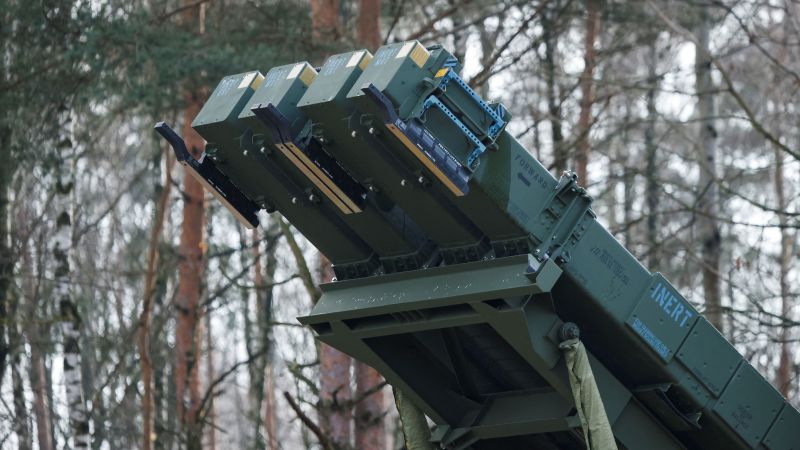
The proposed package involves PAC-3 MSE interceptors, the most sophisticated Patriot missile variant now in operational use. These weapons are among the limited number of systems designed to engage incoming ballistic missiles, making them especially valuable for Ukraine as it confronts repeated strikes against cities, infrastructure and energy-related sites.
Ukraine’s Patriot interceptor supply was exhausted earlier this month, creating renewed urgency around air-defense deliveries. The latest authorization signals that a sale may move forward, but it does not establish a delivery schedule or guarantee that missiles will arrive in time for the current winter season.
European partners would fund the purchase
The United States is not financing or subsidizing the proposed transaction. Instead, the estimated $2.1 billion cost would be covered through money supplied by Canada, Germany and Norway, together with a European Union loan.
The arrangement reflects the central role European partners are playing in sustaining Ukraine’s defensive needs. Patriot interceptors are expensive and scarce, while global demand has increased amid wider concerns over air and missile defense stockpiles.
The State Department’s notice did not say when the 500 missiles could be transferred. It also left unresolved whether Ukraine might receive any domestic production role through an offset agreement involving Lockheed Martin, the company that makes the Patriot system.
Officials said they were unaware of an existing offset arrangement between Kyiv and Lockheed Martin. Such an agreement could still be negotiated directly by Ukraine and the manufacturer.
Pressure grows over winter air defense
President Volodymyr Zelensky welcomed the approval but stressed that timing will determine how meaningful the sale becomes. He said Ukraine needs interceptors now, while Russian attacks continue through the winter, rather than after a lengthy production and delivery process.
“It has been stipulated that deliveries may begin ONLY IN A FEW YEARS. We are asking our American partners to find a solution for the time when there is a real danger and a real need to use PAC-3 interceptors,” Zelensky wrote on X.
Zelensky said Ukraine had sought a winter support package capable of supplying 100 Patriot interceptors each month. In his assessment, a stock of 500 missiles could protect Ukrainian airspace during the months ahead, a period he described as important both for civilian security and for Ukraine’s position in negotiations.
“Five hundred missiles would be enough to protect our skies over the coming months – precisely when it is so important for Ukraine to be in a strong position in negotiations and for Russia NOT to succeed in breaking life in Ukrainian cities and communities.”
The Ukrainian president also argued that the United States and its allies hold sufficient PAC-3 inventories to assist Ukraine immediately and replenish their own arsenals later through production already paid for by Ukraine and partner nations.
“Providing them to Ukraine right now – in the winter of 2026–2027 – and replenishing our partners’ arsenals LATER, in THE FOLLOWING YEARS, through this production already contracted and paid for by Ukraine and our partners would be the right approach,” he said.
Patriot capability remains difficult to replace
Ukraine has repeatedly called for more Patriot systems and missiles because ballistic threats require defenses with specialized capabilities. The PAC-3 MSE interceptor is intended to destroy incoming threats through direct impact, and its availability has become a major factor in Ukraine’s ability to protect populated areas and strategic facilities.
The issue gained fresh attention after Zelensky said Russia launched 17 ballistic missiles overnight on Friday. Some strikes hit oil-refining infrastructure in central Ukraine, he said in a video message released earlier that day.
Winter conditions make the air-defense shortage particularly consequential. Attacks on energy facilities can intensify the pressure on households, communities and public services during periods of low temperatures. A reliable interceptor supply also gives military planners more flexibility in deciding which areas and facilities can receive the strongest protection.
In an August interview, Zelensky said even a relatively limited share of the US Patriot inventory could allow Ukraine to counter Russia’s ballistic missile attacks more effectively.
Approval follows a difficult stretch in US-Ukraine relations
The potential sale comes after several weeks of strain between Washington and Kyiv. Earlier this month, President Donald Trump announced an arrangement allowing Russian diesel exports to reach international energy markets. He also waived additional sanctions connected to Russian fossil-fuel sales that had recently become law.
Trump also warned that intelligence support for Kyiv could be withheld over Ukrainian attacks on Russian refineries. Ukraine’s access to the Starshield satellite service, a key capability, was restricted for a time before being restored last week.
Against that backdrop, the Patriot authorization represents an important diplomatic and military development for Ukraine, even though the practical value of the package will depend on how quickly it can be delivered.
Domestic production remains uncertain
At the NATO summit in Turkey in July, Trump unexpectedly said Ukraine would receive a license to manufacture its own Patriot missiles. Domestic production could eventually reduce pressure on US supply lines, which face shortages connected to the Iran war and rising international demand.
Building an interceptor production facility in Ukraine would likely require years, however, and Trump has appeared to step back from the earlier proposal. For now, Ukraine’s immediate requirements remain tied to access to existing allied stocks and to accelerated delivery of newly produced missiles.
The sale authorization gives Kyiv a potentially significant supply of one of its most sought-after defensive weapons. Yet Zelensky’s response underscored the unresolved question at the center of the announcement: whether Patriot interceptors can reach Ukraine quickly enough to affect the fighting and protect civilians during the winter of 2026–2027.
Related Reading
Frequently Asked Questions
What is US approves potential 2 1 billion?
US approves potential 2 1 billion is the main topic of this guide. The article explains the context, practical details, and next steps readers should understand.
Why does US approves potential 2 1 billion matter?
US approves potential 2 1 billion matters because readers are looking for a useful answer, not just a short summary. Good content should match search intent and help them decide what to do next.