Israel is holding its most important election in years. Here’s what’s at stake

Daftar Isi
Israel’s Election Could Redefine Its Political Direction
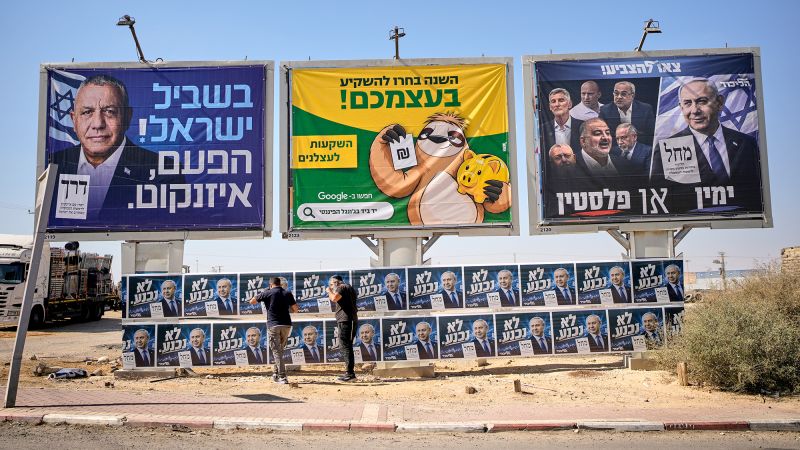
Healfromzero.com – Israelis will vote on October 27 in an election shaped by the aftermath of war, a profound security trauma and a bitter argument over the country’s future. Benjamin Netanyahu, Israel’s longest-serving prime minister, again stands at the center of the contest, but this ballot carries weight far beyond a familiar dispute over his leadership.
It will be Israel’s first nationwide election since the Hamas-led October 7, 2023 attack, described as the deadliest security failure in the country’s history. The violence and the conflicts that followed in Gaza, Lebanon and Iran have affected nearly every part of Israeli public life, while contributing to growing international isolation. Voters are now being asked to decide not only who should govern during a period of conflict, but whether the political path of recent years should continue.
For many people, the vote offers an opportunity to assess the leaders who were in office when the failures of October 7 occurred. It also comes amid intensified debate over military service, national security, religion in public life and the balance of power between elected officials and the courts.
A referendum on Netanyahu — with broader consequences
Recent Israeli elections have repeatedly revolved around Netanyahu’s political survival. This time, however, the stakes extend to the direction of the state itself. His outgoing administration, the first Israeli government in decades to complete a full four-year term, depended on far-right and ultra-Orthodox coalition partners.
That alliance pushed policy and political discourse in a more nationalist and religiously conservative direction. During the same period, Netanyahu became the first serving Israeli prime minister to go on trial on corruption charges. His government also advanced a judicial overhaul intended to reduce the authority of the Supreme Court and other institutional restraints on political power.
The proposed changes sparked large demonstrations in 2023 and exposed a deep divide over democratic institutions. The election therefore presents voters with a larger choice: maintain the current national, religious and conservative trajectory, or support parties seeking a different balance.
How Israel’s Electoral System Shapes the Outcome
The public does not directly elect a prime minister. Instead, Israelis cast ballots for party lists, which compete for seats in the 120-member Knesset. The country’s proportional representation system reflects a society divided by ideology, religion, ethnicity and national identity, producing a crowded and often fragmented political field.
Thirty-seven lists have registered for this election. Only parties receiving at least 3.25% of the vote will enter parliament. Polling indicates that between 11 and 13 parties may clear that threshold, with seats distributed proportionally among qualifying lists.
This system means that winning the most seats does not automatically mean forming the next government. A prospective prime minister must assemble the support of at least 61 Knesset members. No single party has ever secured that number independently, making coalition negotiations decisive.
As a result, election night frequently provides only a partial answer. Discussions among party leaders can last days, weeks or even months, and the bargaining after the vote may prove more important than the headline result.
The leading contenders
Netanyahu’s right-wing Likud remains one of the two largest parties. Its principal challenger is Yashar, a new centrist party led by former military chief of staff Gadi Eisenkot.
Recent polling has offered conflicting pictures. A Channel 12 survey placed Eisenkot’s party in front with 23 seats and Likud on 21. A Channel 14 projection gave Likud 30 seats and put Eisenkot at roughly 20. In direct assessments of who is better suited to serve as prime minister, Eisenkot has maintained a consistent advantage over Netanyahu.
Yet the larger party may still fail to lead the government. The decisive question is whether either leader can gather allies into a majority coalition.
Coalition Arithmetic May Produce Another Stalemate
Most surveys place the pro-Netanyahu camp between 49 and 55 seats, below the 61 required to govern. That bloc includes Likud, two far-right parties headed by Bezalel Smotrich and Itamar Ben-Gvir, and two ultra-Orthodox parties.
The parties opposing Netanyahu have strengths of their own but do not form a unified camp. Eisenkot is positioned between political figures to his right, including former Prime Minister Naftali Bennett and former Defense Minister Avigdor Liberman, and the Democrats party led by Yair Golan on his left.
Bennett and Liberman have not endorsed Eisenkot, and both have ambitions to become prime minister themselves. Those rivalries complicate the task of turning a broad anti-Netanyahu vote into a durable governing coalition.
An alternative administration would likely require backing from, or at least abstention by, Arab parties. Several opposition politicians have ruled out cooperation, narrowing the available options. The result could be a deadlock, a minority government, a broad unity arrangement or yet another trip to the polls.
Small Parties and Turnout Could Decide the Result
The margins may be more consequential than the leading parties’ headline totals. A small party that falls just below the 3.25% threshold receives no Knesset seats, leaving its votes without representation in parliament. Conversely, a party that narrowly enters can become essential to forming a coalition.
That makes turnout especially important. A relatively small number of ballots can determine whether a list disappears from the Knesset, gains leverage as a coalition partner or changes the balance between the major blocs.
Participation among Arab voters could be particularly significant. Palestinian citizens of Israel account for roughly one-fifth of the country’s population, and their parties may hold considerable influence if the contest remains close. In an election where neither side appears assured of a majority, every threshold result and every turnout shift could reshape the negotiations that follow.
Israel’s voters may deliver a clear message on October 27. But the identity of the next government, and the political course it chooses, could remain unsettled long after the ballots are counted.
Related Reading
Frequently Asked Questions
What is Israel is holding its most important?
Israel is holding its most important is the main topic of this guide. The article explains the context, practical details, and next steps readers should understand.
Why does Israel is holding its most important matter?
Israel is holding its most important matters because readers are looking for a useful answer, not just a short summary. Good content should match search intent and help them decide what to do next.