Three Colorado River states must take big water cuts as biggest US reservoirs plunge to record lows

Three Colorado River States Must Take Water Cuts
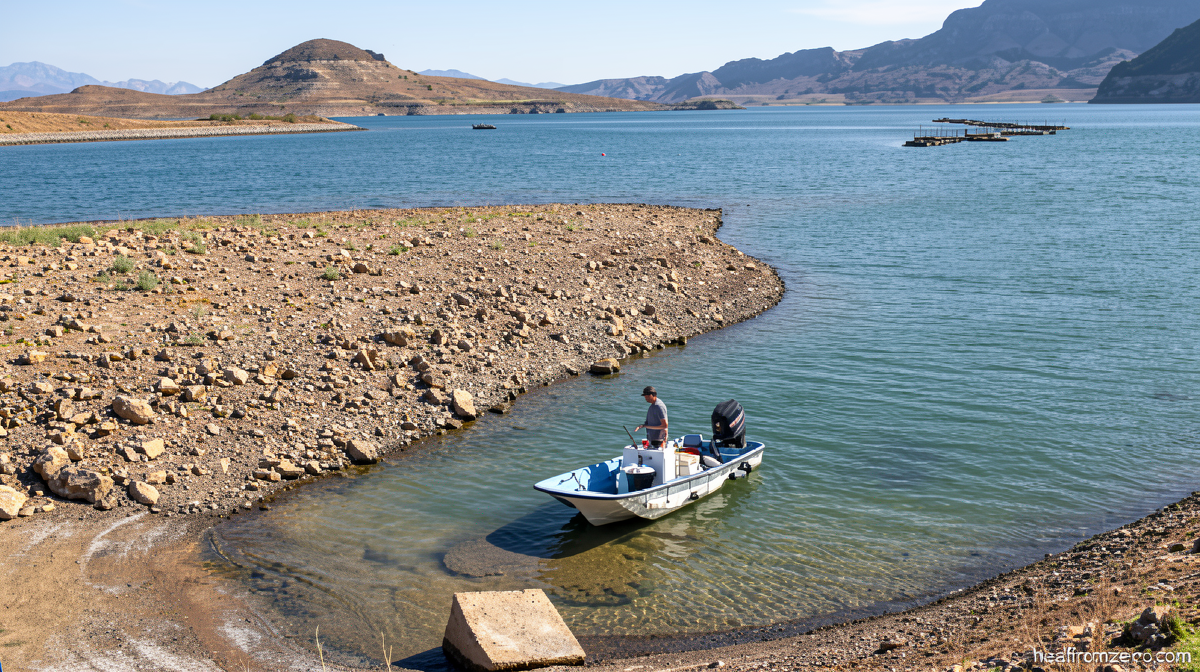
Healfromzero.com – Three Colorado River states must accept historic reductions in their annual water allocations after both of the river’s principal reservoirs — Lake Mead and Lake Powell — fell to levels never before recorded. The Department of the Interior released a two-year operating plan on Friday that mandates substantial withdrawal cuts for Arizona, California, and Nevada, closing out years of stalled negotiations among the seven states that depend on the river’s flow.
The human stakes are staggering. Approximately 40 million people across the American Southwest rely on the Colorado for drinking water, and more than five million acres of farmland depend on its irrigation supply. With combined storage at its lowest point in recorded history, the question has shifted from whether current allocations can be sustained to how rapidly the shortfall will cascade into municipal outages, agricultural losses, and diminished hydropower generation for tens of millions of residents.
What the New Framework Requires
Under the plan, the three lower-basin states face staggered reductions running through 2028. Arizona absorbs the deepest cut at 760,000 acre-feet. California’s reduction is the smallest at 440,000 acre-feet. Nevada will draw 50,000 acre-feet less than its current allocation. No mandatory reductions are imposed on the upper-basin states of Utah, Colorado, Wyoming, and New Mexico — a distinction that has already drawn criticism from lower-basin officials who argue the burden should be shared more evenly.
Translating those figures into percentages, Sarah Porter, director of the Kyl Center for Water Policy at Arizona State University, estimates the cuts represent roughly a 27% reduction for Arizona, a 10% reduction for California, and a 16% reduction for Nevada. For Arizona specifically, she notes that residents actually consuming Colorado River water will experience an effective 50% cut because the state’s allocation is split between agricultural and municipal users.
Reactions From State Leaders and Water Managers
Tom Buschatzke, director of the Arizona Department of Water Resources, framed the outcome as a compromise shaped by prior inter-state discussions and recommendations among the three downstream states.
“It could have been draconian,” Buschatzke said. “I would like the reductions for Arizona to be zero but that’s not the reality we’re facing. It’s a pretty good outcome.”
Arizona’s two Democratic senators, Ruben Gallego and Mark Kelly, issued a joint statement endorsing the new operating guidelines, signaling bipartisan political support within the state most affected by the cuts. Shivaji Deshmukh, general manager of the Metropolitan Water District of Southern California, confirmed that California’s agricultural and urban water users will now negotiate an internal plan to implement the required reductions and added that water users across the entire basin must participate in the process.
Why the Old Compact No Longer Works
The current allocation structure traces back to the 1922 Colorado River Compact, which divides the river’s annual flow into two equal tranches of 7.5 million acre-feet each — one for the upper basin, one for the lower. That division was negotiated when the region’s population was a fraction of today’s, when Rocky Mountain snowpacks were deeper and wetter years more common. The compact assumed a hydrology that no longer exists.
More than two decades of climate-change-driven megadrought, compounded by record heat and sustained over-allocation, have shrunk the river’s effective supply well below the compact’s assumptions. Last month, combined storage in Lake Mead and Lake Powell hit a record low. Lake Mead, the nation’s largest reservoir, now sits below every level recorded since its creation. Celene Hawkins, director of the Colorado River Program at the Nature Conservancy, characterized the moment as one of fundamental transformation in how the system is managed.
“We are at a time of tremendous change in how we are managing water in this system and what that means for both communities and the river itself,” Hawkins said.
The Interior Department’s plan arrives after protracted, ultimately unsuccessful talks among all seven Colorado River states. In July, the US Bureau of Reclamation published a broader operating framework setting out parameters for water sharing over the next decade, including a requirement that specific cut levels be negotiated and codified every two years. The document released Friday constitutes the first such two-year cycle, running through 2028. Three Colorado River states must now translate those mandates into concrete operational changes before the next cycle opens.
Frequently Asked Questions
When do the water cuts take effect? The two-year operating plan runs through 2028. States must negotiate internal implementation details with their agricultural and municipal water users before the next two-year cycle begins.
Which states are affected and by how much? Arizona faces a 760,000 acre-foot reduction (roughly 27% of its allocation), California a 440,000 acre-foot reduction (roughly 10%), and Nevada a 50,000 acre-foot reduction (roughly 16%). Upper-basin states face no mandatory cuts under this cycle.
Will everyday residents feel the impact immediately? For Arizona, where the allocation is split between farm and municipal users, residents consuming Colorado River water face an effective 50% reduction. California and Nevada are still working out internal distribution plans, so the near-term impact on household taps depends on how each state allocates its share.
What happens after 2028? The Bureau of Reclamation’s broader framework requires that all seven states renegotiate cut levels every two years. The next cycle will open after 2028, and the magnitude of future reductions will depend on reservoir levels, snowpack conditions, and demand at that time.