What is the White House press pool, and why is it now under threat?

Daftar Isi
White House press pool faces new questions over access and coverage
Healfromzero.com – Access to the American presidency has long depended on a practical arrangement that allows a relatively small group of journalists to witness events on behalf of a much larger press corps. That arrangement, known as the White House press pool, is now facing fresh uncertainty after President Donald Trump moved to bar CNN, MS NOW and Politico from the White House.
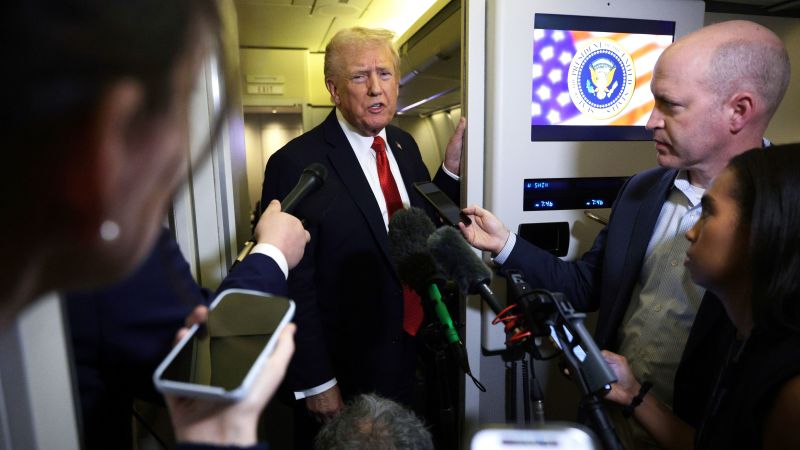
The pool exists because the president often works and travels in locations where room is limited. The Oval Office, Air Force One, motorcades and secure meeting sites cannot accommodate every reporter, photographer and camera crew seeking access. Instead, selected journalists attend as representatives, relay information to other news organizations and provide images, video and written accounts for broader public use.
Its purpose is not simply convenience. The pool helps ensure that presidential actions are observed in person, including during sudden developments, overseas travel, emergency moments and major public events. It also reduces the cost of maintaining full-time reporting teams at the White House and on the road, an especially important consideration for smaller news outlets.
A system built around shared access
The modern pool has roots in the presidency of Franklin D. Roosevelt. Since then, reporters, photographers and technical crews have used a rotating system to cover presidents wherever they go. Its makeup has changed as radio, television, photography and other forms of news distribution became more central to how Americans receive information.
Even as formats have evolved, the central responsibility has remained consistent: pool members are there to see and hear presidential activity directly, ask questions when circumstances permit, and make their reporting available to colleagues who were not physically present.
The pool includes print reporters, broadcast journalists and still photographers. Its size depends on the setting. Air Force One, for instance, has 13 seats in the press cabin. In tight quarters, those limits make a representative system necessary.
For much of the pool’s history, journalists largely managed the assignments themselves. The White House Correspondents’ Association selected print reporters who would send written pool reports to the broader group of journalists covering the presidency. Television and radio organizations took turns supplying the network crew that would record the president and share the resulting material. Pool outlets then gave the White House the names of the journalists assigned, allowing officials to coordinate credentials, travel and security logistics.
Trump’s restrictions put assignments in doubt
The new restrictions raise questions about whether the established system can continue to operate as intended. CNN had been scheduled to serve as the television pool on Monday and was assigned to accompany Trump during a planned trip to New York for the annual United Nations General Assembly. That assignment was subsequently removed from the White House’s daily press guidance, which did not identify any television outlet as the main TV pool for Monday.
It remains unclear how the ban could alter future pool duties. Removing even one outlet can create broader complications, particularly for television coverage. The remaining organizations may face staffing, travel and financial pressures that make continuous coverage of the presidency more difficult to sustain.
On Saturday, the Secret Service denied CNN journalist Betsy Klein entry to the White House and took her press pass. Journalists from Politico and MS NOW were also denied access. The actions followed Trump’s announcement the previous day that the three organizations would be barred.
The stakes extend beyond any individual newsroom. A pool arrangement depends on participating outlets being able to rotate responsibility and distribute material to others. If exclusions interrupt that rotation, the effect can reach reporters and audiences far beyond the organizations directly affected.
Access has been limited before, usually under exceptional circumstances
White House administrations have at times narrowed pool access because of security, logistics or the sensitivity of a trip. Such decisions have generally been linked to immediate operational conditions rather than a permanent removal of a news organization from routine participation.
After the September 11, 2001 attacks, the White House reduced the number of journalists accompanying President George W. Bush as he traveled to locations that were not publicly disclosed. Some pool members pressed for reporters to remain aboard Air Force One, and Bush’s aides ultimately permitted half of the pool to stay on the aircraft.
President Joe Biden’s 2023 visit to Ukraine also involved sharply limited access because it was a covert wartime trip. Only a still photographer and a print reporter joined him on the train journey from Poland.
The record of past presidents illustrates why the pool has become an important part of presidential coverage. Pool reporters were present in Warm Springs, Georgia, when Roosevelt died. Journalists were in Dallas when President John F. Kennedy was assassinated, outside the Washington Hilton after Ronald Reagan was shot, and aboard Air Force One during secret visits by George Bush, Barack Obama and Trump to distant war zones.
Past disputes over media access
Conflicts between administrations and news outlets are not new. During the Obama administration, officials briefly sought to leave Fox News out of interviews with Kenneth Feinberg, who was then administering the Troubled Asset Relief Program. The interviews had been offered to the other four networks in the television pool.
Other television networks objected, and Fox News was restored to the interview round. The Obama White House did not attempt to prevent Fox from serving as the daily television pool network.
When Trump returned to office in 2025, his press operation introduced changes to how the pool would function. Those changes added to a broader debate over who determines pool membership and how access to presidential events should be allocated.
For readers, the issue is ultimately about more than seating charts or credential procedures. The press pool is one of the mechanisms through which the public receives firsthand information about a president’s decisions, movements and responses during consequential moments. Its effectiveness relies on access, cooperation and the ability of participating journalists to share what they witness with the wider public.
Related Reading
Frequently Asked Questions
What is What is the White House press?
What is the White House press is the main topic of this guide. The article explains the context, practical details, and next steps readers should understand.
Why does What is the White House press matter?
What is the White House press matters because readers are looking for a useful answer, not just a short summary. Good content should match search intent and help them decide what to do next.