El-Sayed apologizes to Jewish Democrats as he seeks to bridge party divides

Daftar Isi
Michigan Senate Race Tightens as El-Sayed Courts Jewish Democrats After Primary Rifts
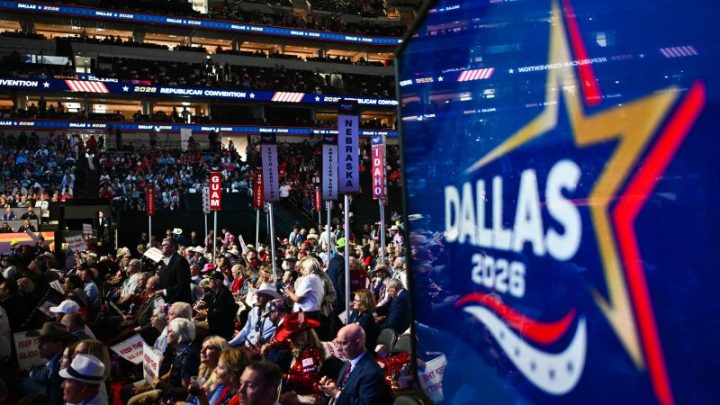
Healfromzero.com – The Saturday afternoon crowd in Lansing, Michigan, offered a pointed contrast to the chaos that had defined the state’s spring Democratic gathering. Several hundred party members packed the convention hall, and when Abdul El-Sayed took the stage for a nine-minute address, they delivered one of the loudest cheers of the day. There were no boos. No progressive activists storming the aisles. No heckling aimed at moderate Democrats. The atmosphere suggested a party attempting, at least for one afternoon, to stitch itself back together after a bruising primary season.
That stitching work had been underway all weekend. El-Sayed, the Michigan Democratic Senate nominee who defeated moderate Rep. Haley Stevens in a fiercely contested primary earlier in August, spent the days before the convention meeting individually and in small groups with Jewish party leaders across the state. The purpose was explicit: apologize for remarks he made in the aftermath of a synagogue attack and signal that his candidacy should not be read as a repudiation of Jewish Michiganders’ place in the Democratic coalition.
The Synagogue Attack and the Words That Followed
The remarks in question came after the March attack on the Temple Israel synagogue in West Bloomfield Township, a suburb near Detroit. Officials identified the assailant as Ayman Ghazali, a naturalized U.S. citizen originally from Lebanon, who drove a vehicle loaded with explosives into the building, setting it ablaze. Ghazali killed himself at the scene. According to reporting at the time, he had lost family members in an Israeli airstrike in Lebanon roughly one week before the Michigan incident.
In the days following the attack, El-Sayed condemned the violence and antisemitism broadly. But he also offered what many in the Jewish community read as a contextualizing frame: that “violence is a cycle” and that “hurt people hurt people.” State Attorney General Dana Nessel, among the most vocal Democratic critics of those comments, argued they risked normalizing the assault. Nessel did not attend Saturday’s convention, saying she feared she would again be harassed and booed off the stage — a reference to the spring gathering, where progressive pro-Palestinian activists had jeered at Democrats they judged insufficiently critical of Israel’s war against Hamas.
At the convention, El-Sayed addressed the Michigan Democratic Jewish Caucus directly. He acknowledged that his post-attack language had been received as something other than what he intended.
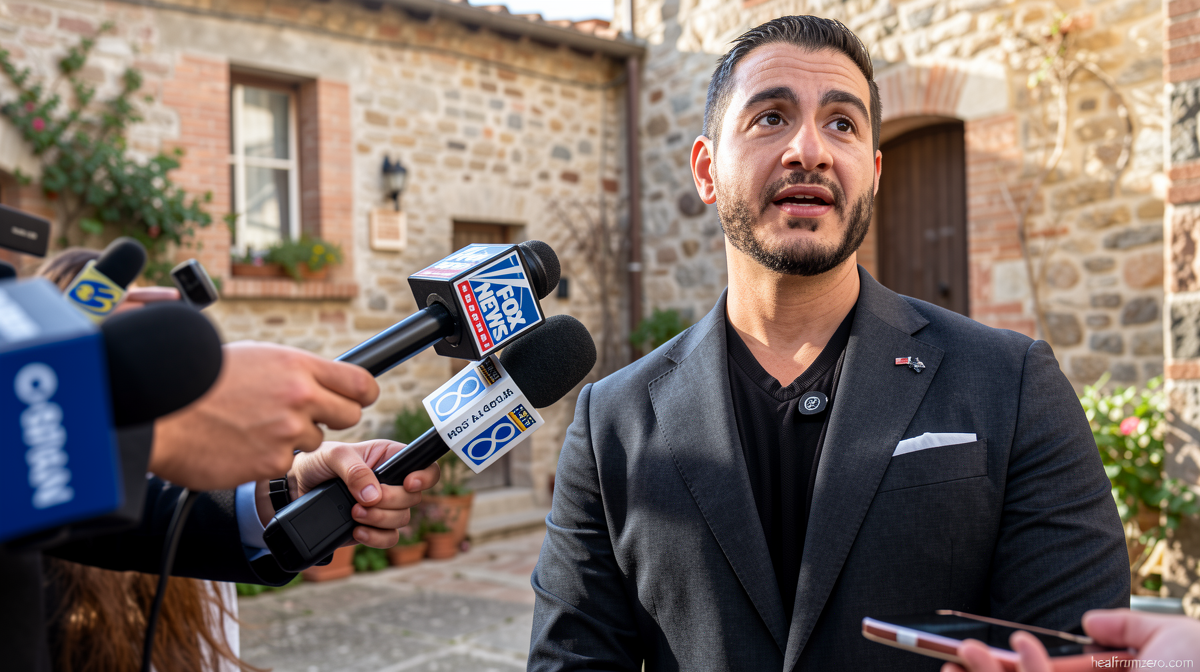
“My comments might have been misconstrued to be justifying something I did not intend to justify,” he told reporters afterward. “To anybody who feels like my comments might have been hurtful, I’m really sorry. That was not my intention.”
He elaborated that his goal had been to offer context for why the attack occurred, but conceded the timing was wrong.
“We condemned that terrorist attack. We condemned it outright. What I was trying to do is offer context for why it happened, but it wasn’t the time for context. And you don’t ever want to trample somebody’s pain,” he said.
A Primary Fought Over Millions and Ideology
The primary El-Sayed won was anything but a quiet affair. Stevens, a moderate representative backed by tens of millions of dollars in spending linked to the American Israel Public Affairs Committee, mounted a sustained campaign against the progressive firebrand. El-Sayed pointed to more than $60 million deployed against him during that race. Yet at Saturday’s convention, he referenced the dollar figure without naming AIPAC by name — a deliberate omission that observers read as another conciliatory gesture toward the party’s most organized Jewish constituency.
The convention itself was markedly quieter than the spring event. Where that earlier gathering had featured raucous interruptions and ideological infighting, the Lansing afternoon ran without disruption. El-Sayed’s speech included pointed jabs at his November opponent, Republican former Rep. Mike Rogers, and at President Donald Trump, drawing applause from the assembled delegates.
The Piker Question
One relationship El-Sayed chose to downplay publicly was his campaign alliance with Hasan Piker, the far-left Twitch streamer who had campaigned alongside him during the primary. Earlier in August, Piker told his online audience that Israel had become so toxic that American Jews who supported the country could be met with violence. El-Sayed, asked about the connection, was blunt.
“I don’t ever want my comments to hurt anybody’s feelings. It’s important to me that people understand that I take seriously the pain of all communities in this state,” he said. “But I don’t want to have a conversation about a Twitch streamer in California. It’s just not a serious conversation.”
What Stakes the Seat
The Michigan contest matters well beyond the state. Democrats require a net gain of four Senate seats to reclaim the chamber’s majority in November’s midterm election. Losing the seat vacated by retiring Democratic Sen. Gary Peters would make that arithmetic considerably harder. El-Sayed’s November matchup with Rogers thus carries weight in the broader partisan calculus.
Norma McDaniel, a 79-year-old delegate from Inkster who works for the Detroit Department of Elections, illustrated the convention’s unifying effect. She had opposed El-Sayed in the primary and arrived in Lansing with what she described as serious concerns about his candidacy. After his speech, she changed her mind.
“He’s very articulate, he knows what points to hit, and he knows how to hit people’s hearts. He reached my heart today,” she said. “We have to unify the Democrats against what’s going on in Washington.”
Rogers Pushes Back
The Republican side was less forgiving. Rogers responded to El-Sayed’s Saturday comments by accusing him of attempting to convince Michiganders that his beliefs had shifted since the primary.
“Let me be clear: they have not,” Rogers said. “Abdul has had six months to apologize for his incredibly horrific remarks.”
Whether the convention’s brief moment of cohesion holds through November remains the central question in a race where ideology, money, and memory of a synagogue fire all converge on a single ballot.
Related Reading
Frequently Asked Questions
What is El Sayed apologizes to Jewish Democrats?
El Sayed apologizes to Jewish Democrats is the main topic of this guide. The article explains the context, practical details, and next steps readers should understand.
Why does El Sayed apologizes to Jewish Democrats matter?
El Sayed apologizes to Jewish Democrats matters because readers are looking for a useful answer, not just a short summary. Good content should match search intent and help them decide what to do next.