Military F-16 fighter jet crashes and bursts into flames in Michigan during training exercise

Daftar Isi
F-16 Crashes in Northern Michigan During Training Mission
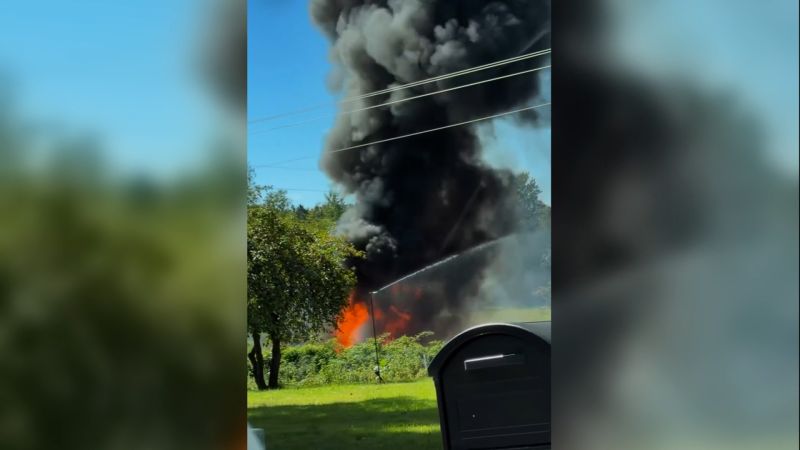
Healfromzero.com – A Texas Air National Guard F-16 crashed in northern Michigan on Thursday afternoon during a routine training flight, sending up a large fireball and thick black smoke in Grand Traverse County. The pilot ejected safely and was taken to a local hospital in stable condition.
The aircraft was assigned to the Texas Air National Guard’s 149th Fighter Wing and had departed from the National Guard base in Alpena, Michigan. The crash occurred in a rural area south of Traverse City, roughly 130 miles north of Grand Rapids, near homes and businesses that were temporarily evacuated.
Authorities said no injuries were initially linked to the impact itself beyond the pilot. However, several first responders later received treatment after possible exposure to hazardous chemicals released in connection with the wreckage. Those who remained hospitalized were expected to be released Friday.
Pilot Ejects as Aircraft Goes Down
Emergency communications suggested the fighter may have suffered an engine problem before the pilot left the aircraft. An air traffic controller told other pilots that the aircraft appeared to have lost an engine and that the smoke visible from the ground was believed to be coming from the downed F-16.
“It appears that they may have lost an engine and ejected… but we do see a lot of black smoke, which we believe is the ejected F-16.”
Another military pilot radioed air traffic control with a possible explanation for the emergency, raising the prospect that the aircraft had struck a bird.
“We have a possible mayday by wingman. I believe (they) may have taken a bird.”
The military has not determined what caused the crash and is investigating. A bird strike remains only a possible factor at this stage, not a confirmed cause.
Hydrazine Precautions Prompt Evacuations
The emergency response was complicated by concerns over hydrazine, a highly toxic substance used in an emergency power system on F-16 aircraft. Exposure can lead to coughing, wheezing and difficulty breathing, making decontamination and protective measures important for crews working close to the crash site.
Munson Medical Center set up an outdoor treatment area to assess and decontaminate people who might have encountered the chemical. The precaution reflected the potential hazards around military aircraft wreckage, where fuel, emergency systems and damaged equipment can create risks even after a pilot has escaped.
Homes and businesses within a one-mile radius were evacuated because of the hazardous chemical spill connected to the crash. Most residents were permitted to return by 10 p.m. Thursday, after officials assessed conditions in the area.
For nearby residents, the incident unfolded suddenly. Shellie Doornbos and her husband were returning from errands when they saw the fireball in a field. As they drove away, they heard explosions from the burning wreckage.
“We could hear explosions coming from the fire and asked a police officer what it was we were hearing as we were driving away, and he told us it was a fighter jet crash and the explosions were ammunition.”
Bird Strikes Are a Persistent Aviation Risk
Wildlife collisions are a familiar risk for pilots in both civilian and military aviation. Birds and other animals can damage engines, windshields, wings or other critical aircraft components, particularly during takeoff and landing when planes operate at lower altitudes. The Federal Aviation Administration’s Wildlife Strike Database records thousands of such incidents across the United States each year.
Traverse City alone recorded 41 wildlife strikes in 2025. Most do not result in a catastrophic emergency, but the danger can increase when an animal enters an engine or strikes a key part of an aircraft during a sensitive phase of flight.
Military training flights are designed to prepare aircrews for demanding operational conditions, but routine missions still involve the same environmental hazards faced by other aircraft. Investigators will examine the jet’s condition, flight information, maintenance history, weather and any evidence of wildlife contact as they work to establish what happened in Grand Traverse County.
The crash also highlighted the broad range of agencies involved after an aviation emergency. Beyond the immediate rescue of the pilot, responders had to secure the wreckage, address fire and ammunition concerns, evaluate chemical exposure, protect nearby residents and determine when the evacuation zone could safely reopen.
While the pilot’s successful ejection prevented a potentially more serious outcome, the investigation will focus on the chain of events that brought the F-16 down. Officials have not announced a timeline for a final finding.
Related Reading
Frequently Asked Questions
What is Military F 16 fighter jet crashes?
Military F 16 fighter jet crashes is the main topic of this guide. The article explains the context, practical details, and next steps readers should understand.
Why does Military F 16 fighter jet crashes matter?
Military F 16 fighter jet crashes matters because readers are looking for a useful answer, not just a short summary. Good content should match search intent and help them decide what to do next.