The Fed meeting is a pivotal moment for the bond market

Daftar Isi
Fed Decision Takes Center Stage as Treasury Yields Climb
Healfromzero.com – Financial markets are approaching the Federal Reserve’s policy meeting with unusual tension as a broad retreat from bonds drives borrowing costs higher across the economy. Investors are widely expecting the central bank to increase its benchmark interest rate on Wednesday, its first move upward since 2023, while watching closely for signs that officials remain determined to contain inflation.
Interest-rate futures reflected a 93% probability of a quarter-point increase ahead of the meeting. That expectation has made the decision especially important: a move in line with forecasts may calm one immediate concern, but a decision to leave rates unchanged could intensify selling in longer-term Treasury securities.
The pressure is already visible in government debt markets. The benchmark 10-year Treasury yield rose Tuesday and briefly reached its highest point since 2007. It has moved above 5%, compared with a 4.6% closing level on July 29. Because bond prices and yields travel in opposite directions, the rise in yields reflects lower demand for existing bonds as investors seek greater compensation for holding them.
Why Treasury yields matter beyond Wall Street
Treasury yields influence far more than trading desks. They help shape rates on mortgages, business loans, consumer credit and government borrowing. When longer-term yields rise sharply, households can face more expensive financing, companies may encounter higher funding costs, and federal interest expenses can increase.
Higher yields can also affect stock valuations. Investors often compare the potential returns from stocks with the returns available on relatively safe government bonds. As Treasury yields rise, that comparison can become less favorable for riskier assets, adding another source of volatility to equity markets.
Markets have spent weeks split between the possibility of a rate increase and a pause. Earlier in the month, each outcome at times appeared to have roughly equal odds. The calculation shifted after Friday’s inflation figures showed consumer prices remained stubborn in August. Inflation concerns have become more acute since the conflict involving Iran began, increasing pressure on policymakers to demonstrate that they will not allow price growth to become entrenched.
Credibility is part of the calculation
If the Fed declines to raise rates despite the current market consensus, investors may question whether the central bank is moving forcefully enough against inflation. That reaction could push long-dated Treasury yields even higher, even if shorter-term securities initially rally on expectations that official rates will remain lower than anticipated.
“At this stage, it would be very difficult for the Fed to leave rates unchanged this week without eroding its inflation-fighting credibility,” Vail Hartman, US rates strategist at BMO Capital Markets, said in a note.
Hartman noted that the Fed has historically been reluctant to diverge from a decision markets have anticipated with such strong conviction.
“Historically, the Fed has seldom deviated from rate decisions that markets have priced with such high conviction,” Hartman said. “Surprising with a hold would trigger a sharp rally in the front end of the curve and a sell-off in longer-dated Treasuries, [the] US dollar and risk assets.”
The contrast between short- and long-term yields is central to the market’s message. The two-year Treasury yield, often viewed as closely tied to expectations for Fed policy, stands at its highest level in more than two years. It is also roughly 100 basis points, or one percentage point, above the Fed’s benchmark interest rate. That gap indicates investors see a stronger policy response as increasingly likely.
Warsh’s message will be closely examined
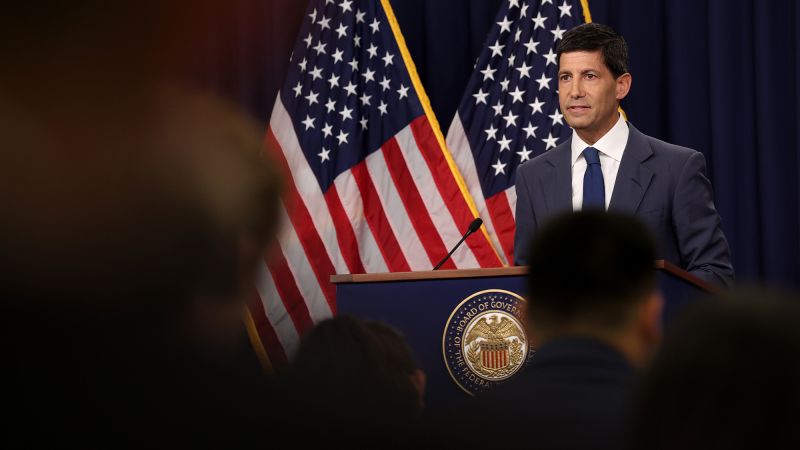
Chairman Kevin Warsh’s remarks after the decision may prove nearly as consequential as the rate move itself. Even a quarter-point increase could fail to satisfy investors if his comments leave doubt about the Fed’s willingness to keep policy restrictive should inflation remain elevated.
At the July meeting, Warsh argued that markets should react to economic conditions rather than trying to predict the central bank’s next action. He welcomed the increase in Treasury yields at that time as evidence that investors were responding to underlying economic developments.
“Market participants are learning to play the ball, not the referee — and market prices will continue to respond in the direction and magnitude they see fit,” Warsh said on July 29. “This is, in my view, a change for the better — and we’re just getting started.”
Since then, the bond market has continued to deliver a more forceful warning. The 10-year yield’s move past 5% has taken it to territory not seen in nearly two decades. Investors are weighing sticky inflation, heavier corporate borrowing, growing government debt, expectations for additional central-bank tightening and policy uncertainty connected to the Middle East conflict.
Ed Yardeni, president of Yardeni Research, said Warsh’s previous comments have heightened expectations that the Fed will act.
“[Warsh] has been talking hawkishly since June. Now, he has to deliver a rate hike,” Ed Yardeni, president of Yardeni Research, said in a note.
“After all, he promised to follow the financial markets’ lead. The 2-year and 10-year yields are clearly calling for a rate hike,” Yardeni said. “If they keep rising after Warsh’s presser on Wednesday, then he will still have a credibility problem.”
A decision with consequences for the broader economy
The Fed faces a difficult balance. Raising rates can reinforce its commitment to price stability, but tighter policy also increases the cost of borrowing throughout the economy. Holding steady could avoid adding immediate pressure to borrowers, yet it may risk convincing bond investors that inflation will not be restrained quickly enough.
For consumers and businesses, the most important outcome may not be the precise size of Wednesday’s move. The bigger question is whether the Fed can persuade markets that its actions match the inflation challenge. If that confidence weakens, Treasury yields could remain elevated or climb further, extending the effects of the bond-market sell-off well beyond the meeting room.
Related Reading
Frequently Asked Questions
What is The Fed meeting is a pivotal?
The Fed meeting is a pivotal is the main topic of this guide. The article explains the context, practical details, and next steps readers should understand.
Why does The Fed meeting is a pivotal matter?
The Fed meeting is a pivotal matters because readers are looking for a useful answer, not just a short summary. Good content should match search intent and help them decide what to do next.