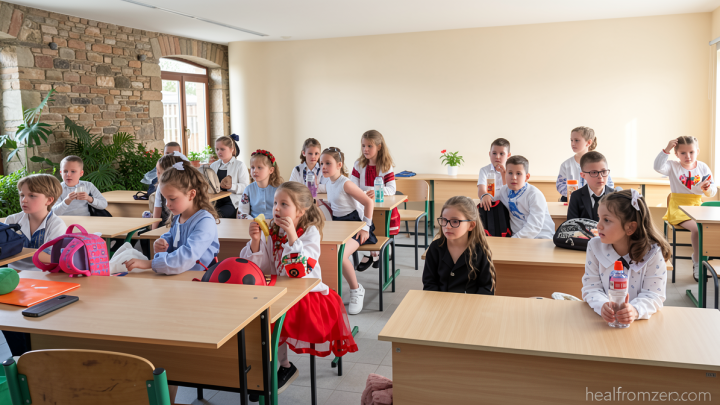
Students in Asia extend lead over a flagging US as AI reshapes education

Daftar Isi
Asian Students Maintain a Strong Edge as Global Achievement Slips
Healfromzero.com – A widening gap in international education is becoming harder to ignore: high-school students in several Asian education systems continue to outperform many Western peers while overall results in reading, mathematics and science move in the wrong direction.
The 2025 Programme for International Student Assessment, released this week by the Organisation for Economic Co-operation and Development, shows declining performance among 15-year-olds across the three core subjects. The findings arrive as governments and schools confront a faster-changing learning environment shaped by artificial intelligence, digital devices and an increasingly intense competition for skilled workers.
Asia dominates the leading group
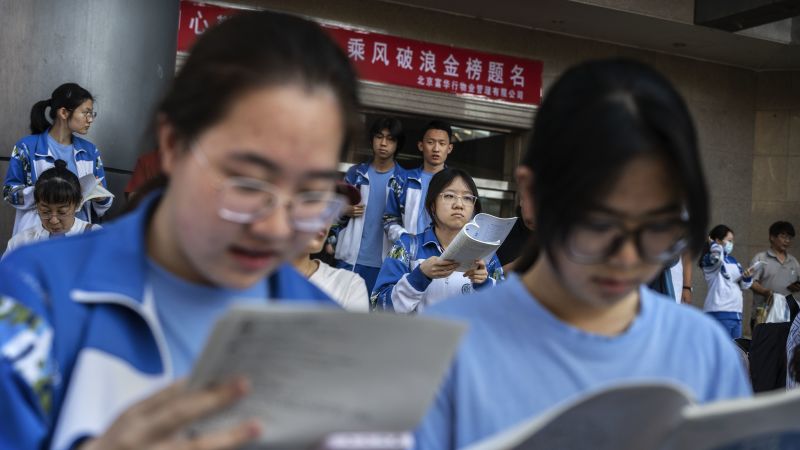
Students in Beijing and Shanghai, along with China’s Jiangsu and Zhejiang provinces, ranked among the strongest performers last year. Singapore also remained near the top of the global field. Japan and South Korea appeared in the top 10 across reading, mathematics and science, joined by Macao and Taiwan.
These results reinforce a pattern that has been visible in previous rounds of PISA testing: several East Asian systems have combined high academic expectations with consistently strong outcomes in the subjects measured by the assessment.
The Chinese results have drawn scrutiny because the participating jurisdictions represent four affluent eastern coastal areas rather than the country as a whole. Beijing, Shanghai, Jiangsu and Zhejiang are not a complete picture of China’s enormous and economically diverse student population. Even with that limitation, the submitted results underscore the contrast with the longer-term decline seen in the United States.
US scores fall as the talent race accelerates
Reading scores for American secondary-school students have fallen near their lowest point in roughly 25 years. The United States has also trailed the participating Chinese jurisdictions in PISA for years, adding urgency to concerns about educational performance at a moment when Washington and Beijing are competing for technological leadership.
That broader rivalry extends beyond test scores. China has moved ahead of the United States in the number of published scientific reports and in research spending. Both countries spent more than $1 trillion on research in 2024, highlighting the scale of investment tied to innovation, advanced technology and future economic influence.
Education matters in that contest because academic skills form part of the long pipeline that supports scientific research, engineering, entrepreneurship and a workforce able to adapt to new tools. PISA does not measure every quality that determines a student’s future success, but its reading, math and science results offer a useful view of how prepared young people are to handle complex information and problem-solving tasks.
AI raises the stakes for reading and critical thinking
The rapid spread of generative AI has made the decline in fundamental skills especially concerning. Students now face a torrent of online content, automated summaries and machine-produced answers. That environment can make it easier to find information, but it can also make it harder to assess whether information is accurate, relevant or misleading.
“Most troubling is the decline in the very skills that matter most in the AI age: evaluating information, making connections across multiple sources, and thinking critically about what we read,” Andreas Schleicher, OECD director for education and skills, wrote in the report. “In a world increasingly flooded with information, our students are less likely to think deeply and separate signal from noise.”
The concern is not simply whether students use AI. The larger question is whether they can use digital tools without losing the habits of close reading, independent judgment and sustained attention. Those abilities are increasingly important when polished but unreliable material can be generated instantly.
National wealth and family income appear less closely tied to student performance than they once were as technology has advanced. The relationship between digital tools and achievement is difficult to isolate precisely, but the assessment identified classroom distraction as a significant challenge.
In China, Japan and South Korea, fewer than 10% of students said their classmates were distracted by digital devices during science classes. The global average was 28%. The difference does not prove that devices alone determine achievement, yet it points to the importance of how technology is managed inside classrooms.
Technology requires deliberate limits and strong foundations
Singapore offers one example of a system trying to balance classroom technology with traditional academic foundations. Schools there have used digital tools while placing an early emphasis on reading comprehension. That combination may be increasingly relevant as schools decide how to incorporate AI without allowing it to replace core learning.
The report also identified a striking change in reading behavior. The share of “hasty readers” — students who move quickly through passages and answer incorrectly — almost doubled between 2018 and 2025. In an era designed around alerts, short videos and rapid scrolling, this trend raises concerns about whether students have enough practice with patient, careful reading.
For teachers and families, the lesson is not that screens must disappear from education. Digital resources can support instruction, provide access to materials and help students explore ideas. But access alone is not the same as learning. Students still need opportunities to read longer texts, explain their reasoning, test claims against evidence and work through difficult problems without immediately turning to an automated answer.
Economic consequences could be substantial
The average scores across OECD countries in science, reading and mathematics have reached record lows, creating risks that extend beyond schools. A weaker foundation in basic skills can affect productivity, innovation and economic mobility over decades.
The 2025 assessment cited a Stanford University study estimating that the United States could add more than $40 trillion to its economy over the working lives of today’s young people if every 15-year-old reached a basic level of PISA proficiency. That figure illustrates how much is at stake when large numbers of students leave school without essential academic skills.
The share of OECD students performing below that baseline rose to 20% in 2025, up from 16% in 2022. Reversing that slide will require more than new technology or larger budgets. It will depend on protecting focused learning time, strengthening literacy and numeracy, and ensuring students can think critically in a world where information is abundant but trustworthy understanding is not.
Related Reading
Frequently Asked Questions
What is Students in Asia extend lead over?
Students in Asia extend lead over is the main topic of this guide. The article explains the context, practical details, and next steps readers should understand.
Why does Students in Asia extend lead over matter?
Students in Asia extend lead over matters because readers are looking for a useful answer, not just a short summary. Good content should match search intent and help them decide what to do next.