Eiffel Tower closed due to strike after female staff allegedly removed for religious group

Eiffel Tower Closed Due to Strike Over Religious Visit
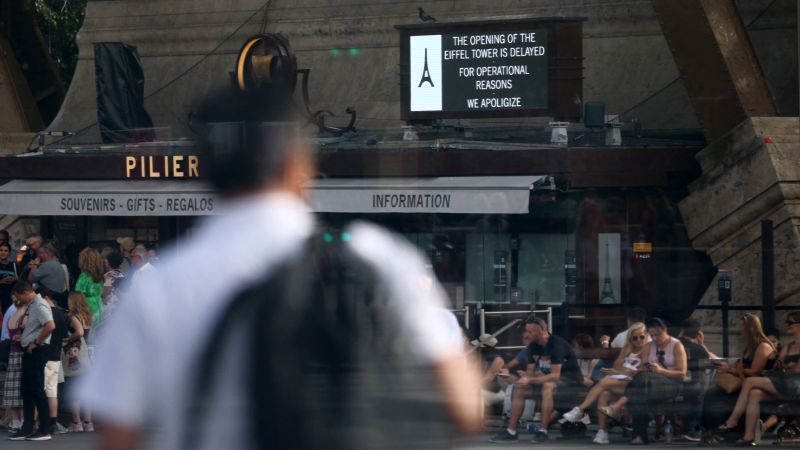
Healfromzero.com – The Eiffel Tower closed due to strike on Monday when its entire workforce walked out, cutting off public access to the monument that has anchored the Paris skyline since 1889. The walkout followed allegations that female employees were ordered off their posts during a Saturday tour by a delegation of roughly 100 members from BAPS, a Hindu organization headquartered in Ahmedabad, India. The episode triggered immediate political fallout in France and rapid coverage across Indian media within hours.
What Happened During the BAPS Visit
BAPS, which describes itself as a volunteer-driven fellowship promoting Hindu principles of faith, service, and global harmony, had arranged a guided tour of the tower on Saturday. The delegation’s Paris itinerary extended beyond the landmark: on Sunday the group inaugurated a newly built Hindu temple in the city, a milestone for the organization’s European operations.
Diane Davoine, union representative for the tower’s workforce, told reporters that the Saturday visit carried an unusual condition. During the delegation’s presence, she explained, women were asked to vacate their stations so that men could be placed in their roles instead.
“So that absolutely does not go down well with the employees, with women obviously, who are all humiliated by what happened, by the way some were treated.”
The Eiffel Tower Operating Company, known as SETE, confirmed that the visiting group had requested a tour format restricting “interactions with women.” In a statement relayed through French media, SETE conceded that “these conditions should not have been accepted,” acknowledging an institutional lapse.
BAPS issued a statement on X that stopped short of directly addressing the female-staff question. The organization said it regarded the concerns “very seriously” and noted the visit had been scheduled at normal opening hours to minimize disruption. It added:
“To the best of our knowledge, at no point was anyone prevented access to the Eiffel Tower. Nevertheless, we sincerely apologise for any pain or inconvenience caused.”
Political Backlash and France’s Secular Framework
Paris Mayor Emmanuel Grégoire moved swiftly, announcing a formal investigation into the allegations. In a post on X he declared:
“It is not acceptable that such conditions can be tolerated. These are neither my values, nor those that the Eiffel Tower should uphold, where everyone should be able to move about and act freely, without distinction between women and men.”
Aurore Bergé, France’s Minister for Gender Equality and the Fight Against Discrimination, weighed in without equivocation, labeling the episode “unacceptable” and stating that gender equality in France “is neither negotiable nor subject to varying standards.”
The incident landed in a country whose constitutional architecture embeds secularism as a foundational principle, a commitment whose intellectual lineage stretches back to the French Revolution. Over the past century, French feminist movements have driven landmark legislative victories including women’s suffrage, reproductive autonomy, and progressively broader guarantees of gender equality. In 2024, France became the first nation to enshrine the right to abortion directly in its constitution, underscoring how deeply gender rights are woven into the republic’s legal fabric.
For a workforce that includes hundreds of women in roles spanning ticketing, maintenance, engineering, and hospitality, being quietly displaced from one’s post to accommodate a visitor’s preference about gender visibility raises questions about workplace dignity, the limits of accommodating religious custom within public institutions, and the practical enforcement of anti-discrimination norms at France’s most visited tourist site.
Frequently Asked Questions
Why was the Eiffel Tower closed on Monday? The tower shut to the public because its workforce staged a full walkout in protest over the alleged directive to remove female staff during the Saturday BAPS visit. The closure lasted until the union and management resolved the dispute.
What is BAPS and why was it visiting Paris? BAPS (Bochasanwasi Akshar Purushottam Swaminarayan Sanstha) is a Hindu organization with global headquarters in Ahmedabad, India. Its delegation of roughly 100 members toured the tower on Saturday and inaugurated a new Hindu temple in Paris on Sunday.
Has an official investigation been opened? Yes. Paris Mayor Emmanuel Grégoire announced a formal investigation into the allegations shortly after the walkout began.
Did SETE admit fault? SETE confirmed the delegation had requested conditions restricting interactions with women and stated that “these conditions should not have been accepted,” effectively acknowledging an institutional error in judgment.
Can visitors still access the tower? Public access was suspended during the strike. Normal operations resume once the labor dispute is resolved; visitors should check the tower’s official channels before planning a trip.