Global bonds sell off as Middle East conflict escalates, further stoking inflation fears

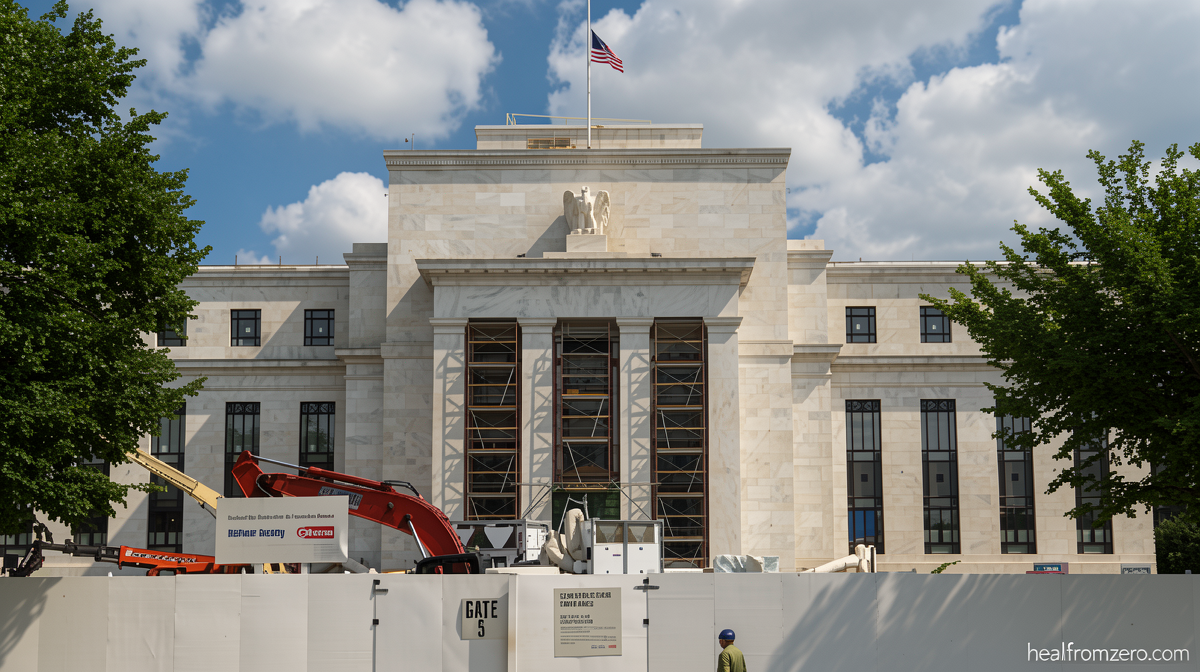
Global Bonds Sell Off as Middle East Conflict Escalates
Healfromzero.com – Global bonds sell off as Middle East tensions flare — and the fixed-income world felt the shock within hours. On Tuesday, sovereign debt prices across every major economy dropped in a synchronized wave, pushing benchmark yields to multi-decade highs. The proximate trigger was a sharp deterioration in the Middle East situation, which sent crude oil higher and revived the specter of renewed monetary tightening. Yet the move was amplified by deeper anxieties: a decade of rising public debt, and fresh signals from the Federal Reserve that left portfolio managers repricing their entire rate outlook overnight.
The practical consequences for households and firms are not abstract. Bond yields set the floor beneath virtually every borrowing rate in the economy. When they jump, mortgage payments rise, auto loans get costlier, and small-business credit tightens almost immediately. A move of this scale does not simply evaporate when the next news cycle arrives.
Yields Breach Multi-Decade Ceilings
The geographic breadth of Tuesday’s move is what distinguished it from routine volatility. Japan’s benchmark 10-year government bond yield broke above 3% for the first time since 1996, a level long dismissed as unreachable under ultra-loose policy. The United Kingdom’s 30-year gilt yield printed its highest reading since 1998. Germany’s 10-year Bund touched its peak since 2011, and France’s comparable instrument reached levels last observed in 2008.
On the other side of the Atlantic, the 10-year U.S. Treasury note — the single most consequential rate in global finance because it feeds directly into mortgage pricing, student-loan refinancing, and corporate debt issuance — climbed to 4.79%, its highest since January 2025. The longer-dated 30-year Treasury, which carries outsized sensitivity to geopolitical shocks and fiscal uncertainty, rose to 5.27%. Together, those figures represent a wholesale repricing of what investors expect the Fed to do over the coming year.
The Oil-Inflation Feedback Loop
Brent crude, the global benchmark for seaborne oil trades, gained roughly 2% on Tuesday and pushed above $92 per barrel. Sustained energy prices at that level flow directly into freight costs, manufacturing inputs, and household utility bills. For central banks already contending with sticky core inflation, a prolonged oil spike strips away the political and economic cover needed to cut rates. Anticipating that scenario, investors began offloading longer-duration bonds in size, mechanically pushing yields higher still.
Warsh’s Jackson Hole Remarks Tip the Balance
The catalyst that accelerated the sell-off this week came from Federal Reserve Chairman Kevin Warsh, who addressed the annual Jackson Hole Economic Policy Symposium on Friday. His characterization of the inflation outlook was blunt:
“concerning”
That single word reframed the probability calculus for thousands of portfolio managers. With the Fed’s next policy meeting scheduled for September 15–16, traders moved quickly to price in a higher probability of a rate hike rather than a cut. The repricing was not confined to American paper; it rippled through European and Asian sovereign markets within hours.
The Fiscal Overhang: $40 Trillion and Beyond
Geopolitics and inflation fears are only half the story. The deeper structural driver is fiscal. The United States national debt surpassed a record $40 trillion in August, sharpening investor scrutiny of America’s long-run fiscal trajectory. When sovereign issuers are perceived as accumulating debt faster than their economies grow, creditors demand a premium — a higher yield — to compensate for the risk that future inflation or currency depreciation will erode the real value of their holdings.
This is not an American problem alone. Japan, the United Kingdom, and France all carry debt-to-GDP ratios that have been trending upward for years. Investors in each of those markets are now insisting on steeper term premia, which explains why the sell-off was synchronized across currencies and continents rather than confined to one region.
Spillover into Equities and Policy Responses
Equity markets felt the tremor immediately. In Tuesday morning trading, the S&P 500 slipped 0.6% while the Nasdaq Composite fell 1%. Higher discount rates compress the present value of long-duration growth stocks, and the bond sell-off also signals a tighter financial environment that historically weighs on risk assets.
Policy makers are already responding. Just weeks ago, the U.S. Treasury Department announced it would expand the size of its bond buyback program, a move intended to absorb excess supply and stabilize secondary-market pricing. Whether that intervention can offset the combined force of fiscal expansion, energy-price shocks, and a hawkish central bank remains the central question for the coming quarter.
Frequently Asked Questions
Why did bond yields spike so sharply on Tuesday? Three forces converged: a sudden escalation in the Middle East conflict that pushed oil above $92, Fed Chairman Warsh’s hawkish Jackson Hole remarks, and the U.S. national debt crossing $40 trillion. Together they convinced investors that rates would stay higher for longer, prompting a broad rotation out of long-duration sovereign bonds.
What does a higher 10-year Treasury yield mean for my mortgage? The 10-year Treasury is the primary benchmark for 30-year fixed-rate mortgages. A move from, say, 4.3% to 4.79% typically translates into roughly 30–50 basis points of added cost on a new mortgage within weeks, depending on lender spreads and prepayment assumptions.
Will the sell-off reverse if the Middle East conflict de-escalates? Partially, yes. Geopolitical risk premia can unwind quickly once hostilities subside. However, the fiscal and inflation components of the move are structural and will not reverse on a single headline. Analysts expect yields to settle at levels meaningfully above pre-Tuesday norms even after the geopolitical premium fades.
What should investors watch next? The September 15–16 Federal Reserve meeting is the near-term focal point. A hawkish hold or any hint of a hike would likely extend the sell-off. Equally important are upcoming U.S. Treasury auction results: if demand for long-dated paper thins further, the Treasury may need to raise issuance costs, reinforcing the higher-yield regime.