People are exercising away their grief. What does the science say?

Daftar Isi
Grief in the Weight Room: How Fitness Studios Are Becoming Spaces for Mourning
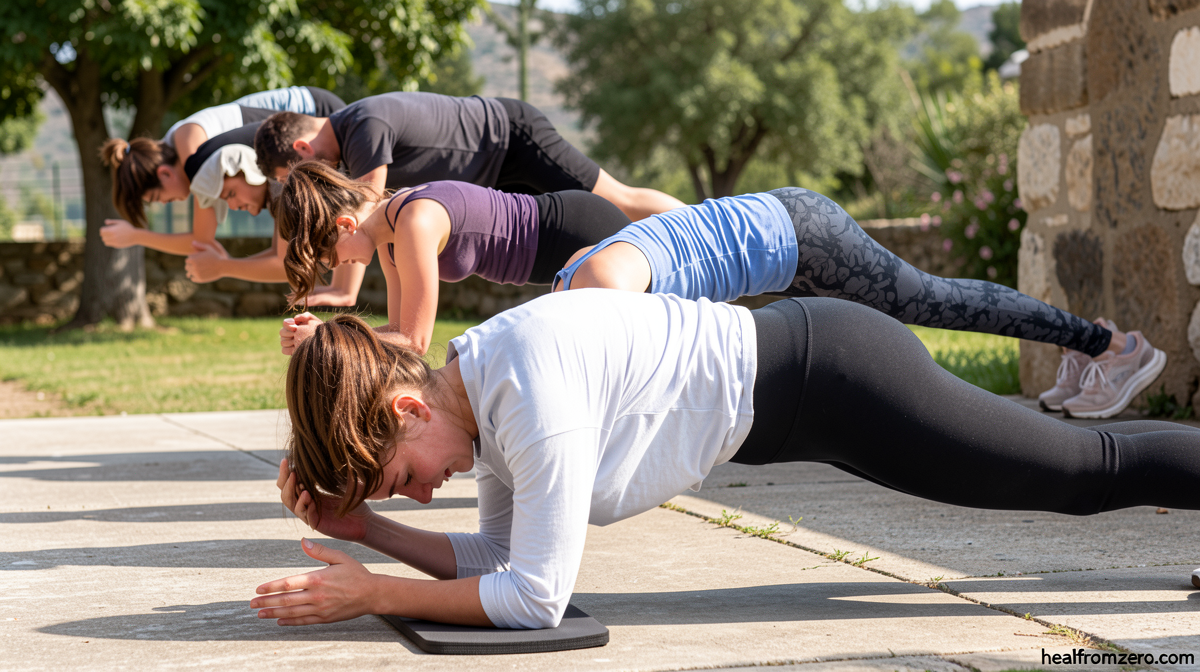
Healfromzero.com – In a dimly lit New York gym, thirty adults stood in silence, tears streaming down their faces before a single rep had been lifted. Instructor Sylvia Borowska, who has spent five years teaching Liftonic weight-training sessions, had just asked each person to select the heaviest dumbbell or barbell they could manage. Then she offered a simple reframe: hold that weight as though it sat on your shoulders, pressed into your back, or lodged in your chest.
“Do as many deadlifts as you can for the amount of time that the person you’ve lost has passed,” Borowska told the room. “That can represent either the months or years you’ve been grieving.”
The session was one of a monthly series organized under the banner of Grief, Sweat & Tears, a pop-up initiative launched in December 2025 that stages workout classes across Manhattan for adults processing loss. Priced at $30 per session, the program markets itself as the intersection where mourning meets physical exertion. For Borowska, the evening marked a personal milestone: it was the first time she opened a class by disclosing that her own mother had died of lung disease.
“Let’s keep going,” she urged the room. “Grief is heavy, but we’re stronger than that, so let’s prove to ourselves and each other how strong we are.”
A Growing Genre of Emotion-Driven Fitness
The scene above is not an isolated experiment. Rage-cycling spin classes, anxiety-focused yoga workshops, and dozens of other emotion-tagged fitness formats have multiplied over the past several years, inviting participants to select a workout not by muscle group or cardio intensity but by the feeling they want to move through. The trend rides a broader shift in how adults build social bonds outside traditional friendship channels. The networking platform Meetup now lists more than three million registered members spread across roughly 2,200 fitness-oriented groups worldwide, a figure that underscores how exercise spaces are doubling as informal community hubs.
Yet the question lingers: does pairing a barbell with a bereavement narrative actually help someone process loss, or does it merely dress up a gym session in therapeutic language? Dr. Ryan Martin, a psychologist, author, and dean of the College of Arts, Humanities and Social Sciences at the University of Wisconsin – Green Bay, cautions that peer-reviewed research on emotion-specific workout formats remains thin.
“It’s not unusual for pop culture to be a little bit further ahead than psychologists are when it comes to advocating some of these things,” Martin said.
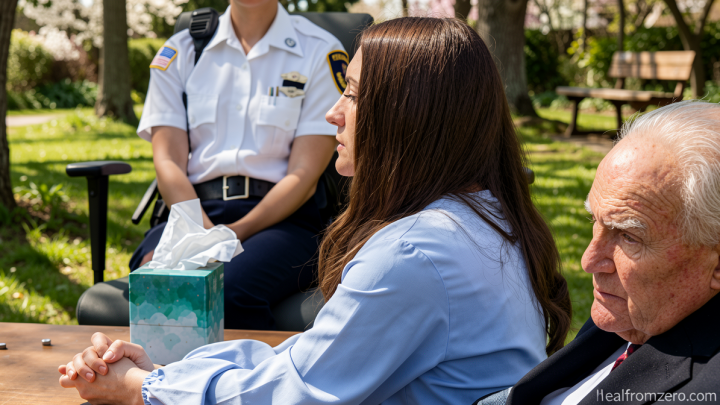
What Martin does identify as genuinely valuable is the communal dimension. For adults who find a formal grief or trauma support group intimidating — the circle of chairs, the expectation to narrate one’s pain aloud — a weight room where everyone is quietly lifting alongside a shared loss can feel like a lower-stakes entry point.
“This might provide a community where you know you’re connecting with other people’s similar experiences, but you’re not just doing it over that experience, which could be too much,” Martin explained.
The Founder’s Own Mourning
Betsy Kaplan, 29, built Grief, Sweat & Tears from a very personal absence. Eight years before the initiative’s founding, her father took his own life, and Kaplan found that New York offered no ready-made “grief space” where she could simply exist among other mourners without being pressed to articulate her story. She wanted what she calls a “no-pressure zone”: a room where the obligation was to lift, not to confess.
“We’re here to work out,” Kaplan said. “We’re here to meet people who get it and just make new connections.”
That design choice produced an immediate and lasting bond at one of the program’s earliest events. Jake Montiel, who lost his mother three years ago at age 30, walked into a GST session expecting to keep his head down. Instead, he found himself beside a young woman who had also lost her mother. The two clicked instantly, and the workout that followed gave them a shared physical task around which a friendship could take shape.
As part of GST’s standing ritual, participants speak the name of the person they have lost at the start of every class. Montiel described being terrified the first time he voiced that name aloud in a room of strangers. What steadied him, he said, was the woman beside him and the barbell waiting on the floor.
“It’s really an honest, open safe space to basically open up and get that weight off your chest just from saying those powerful words of who you’re grieving,” Montiel recalled.
Within roughly six months of its launch, approximately 400 individuals had attended at least one GST session, a number Kaplan treats as evidence that the demand for structured, low-obligation mourning spaces is real and underserved in a city of eight million.
From Rage Rooms to Recovery Spaces
The emotion-fitness model is not limited to grief. In Westminster, Colorado, Elisa Thurston chose E-motion Fitness for her engagement party — a venue that brands itself as equal parts rage room, gym, and sanctuary. Guests smash paint-filled glass bottles against padded walls, each bottle decorated with a single emotion word such as “rage” or “fear.” Trainers then guide the group through a 45-minute full-body workout before ushering everyone into a separate recovery room furnished with visual art and quiet music.
Thurston wanted her family to experience the full arc — the cathartic smashing, the exertion, the decompression — as a shared ritual before the wedding season’s final stretch of logistics and anxiety. The choice of venue itself signals how normalized it has become to book a fitness space not for its equipment but for the emotional architecture of its programming.
What the Evidence Still Lacks
None of these formats yet carry the kind of longitudinal outcome data that would let clinicians prescribe them alongside therapy. Martin’s point about pop culture outrunning the literature is apt: the classes are filling a social and psychological gap before any controlled study has measured whether a deadlift performed in the company of fellow mourners produces measurable reductions in grief-related distress, or whether the benefit is primarily social — the relief of being seen by others who need no explanation.
What is clear, however, is that adults are actively seeking spaces where the body’s need to move and the mind’s need to grieve are treated as compatible rather than competing. Whether the science catches up to the demand, or whether the demand simply outgrows the science, remains an open question. For now, the answer lives in a thirty-person gym in New York, where the heaviest weight in the room is not the barbell but the name spoken aloud at the start of the set.
Related Reading
Frequently Asked Questions
What is People are exercising away their grief?
People are exercising away their grief is the main topic of this guide. The article explains the context, practical details, and next steps readers should understand.
Why does People are exercising away their grief matter?
People are exercising away their grief matters because readers are looking for a useful answer, not just a short summary. Good content should match search intent and help them decide what to do next.