Enes Kanter Freedom ejected from WNBA game after he was confronted by player

Daftar Isi
WNBA Game Disrupted as Former NBA Center Enes Kanter Freedom Ejected After On-Court Confrontation
Healfromzero.com – A tense exchange between a former NBA player and a current WNBA guard turned a routine Sunday evening basketball game into a scene that drew national attention. Enes Kanter Freedom, the former center who spent years in the NBA, was removed from the arena floor during the Indiana Fever’s matchup against the Chicago Sky after a heated verbal confrontation with Sky guard Natasha Cloud in the closing minutes of the third quarter.
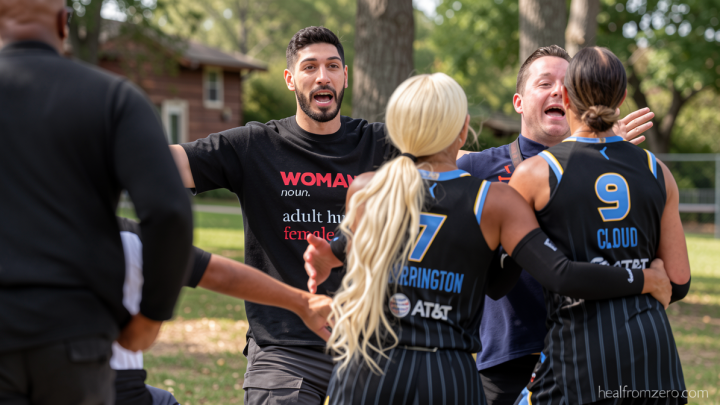
The incident unfolded at Wintrust Arena in Chicago, where Freedom had been seated along the baseline watching the action. He was wearing a black shirt bearing the printed definition: “WOMAN noun. adult human female.” That garment would become central to the aftermath of the ejection.
How the Confrontation Escalated
With 1:22 remaining in the third period, Cloud drove to the basket and scored inside. The Fever immediately called a timeout to regroup. As play paused, Cloud turned her attention toward the sideline and directed a pointed remark at Freedom, who was positioned near the baseline. Witnesses described Cloud yelling and gesturing in his direction.
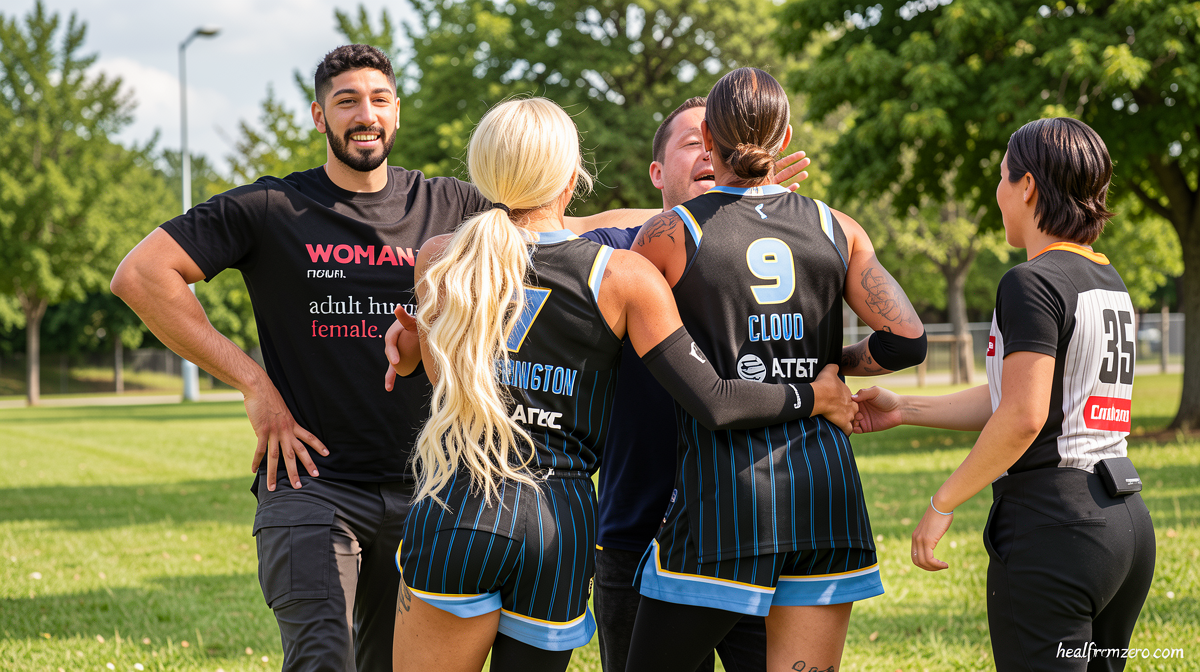
Freedom responded by extending both arms outward and stepping once onto the court surface. The brief physical proximity between the two prompted arena security personnel and several Sky players to move quickly between them, preventing the situation from escalating further. After the intervention, Freedom was escorted away from the court area by officials.
As he walked toward the arena lobby, Freedom raised his shirt to display the printed text to those around him. Before leaving Wintrust Arena entirely, he stopped to speak with a small group of police officers who had been called to the scene. No arrests were reported, and the game resumed after the brief interruption.
A Draft Eligibility That Reframes the Conversation
The ejection did not occur in a vacuum. Earlier this month, Freedom publicly declared his eligibility for the WNBA draft, stating that he identifies as a woman. He was not alone in that announcement: Royce White, another former NBA player, simultaneously declared his own draft eligibility and likewise said he identifies as a woman. Their joint declaration placed them in the pool of players available for selection by WNBA franchises during the upcoming draft process.
The WNBA draft typically draws from a mix of college players, international professionals, and players returning from other leagues. Former NBA athletes entering the draft is exceedingly rare, and the two declarations have generated sustained discussion about how gender identity intersects with athletic eligibility, roster construction, and fan expectations in professional women’s basketball.
For context, the WNBA’s draft rules allow any player who meets age and amateur-status criteria to declare eligibility. Once declared, a player’s name enters the draft pool, and teams select from that pool during the annual draft. The league does not require a player to have played exclusively in women’s competition prior to entry, meaning a former NBA career does not, by itself, disqualify a candidate. The practical question that follows such a declaration is whether any franchise will select the player, and if so, at what position in the draft order.
The Broader Cultural Moment
The Sunday-night incident at Wintrust Arena became a focal point for a debate that has been building across American sports for several seasons: how teams, leagues, and fans navigate the presence of players whose gender identity differs from the sex assigned at birth, particularly in a league whose brand identity is built around women’s athletics. Supporters of Freedom and White argue that self-identification is the standard by which every other athlete in the league is treated, and that questioning eligibility is inconsistent with how the WNBA handles its own roster decisions. Critics, meanwhile, point to competitive balance, locker-room dynamics, and the specific history of the sport as reasons for closer scrutiny.
The shirt Freedom wore that evening — a dictionary-style definition of the word “woman” — was clearly intended as a statement. By displaying it as he exited the arena, he turned a personal fashion choice into a public declaration, one that was photographed and shared widely across social platforms within hours of the game.
What Happens Next
The WNBA draft is scheduled later this year. Until a franchise selects Freedom or White, their status remains that of draft-eligible candidates. The league has not issued a separate statement addressing the Sunday confrontation beyond confirming the ejection under its standard rules for sideline conduct. Indiana and Chicago both returned to their regular-season schedules following the game.
For fans attending WNBA games in the coming weeks, the episode is likely to shape the atmosphere around any future appearance by either player. The question of whether, and when, Freedom or White will be drafted — and what the reception will be in an arena — remains open. What is no longer open is the fact that the conversation has moved from the margins of sports talk into the center of the WNBA’s own story.
Related Reading
Frequently Asked Questions
What is Enes Kanter Freedom ejected from WNBA?
Enes Kanter Freedom ejected from WNBA is the main topic of this guide. The article explains the context, practical details, and next steps readers should understand.
Why does Enes Kanter Freedom ejected from WNBA matter?
Enes Kanter Freedom ejected from WNBA matters because readers are looking for a useful answer, not just a short summary. Good content should match search intent and help them decide what to do next.