A landslide at a landfill in the capital of Guinea kills 30 people, officials say

Daftar Isi
Thirty Dead as Conakry’s Largest Waste Dump Collapses on the Day It Was Scheduled to Shut Down
Healfromzero.com – A towering mound of accumulated garbage gave way in the pre-dawn hours of Sunday, sending a torrent of rotting material cascading across the shantytown that had grown up around it. Thirty residents of Conakry, the capital of Guinea, were killed when the Dar Es Salam landfill — the city’s biggest open-air waste dump — slid into the homes clustered at its base. The disaster struck at the very moment the site was slated to be decommissioned, a cruel coincidence that has intensified public anger over years of deferred maintenance and inadequate urban planning in West Africa’s largest bauxite producer.
The Collapse
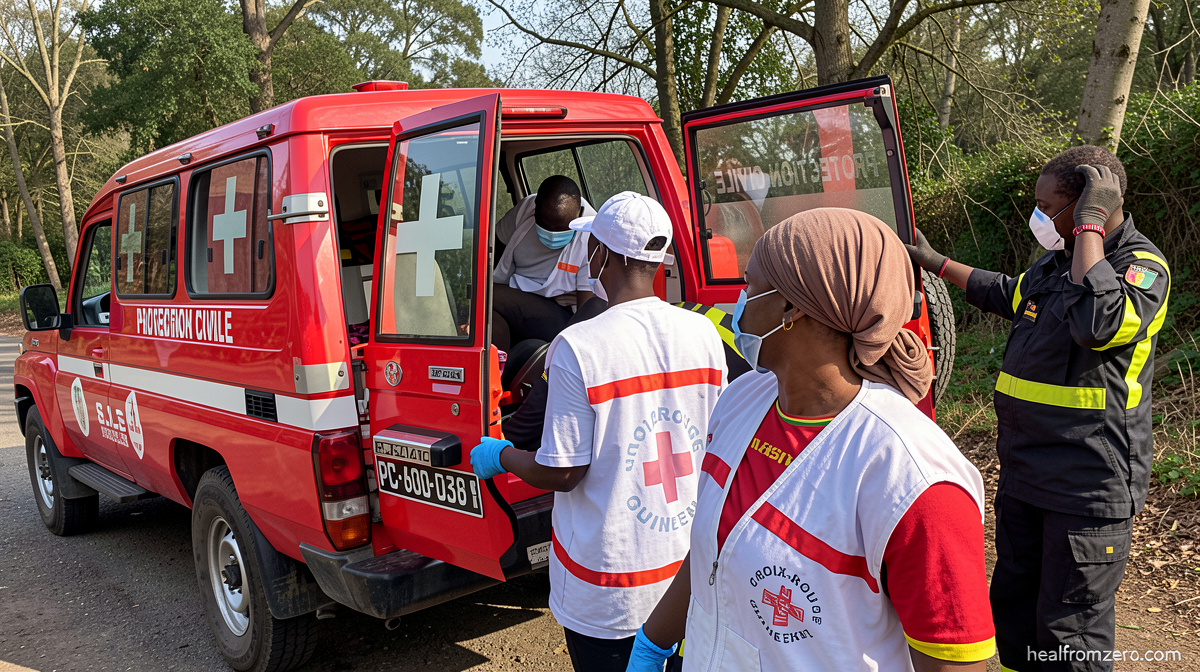
Heavy rainfall began falling over the Conakry area at approximately 2 a.m., saturating the compacted layers of refuse that had built up over many years. Waterlogged and structurally unstable, the heap lost cohesion and broke loose in a single catastrophic slide. The mass of decomposing waste, mixed with liquid runoff, swept downhill and engulfed the makeshift dwellings — thin-walled shacks constructed from salvaged materials — that lined the landfill’s lower slopes. Several structures were flattened outright, and six survivors pulled from the debris were reported in serious condition, requiring immediate medical attention.
Search-and-rescue teams worked through the morning and into the day, combing through the collapsed material for anyone still alive beneath the rubble. The operation was hampered by the sheer volume of organic waste, the ongoing drizzle, and the unstable ground surrounding the site, which continued to shift in smaller secondary slides.
A Closure That Came Too Late
The Dar Es Salam dump had been officially designated for closure on that same Sunday, according to Lt. Col. Baldé Mamadou Bailo, the sanitation officer attached to the military engineering battalion responsible for municipal waste operations. The announcement of the shutdown had prompted authorities to issue eviction notices to the informal settlements that had developed in the landfill’s shadow over successive years. Many residents heeded the warnings and moved out in the days beforehand, yet a significant number remained in place when the mountain of garbage let go.
The minister of territorial administration and decentralization, Dienabou Touré, addressed the crowd gathered at the scene and pledged that no family would be left without a destination:
“We will ensure that the remaining families are relocated elsewhere.”
That promise, however, lands against a backdrop of chronic housing shortages in Conakry, where informal settlements along riverbanks, hillside slopes, and industrial perimeters have become the default accommodation for working-class residents priced out of formal neighborhoods. Relocation, in practice, often means a move from one precarious location to another, and critics have long argued that Guinea’s urban infrastructure has not kept pace with rapid population growth in its capital.
Wealth and Want: Guinea’s Paradox
The tragedy at Dar Es Salam sits in sharp tension with the country’s extraordinary mineral endowment. Guinea holds the world’s largest known reserves of bauxite, the primary ore of aluminium, and also possesses substantial deposits of iron ore, gold, diamonds, and a range of other industrial minerals. Revenue from these resources has made the nation one of West Africa’s most strategically important extractive economies.
Yet that wealth has not translated into broad-based prosperity. The World Bank places Guinea’s poverty rate at 43.7 percent of the population living below the national poverty line — a figure that underscores how mineral riches, concentrated in a handful of export operations, coexist with widespread material deprivation in urban and rural communities alike. For the families who built their homes at the foot of the Dar Es Salam heap, the distance between Guinea’s global mineral significance and their daily reality was measured in metres of compacted garbage.
Broader Implications
The Conakry disaster is unlikely to be an isolated event. Open-air landfill sites of comparable scale and age exist in several West African capitals, where municipal waste collection remains incomplete and informal settlements press against the boundaries of disposal grounds. Seasonal rainfall, which intensifies through the summer months in the Guinea region, repeatedly tests the structural integrity of such sites. Engineers and public-health specialists have repeatedly cautioned that without engineered containment — lined cells, leachate collection, and controlled compaction — large unmanaged dumps become latent hazards every time a heavy storm passes overhead.
The fact that Dar Es Salam was already earmarked for closure on the day it failed raises difficult questions about the sequencing of decommissioning: Were residents given adequate time and resources to vacate? Were temporary shelters arranged before the final shutdown? Were the structural risks of a saturated heap communicated to those still living at its base? Answers to those questions will shape whether the government’s response is viewed as genuine accountability or as another episode of reactive crisis management in a city that has, for years, lacked a coherent long-term waste-management strategy.
For now, the focus remains on the thirty families who lost members in the slide, the six seriously wounded survivors still in hospital, and the displaced residents awaiting the relocation that Minister Touré has pledged. The mountain of refuse that killed them on Sunday was, by design, meant to be gone by Monday. The delay, however brief, proved fatal.
Related Reading
Frequently Asked Questions
What is A landslide at a landfill?
A landslide at a landfill is the main topic of this guide. The article explains the context, practical details, and next steps readers should understand.
Why does A landslide at a landfill matter?
A landslide at a landfill matters because readers are looking for a useful answer, not just a short summary. Good content should match search intent and help them decide what to do next.