When they didn’t find fraud while testing a voting machine for the Trump admin, this cyber firm faced a wave of backlash

Daftar Isi
Cybersecurity Firm Loses Government Contract After Refusing to Confirm False Election Fraud Claims
Healfromzero.com – A cybersecurity company contracted by the federal government to evaluate voting equipment has found itself at the center of political controversy after declining to validate administration officials’ assertions about widespread voter fraud in the 2020 presidential election. Mojave Research, led by CEO Jason Wareham, was abruptly dropped from its contract with the Office of the Director of National Intelligence despite conducting thorough testing of election hardware.
Testing in an Unexpected Location
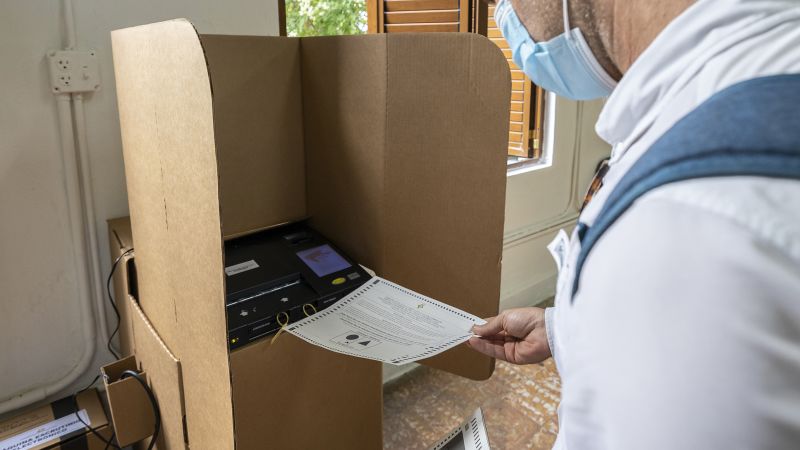
When the ODNI approached Mojave Research in the spring of 2025, the company had never before tested election systems. The federal agency needed an independent assessment of a Liberty Vote voting machine—previously manufactured by Dominion Voting Systems—that had been acquired from Puerto Rico. What followed was an intensive six-week examination conducted entirely in Wareham’s basement in Reston, Virginia. The comprehensive analysis revealed significant vulnerabilities in the voting equipment. According to Mojave’s chief technology officer Manbir Gulati, who presented the findings at DEF CON’s “Voting Village” symposium in Las Vegas, the team discovered “extensive and largely unacceptable weaknesses, but we did not find evidence that those weaknesses were actively exploited or that votes were altered.” The complete report was submitted to the ODNI in July 2025 but remains unpublished to this day.
Political Backlash Follows Unbiased Findings
The firm’s refusal to align with prevailing political narratives triggered an immediate response from Trump administration allies. Wareham, a Republican, explained his position at the DEF CON conference: “A group of White House-adjacent Trump allies was dissatisfied that I was not willing to name and shame at that moment and to say, Turns out 2020 was a landslide for Trump. Nobody knew.” Rather than accepting the firm’s conclusions, several Trump-aligned figures began questioning Mojave Research’s credibility through coordinated misinformation campaigns. The most persistent false claim centered on the company’s alleged funding from George Soros, a billionaire who has become a frequent target of conspiracy theories.
A Declaration Under Penalty of Perjury
In September, Wareham submitted a formal declaration under penalty of perjury to the Trump administration. The document explicitly rejected accusations that his company was “some form of deep plant meant to ensure the suppression of truth around compromised elections or election systems.” The declaration included financial statements demonstrating that Mojave Research had no financial connection to Soros. The political maneuvering intensified when attorney Kurt Olsen, who had built a reputation challenging election results, inserted himself into the ODNI’s investigation. Despite having no prior experience in election law before 2020, Olsen eventually established a direct line to President Trump through his persistent efforts to undermine confidence in the 2020 election outcome. Wareham’s declaration noted that “during many of those interactions and meetings, Mr. Olsen would inform me he was speaking with the President on the election topic and at times seemed to intimate that he spoke on this issue for him.”
The Stop-Work Order
Following the declaration submission, Wareham received an email confirming that the ODNI had issued a stop-work order on the contract. This administrative action effectively halted Mojave Research’s work without formally terminating the agreement, leaving the company’s future uncertain. The incident reflects broader tensions within the Trump administration regarding the 2020 election. The administration’s renewed examination of that contest has extended beyond Puerto Rico to Arizona, where the FBI obtained records of an audit confirming Joe Biden’s victory in the state.
Legal Consequences for Election Challengers
Olsen’s track record of challenging election results has not been without legal repercussions. The Arizona Supreme Court previously ordered $2,000 in sanctions against Olsen and his co-counsel after they made false claims about the 2022 Arizona gubernatorial election during their unsuccessful attempt to overturn that result.
Implications for Election Security
This episode highlights the challenges facing independent organizations tasked with evaluating election infrastructure. When political actors prioritize narrative consistency over factual accuracy, companies providing unbiased analysis can face significant professional consequences. The Mojave Research case also demonstrates how conspiracy theories can be weaponized against legitimate institutions. The persistent claims about Soros funding, despite lacking evidentiary support, illustrate how antisemitic conspiracy theories continue to circulate in American political discourse. As election security remains a priority for federal agencies, the treatment of Mojave Research serves as a cautionary example for other organizations considering government contracts in this politically charged environment. The firm’s experience suggests that political alignment may sometimes matter more to certain officials than technical accuracy or methodological rigor. The unpublished nature of Mojave’s complete report adds another layer of complexity to the situation. Without public access to the full findings, the debate continues to be shaped by political narratives rather than comprehensive evidence.
Related Reading
Frequently Asked Questions
What is When they didn t find fraud?
When they didn t find fraud is the main topic of this guide. The article explains the context, practical details, and next steps readers should understand.
Why does When they didn t find fraud matter?
When they didn t find fraud matters because readers are looking for a useful answer, not just a short summary. Good content should match search intent and help them decide what to do next.