Claudia Sheinbaum Fast Facts

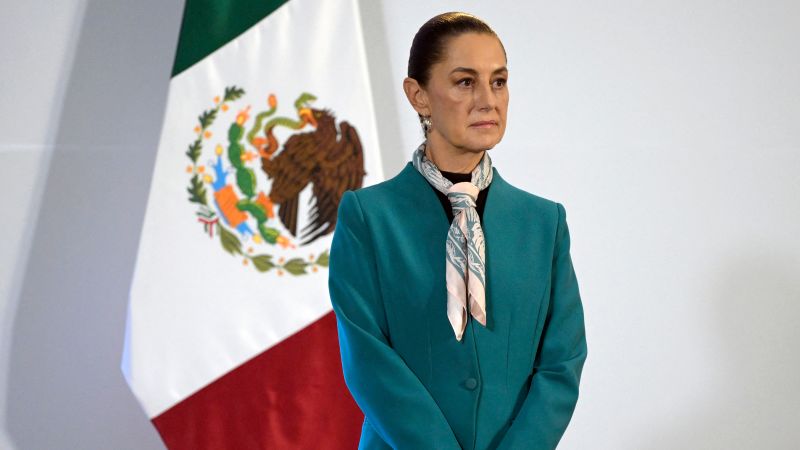
Claudia Sheinbaum: Pioneering Climate Scientist and Mexico’s First Female President
Early Life and Family Background
Claudia Sheinbaum Fast Facts – Claudia Sheinbaum, born on June 24, 1962, in Mexico City, emerged as a trailblazer in Mexican politics. Her full name, Claudia Sheinbaum Pardo, reflects her multicultural heritage. Her father, Carlos Sheinbaum, was a chemical engineer, while her mother, Annie Pardo, served as a biologist and professor. The family’s Jewish roots, traced back to Sheinbaum’s maternal grandparents who fled Europe during the Holocaust, have shaped her identity and values. Despite her heritage, Sheinbaum has rarely discussed her personal background publicly, instead focusing on her professional achievements.
Education and Academic Contributions
Sheinbaum’s academic journey began at the National Autonomous University of Mexico (UNAM), where she earned a bachelor’s degree in physics in 1989. Her dedication to energy science led her to pursue advanced degrees, including a master’s and a doctorate in energy engineering from the same institution. Her scholarly work gained international recognition, culminating in her role as a researcher at the Lawrence Berkeley National Laboratory in California. This experience solidified her expertise in environmental issues and positioned her as a key figure in climate science.
Political Activism and Early Career
Sheinbaum’s political engagement began in her formative years, influenced by her parents’ participation in Mexico’s 1968 protest movements. As a student at UNAM, she became actively involved in advocating for public education reforms, protesting against privatization efforts that threatened access to quality schooling. These early efforts laid the groundwork for her future leadership. Her academic credentials earned her the nickname “la Doctora,” a title that underscores her authority in policy discussions.
Rise in Political Leadership
In 1995, Sheinbaum joined the faculty of UNAM’s Engineering Institute, contributing to education and research. By 2000, she had already entered politics, serving as Mexico City’s environment secretary under the leadership of Andrés Manuel López Obrador. This role marked her first significant step into public governance. Her career continued to evolve when she left the Party of the Democratic Revolution (PRD) in 2014 to align with López Obrador’s National Regeneration Movement (MORENA).
Historic Presidential Election
Sheinbaum’s political milestones culminated in a groundbreaking achievement. In 2018, she became the first woman elected mayor of Mexico City, a role she held until June 2023. Her campaign highlighted environmental sustainability and social equity, resonating with voters. In September 2023, she secured the presidential nomination through a coalition including MORENA, the Labor Party, and the Ecologist Green Party. Her victory in the June 2, 2024, election, where she garnered approximately 60% of the vote, made her the first female president in over 200 years of Mexico’s independence.
Legacy and Impact
Sheinbaum’s presidency has been defined by her scientific background and progressive policies. As a member of the International Panel on Climate Change (IPCC), she was part of the team that shared the Nobel Peace Prize with Al Gore in 2007 for their work on climate change awareness. Her leadership has emphasized climate action, renewable energy, and social reforms, reflecting her commitment to addressing both environmental and socioeconomic challenges.
Recent Political Developments
In November 2025, Sheinbaum made headlines by announcing legal action against a man she accused of harassing her the previous day. “This was an assault on all women,” she stated, framing the incident as a broader issue of gender-based violence. This moment underscored her role as a vocal advocate for women’s rights.
Controversies and Media Scrutiny
The media has also scrutinized Sheinbaum’s administration. In May 2026, CNN reported that CIA operatives in Mexico had been linked to targeted attacks on cartel members, a claim Sheinbaum later dismissed. The report, which highlighted potential foreign influence in domestic affairs, sparked debates about security policies and external involvement in Mexico’s drug war.
Sheinbaum’s career trajectory exemplifies the intersection of science and politics. From her early activism to her academic pursuits, she has consistently used her knowledge to shape policy. Her election as president marked a pivotal moment in Mexican history, symbolizing a shift toward more inclusive leadership. As the 66th president, she has faced both praise and criticism, but her achievements remain a testament to her qualifications and vision. Her tenure continues to influence national discourse, particularly on climate change and social justice.
Her personal life also reflects a blend of stability and transformation. She married Jesús María Tarriba in 2023, a union that has reinforced her public presence. Earlier, she was married to Carlos Ímaz Gispert from 1987 to 2016, and they had two children: Mariana and Rodrigo, the latter being the son of Ímaz Gispert from a prior relationship. These personal milestones have coincided with her professional ascension, illustrating a life dedicated to public service.
As a secular leftist, Sheinbaum’s policies have sought to balance economic growth with social welfare. Her administration has focused on reducing inequality, modernizing infrastructure, and addressing environmental degradation. These priorities align with her academic focus on energy engineering and her advocacy for sustainable practices. Despite the challenges of leading a nation with deep-rooted political divides, she has maintained a strong public image, often emphasizing unity and progress.
Sheinbaum’s journey from a physics student to a national leader highlights her perseverance and adaptability. Her ability to transition from scientific research to political activism has positioned her as a unique figure in Mexican politics. Her leadership has also been marked by a focus on international collaboration, as seen in her involvement with the IPCC and her engagement with global climate initiatives.
Her election in 2024 was a historic event, not only for its scale but also for its implications. As the first president of Jewish heritage, she brought a diverse perspective to the Mexican government. Her swearing-in ceremony on October 1, 2024, symbolized the culmination of decades of work in public service.
Throughout her career, Sheinbaum has remained a prominent voice in environmental policy. Her scientific expertise has informed her decisions, making her a credible leader in an era of climate urgency. Her policies have aimed to integrate scientific solutions with grassroots movements, ensuring that climate action is both evidence-based and socially inclusive.
Her advocacy extends beyond policy. In 2025, she took a stand against gender-based violence by publicly accusing a man of harassing her, describing the incident as an attack on women’s dignity. This statement reflected her broader commitment to equality and justice.
As Mexico’s first female president, Sheinbaum has faced unprecedented scrutiny. Yet, her tenure has been characterized by a focus on innovation and progress. Her leadership has also highlighted the importance of scientific leadership in governance, setting a precedent for future administrations.
From her early days at UNAM to her presidential campaign, Sheinbaum’s story is one of determination and public service. Her ability to merge her scientific background with political strategy has made her a symbol of modern leadership in Mexico. As she continues her term, her legacy is being shaped by her policies, her personal convictions, and her historic role in a rapidly changing nation.
“This was an assault on all women,” Sheinbaum stated, framing the incident as a broader issue of gender-based violence.
Her journey serves as an inspiration to aspiring leaders, particularly women and minorities. By breaking barriers in both science and politics, Sheinbaum has redefined what is possible in Mexican leadership. Her career, marked by resilience and vision, continues to influence the country’s direction in the 21st century.