
Wreckage of Pan Am plane found 74 years after it crashed off Puerto Rico
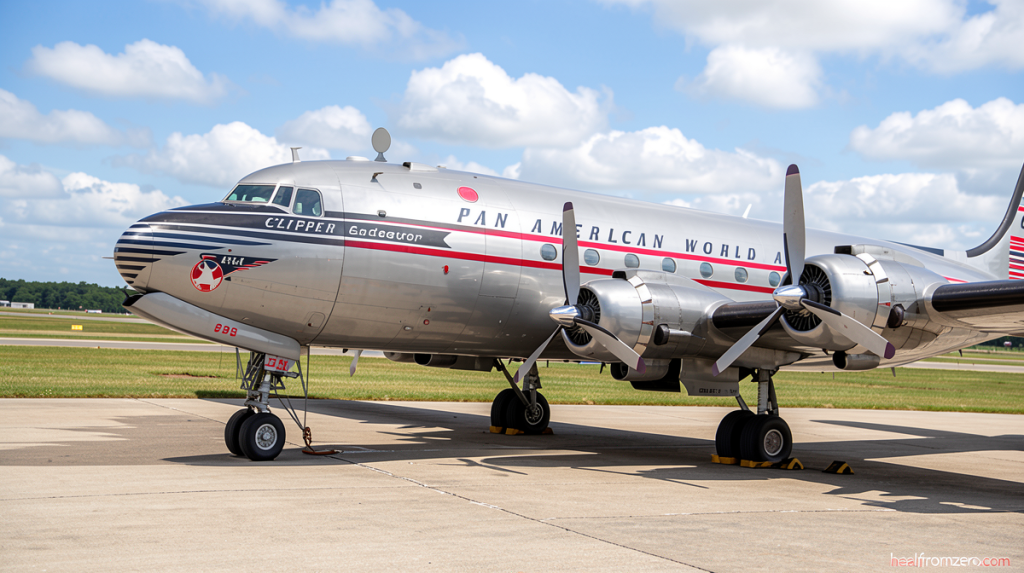
Historic Pan Am Aircraft Recovered from Puerto Rico Waters After Seven Decades
Healfromzero.com – For nearly three-quarters of a century, the resting place of the Pan Am “Clipper Endeavor” remained a maritime mystery. That uncertainty finally ended when an aviation search team located the Douglas DC-4 aircraft resting on the Atlantic Ocean floor off Puerto Rico’s northern coastline. The discovery, announced on a Tuesday, marks the culmination of decades-long efforts to pinpoint exactly where the plane came to rest following its dramatic crash on April 11, 1952.
The Air/Sea Heritage Foundation spearheaded the expedition, collaborating with multiple organizations including the Discovery Channel’s popular program “Expedition Unknown.” Using an autonomous underwater drone equipped with high-resolution sonar technology, the team successfully identified the wreckage on June 2 at a depth of approximately 2,000 feet beneath the ocean’s surface. The breakthrough came partly through serendipity, as a research vessel carrying one of the world’s most advanced sonar systems happened to navigate through the team’s narrowed search parameters and agreed to remain for 48 hours to assist with the investigation.
A Tragedy That Transformed Aviation Safety
The Clipper Endeavor departed Puerto Rico bound for New York with 64 passengers and five crew members aboard. Shortly after takeoff, the aircraft experienced catastrophic failures when both of its right-side engines failed. The pilot executed what investigators described as a violent water landing, but the aircraft sank in less than three minutes despite being equipped with life rafts and personal flotation devices for everyone on board.
While all passengers survived the initial impact, only 17 individuals were ultimately rescued. The remaining 52 people perished in the disaster. Investigators attributed the high casualty rate to several compounding factors: the absence of a safety briefing, a language barrier among passengers, and the lack of a coordinated evacuation procedure. The US Coast Guard and Air Force responded to the emergency, successfully saving 12 passengers and five crew members from the rapidly sinking plane.
“We are all stunned and elated by this discovery yet also humbled to remember what happened in that place so long ago,” Russ Matthews, president and co-founder of the Air/Sea Heritage Foundation, expressed in an official release.
Confirming the Discovery
A subsequent photographic survey provided conclusive identification of the aircraft. Images clearly revealed the iconic winged Pan American logo alongside the aircraft’s name, both still legible after 74 years underwater. The craft had separated into two distinct sections during the crash and subsequent descent to the ocean floor.
Josh Gates, host of “Expedition Unknown,” described the moment of discovery: “It went down for about 30 hours and scanned the sea floor in our target area, came back to the surface, and there it was.” NBC first reported the finding on the “Today” show on Tuesday morning, bringing widespread attention to the historic recovery.
“Having had the cabin crew establish their aut” — this partial quote from the original report references the safety reforms that followed the tragedy.
Legacy and Remembrance
The Clipper Endeavor disaster prompted significant changes in aviation regulations. The Civil Aeronautics Board, which preceded today’s Federal Aviation Administration, proposed amendments to civil air regulations designed “to assure a greater degree of safety to the occupants of aircraft flying over water routes.” These proposals, subsequently implemented, included mandatory preflight briefings instructing passengers on locating and utilizing life vests, life rafts, and emergency exits.
Discovery Channel plans to feature the discovery in an upcoming “Expedition Unknown” episode later this year. Both Discovery and CNN share ownership under Warner Bros. Discovery. A spokesperson for “Expedition Unknown” confirmed to CNN that the wreckage will remain undisturbed, as the site serves as a grave for those who lost their lives in the crash.
The Air/Sea Heritage Foundation is currently collaborating with Puerto Rico’s government to expand legal protections for the wreckage site. The organization is also advocating for the establishment of a memorial honoring the victims. Families directly affected by the tragedy, including the crash’s only two known living survivors, have been contacted regarding the discovery.
According to Gates, the two surviving passengers are a woman now 102 years old who served as a nurse in her twenties and played a crucial role in opening the aircraft door to help passengers escape, and a baby who was found floating on the water’s surface and successfully resuscitated by rescuers. Both survivors were described as deeply emotional and gratified upon learning that the wreckage had finally been located.
The search team, which also included the Deep Sea Vision company, utilized cutting-edge technology to complete the mission. The combination of modern sonar capabilities and fortunate timing allowed researchers to solve a mystery that had persisted for generations, bringing closure to one of aviation’s most poignant maritime tragedies.