
What the Guadalupe River left behind
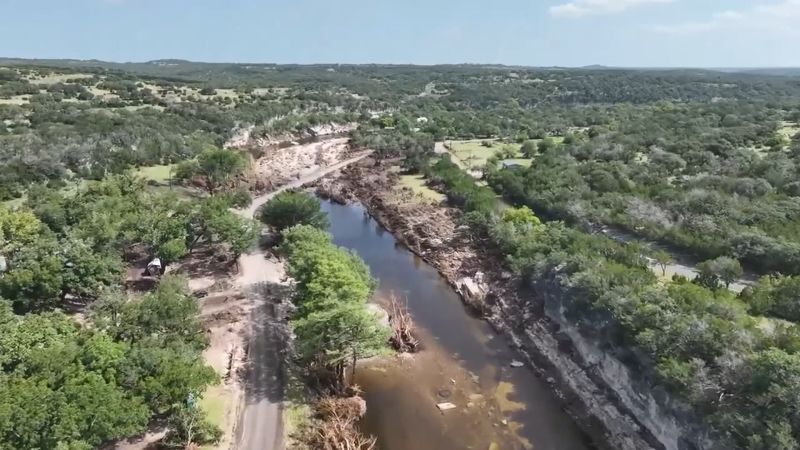
What the Guadalupe River left behind
What the Guadalupe River left behind – During a summer marked by relentless rainfall, the Guadalupe River in Texas transformed from a gentle stream into a powerful force of nature. On July Fourth, Elida Sierra Lutz and her three children were among those caught in the chaos. As the waters surged, the family was swept away, their belongings scattered like flotsam in the current. For hours, they clung to life, fighting against the flood’s fury until they were finally rescued. The disaster had been swift—more than a summer’s worth of rain had fallen overnight on parched earth, raising the river’s level from just over three feet to nearly 30 feet in under an hour. For Elida, the loss was devastating: her 18-year-old son’s black zippered hoodie, a cherished item he wore almost daily, was gone. So too were his wallet, glasses, and cell phone. Her daughter’s Nintendo devices, lifejacket, and a pair of white Crocs adorned with handpicked charms vanished. Even their travel trailer was claimed by the flood, leaving them to wonder what would become of their personal treasures.
The Camp’s Devastating Toll
About 10 miles downstream, the devastation at Heart O’ the Hills was equally profound. The summer camp, nestled along the Guadalupe River, had lost more than just its physical structures. Among the casualties was the camp’s beloved director and co-owner, whose lifeless body was found amid the wreckage. The flood had erased pieces of the camp’s storied history—cabin signs, 1950s-era sterling-silver necklaces symbolizing the Firelighter leaders, and the iconic trophy known as The Cup, awarded to campers at the end of each term. Even the crown molding in the director’s office, which spelled out the camp’s Eight Traits, including courage, trust, and faith, was swept away. The items were no longer just possessions; they were fragments of memory, identity, and community. Survivors, though grateful to be alive, found themselves grappling with the question of what had become of their belongings.
A Call to Action
As the waters receded, the task of recovery began. Dondi Voigt Persyn, a mother of three and grandmother of four from Boerne, Texas, stepped forward as a volunteer. Her home, perched on a hill above the Guadalupe River, offered a vantage point for tracking the flood’s aftermath. With a background in pathology and a passion for perfume, Dondi was unprepared for the scale of the challenge ahead. Yet, within days, she realized the flood had not only taken lives but also left a trail of lost items across the Central Texas landscape. “They’re gonna want their things,” she mused, recalling the emotional weight of the situation. “Like I would want mine.”
The mission to reclaim the stolen belongings quickly evolved into a communal effort. Dondi enlisted the help of her best friend, DeAnna, a skilled internet sleuth, to organize the search. Together, they launched a Facebook group called FOUND on the Guadalupe River, a digital hub where people could share lost and found items. The page became a lifeline for survivors, with posts flooding in as individuals posted photos of wallets, textiles, sports gear, jewelry, and even children’s stuffed animals. Strangers in the comments sections offered clues, identified missing items, and connected owners with their belongings. It was a testament to the resilience of the community, as people banded together to rebuild what had been taken.
Reconnecting Lost Pieces
The process was not without its challenges. Sorting through debris, identifying items, and matching them to their rightful owners required patience, creativity, and a deep understanding of human connection. Dondi and DeAnna worked tirelessly, piecing together stories from the remnants of lives upended by the flood. Among the most poignant moments came when the first reunion occurred. On July 7, just days after the disaster, Dondi posted a photo of five tangled necklaces she had found in the floodwaters. Within hours, a message arrived from Patty Hyatt, a retired schoolteacher, who had lost everything in the same surge. “Oh my goodness, those are mine,” she wrote, her voice trembling with relief. Patty and her grandson had barely escaped with their lives before the floodwaters destroyed their trailer, taking with them the necklaces that had once belonged to her.
“They’re gonna want their things,” she thought, “like I would want mine.”
Patty’s story was one of many that unfolded through the FOUND group. Each post became a narrative of loss and hope, with survivors describing the sentimental value of their items. A child’s toy, a family heirloom, or a flag from a previous camp session carried more than just material worth—they were tied to moments of joy, grief, and survival. Dondi’s team of volunteers, including locals and strangers from across the country, worked methodically, cataloging items and sending them to potential owners. The process was slow, but the momentum grew as more people joined the effort, sharing leads and photos that helped piece together the flood’s aftermath.
As the days passed, the FOUND group became a symbol of collective determination. The team documented their journey, from the initial chaos to the gradual reunification of lost items. For many, the recovery was not just about reclaiming objects but about restoring a sense of normalcy. The camp’s Eight Traits, once etched in the crown molding, were now etched into the hearts of those who had survived. Dondi, who had initially joined as a volunteer, found herself at the center of an unexpected mission. What began as a simple search for items turned into a calling, one that would span weeks and involve hundreds of people. The flood had taken much, but it had also given rise to a story of human solidarity, proving that even in the face of nature’s wrath, the bonds of community could endure.
While the Guadalupe River had claimed 136 lives, including dozens of children, a grandmother, and a coach, its legacy extended beyond the loss. The flood’s aftermath became a stage for stories of survival, from the Lutz family’s harrowing escape to the camp’s program director, whose absence left a void in the community. The FOUND group, now a cornerstone of the recovery effort, highlighted the emotional stakes of the disaster. Every item found was a step toward healing, a reminder that even the smallest trinkets could hold immense meaning. As the river’s waters receded, the true cost of the flood became clearer. Yet, amid the ruins, a new chapter began—one where lost belongings would be reclaimed, and the spirit of the community would rise to meet the challenge.
The Journey of Reclamation
The work of recovery continued long after the floodwaters had gone. Dondi and her team spent weeks combing through the landscape, uncovering items that had been carried away by the river’s force. Some objects were found near the banks, others buried beneath layers of mud, and a few even floated downstream to unexpected places. The process required not only determination but also a knack for storytelling, as each item’s journey became a thread in the larger tapestry of the disaster. For the Lutz family, the return of their son’s hoodie was more than a simple act—it was a moment of closure, a reminder that the river had taken much, but not everything.
As the FOUND group expanded, its impact grew. What started as a local effort became a national movement, with people from distant cities contributing to the search. The group’s pages brimmed with emotion, from gratitude for found items to sorrow for those that remained missing. The flood had left behind a landscape of loss, but it had also sparked a movement of hope. Each recovered item, whether a necklace, a toy, or a photograph, was a victory over the flood’s devastation. The Guadalupe River had taken pieces of lives, but through the efforts of volunteers like Dondi, those pieces were slowly returned, piece by piece, to their rightful places.