This city had a flooding problem. So it turned to an animal that had been extinct there for 400 years

This City Had a Flooding Problem. So It Turned to an Animal That Had Been Extinct There for 400 Years
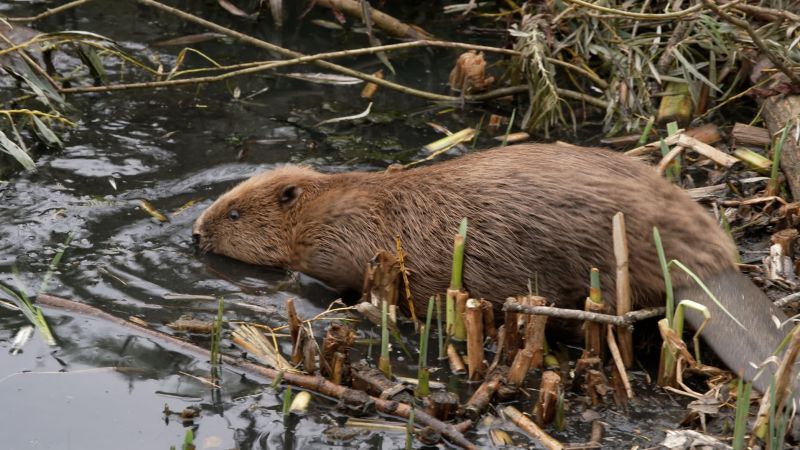
This city had a flooding problem – Deep in the heart of West London’s Ealing borough, a surprising transformation is taking place. A few hundred feet from a McDonald’s and a strip mall, nestled between bustling and heavily trafficked streets, a thriving urban wetland is being shaped by an unlikely team of creatures: beavers. These flat-tailed rodents, long absent from the area, are now playing a pivotal role in combating a persistent issue that has plagued the region for years.
For decades, heavy rainfall would turn Ealing’s streets into rivers, with water spilling into the nearby Greenford tube station, a key part of the London Underground network. The problem was severe enough to prompt local authorities to consider conventional engineering fixes—constructing artificial reservoirs with heavy machinery and concrete. But a group of conservationists saw a different path. “Why not let nature handle it?” asked Sean McCormack, a veterinarian and wildlife expert leading the Ealing Beaver Project. This bold approach has already yielded tangible results, marking a new chapter in urban environmental management.
A Forgotten Space, Now a Natural Sponge
Paradise Fields, the 24-acre site chosen for the project, was once a neglected corner of the borough. Over recent years, it has been transformed into a vibrant habitat, thanks to the beavers’ natural ability to reshape the landscape. The animals have begun constructing dams and canals, which act as natural water retention systems. “These wetlands function like sponges, absorbing excess rainwater and slowing its flow,” said Emily Fairfax, a geography professor at the University of Minnesota. “This reduces the risk of sudden floods downstream and creates a more resilient environment.”
Beavers, known for their exceptional engineering skills, have been absent from the UK for centuries. Their extinction around 400 years ago was due to human activity, including hunting for their fur, meat, and musky scent glands, which were prized for flavoring food and perfumes. Yet, their return is sparking a renaissance in ecological restoration. “Beavers are semi-aquatic architects,” said McCormack. “Their dams not only store water but also encourage biodiversity by creating diverse wetland ecosystems.”
More Than Just Flood Control
While the primary goal of the project is to manage flooding, the benefits extend beyond that. The wetlands created by the beavers help regulate water levels during droughts, ensuring that surrounding areas remain hydrated. Additionally, the moisture retained in these habitats makes them less prone to wildfires, a critical advantage in an era of increasingly frequent extreme weather events. “The beavers’ presence acts as a natural firebreak,” explained Fairfax. “The wetlands they build can prevent dry vegetation from catching fire.”
But the impact of beaver rewilding goes further. The project has already attracted a range of wildlife, including birds, butterflies, bats, and freshwater shrimp. This biodiversity is a testament to the beavers’ ability to restore ecological balance. “It’s like a living tapestry,” said McCormack. “Each element of the wetland supports others, creating a self-sustaining environment.” The population at Paradise Fields has grown, with eight beavers currently residing there and a new generation of kits—baby beavers—expected to emerge from their lodge this month.
A Global Movement, With Local Challenges
Beaver rewilding is gaining traction not only in the UK but also across the United States, particularly in the western states where droughts and wildfires are common. However, the success of such projects hinges on careful planning. “Beavers can’t be released anywhere,” said George Holmes, a conservation professor at the University of Leeds. “They need the right conditions—sufficient food, water, and space to build their dams. Plus, communities must be prepared for potential conflicts with infrastructure.”
One such challenge is the risk of “beaver bombing,” a term used to describe the practice of introducing beavers without proper oversight. This can lead to unintended consequences, such as dam construction near farmland or waterways, which may disrupt human activities. “When beavers are brought in without community buy-in, it can cause problems for farmers,” Holmes noted. “Their tunnels can trap livestock or damage machinery, and their dams might flood homes or roads if not managed correctly.”
Despite these hurdles, the Ealing project has shown that collaboration and foresight can turn challenges into opportunities. By the beavers’ second winter at Paradise Fields, the area has experienced no flooding for the first time in over a decade. This success has sparked interest in similar initiatives, as cities worldwide seek innovative ways to combat climate change. “There’s a joke in the beaver science community that if you’ve got a problem, there’s a beaver for it,” said Fairfax. While she acknowledges the joke is an oversimplification, she emphasizes that beavers truly offer a multitude of ecological services, from water filtration to habitat creation.
The Ealing Beaver Project stands as a beacon of hope for urban areas grappling with environmental issues. It demonstrates how reintroducing native species can address complex challenges like flooding, while also enriching the local ecosystem. As climate change intensifies, such nature-based solutions may become increasingly vital. “This isn’t just about solving one problem,” McCormack added. “It’s about restoring a balance that nature has always maintained.”
With the beavers’ work continuing to shape the landscape, the future of Ealing’s wetlands looks promising. The project serves as a reminder that even in the most developed environments, the power of nature can offer sustainable answers. As the kits begin to emerge, the community will watch closely to see how this living experiment evolves. For now, the beavers are proving that their return is more than just a gimmick—it’s a strategy that can protect both people and planet.