
The newest Air Force One is flying, but is it ready to deal with all the threats a president faces?
A New Era for Presidential Aviation: Questions Surround the Qatari-Donated Air Force One
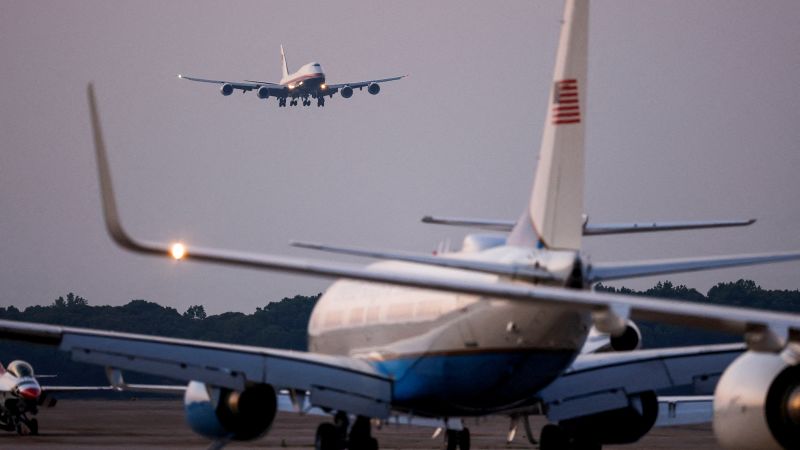
The newest Air Force One is flying – As President Donald Trump prepared to leave Turkey this week, he chose to board a 35-year-old modified Boeing 747 rather than the gleaming new aircraft sitting nearby on the tarmac. The newer jet had been unveiled just days before with considerable ceremony, yet the president opted for the older vessel. This choice has amplified concerns regarding the Qatari-donated aircraft, which underwent conversion on an exceptionally tight schedule. Observers are now questioning whether the plane received all necessary communications, security, and defensive enhancements to function as the heavily fortified “flying White House.”
Timing and Geopolitical Context
The timing of this flight proved particularly significant, coinciding with American military strikes against Iran—a nation that shares a border with Turkey. Shortly after departing on the older aircraft, Trump remarked to reporters, “Air Force One could be a ‘dangerous plane because of the sleaze bags we have to deal with.’ ‘These are sick people, so I could see something like that.'” According to sources speaking with CNN, no specific new threat to the president’s life had emerged. Nevertheless, Trump had previously discussed the possibility of an assassination attempt originating from Iran during the NATO summit.
The former Qatari jet made its inaugural presidential flight at the beginning of July, following approximately one year of modifications and conversions. Several Republican senators voiced reservations about accepting the aircraft, citing potential security and legal complications. Additionally, Trump’s plan to eventually deliver the plane to his presidential library after leaving office sparked ethical debates.
Expert Concerns About the Accelerated Timeline
“There’s never been a plane like this ever built, and there will never be a plane like this built again,” Trump declared during the July 17 unveiling ceremony. However, the rapid conversion process has prompted aviation and security specialists to wonder whether every essential upgrade was finalized before the aircraft entered presidential service.
“It was a schedule driven modification,” Frank Kendall, the former Air Force secretary under the Biden administration, explained to CNN. “To do that, they would have had to leave out a lot of things that are on a regular Air Force One.”
Kendall continued, noting that “you have to add all the things that are required for the president, and that’s why it takes so long and costs so much money. So, they did what they could with the time that they had.” Trump had wanted the new aircraft operational by July 4 and completed his first journey in it on July 3, traveling to Bismarck, North Dakota, for the opening of the Theodore Roosevelt Presidential Library.
Visible Changes and Hidden Systems
While most details concerning Air Force One remain classified for security reasons, several visible modifications distinguish the new aircraft from the Boeing 747-200s delivered during President George H. W. Bush’s presidency. Beyond the fresh paint scheme and increased dimensions, the Boeing 747-800 features more fuel-efficient engines and extended range capabilities.
The White House has not released comprehensive information about defensive upgrades, stating that modifications concentrated on essential systems rather than aesthetic improvements. A senior administration official told CNN, “By making minimal changes to the previous head-of-state interior, the Air Force fielded the aircraft faster without accepting any risk regarding security, safety, or secure communications.”
Nevertheless, certain experts worry that the roughly twelve-month modification period may not have provided adequate time to fully harden the aircraft for operations in high-threat airspace. Aviation observers examining photographs of the aircraft noted that the new plane appears to lack external modifications to the tail cone typically associated with directional infrared missile defense systems. However, the absence of visible features does not conclusively determine which systems are installed.
Defensive Capabilities Under Scrutiny
The older presidential fleet is widely believed to carry chaff—bundles of metallic strips ejected from the aircraft to generate false radar targets and confuse radar-guided missiles. Antennas play a crucial role in maintaining secure communications, Kendall emphasized, adding, “You have to basically do structural changes to put the antennas in. Some of that, I’m sure they did. I’m not sure how much.”
Boeing 747s are generally not outfitted with missile countermeasures, though the older presidential fleet is thought to include them. It also remains uncertain what level of protection the new aircraft provides against nuclear attacks and associated electromagnetic pulses compared to the Cold War-era designs of the previous fleet.
While these defensive systems may not have been essential for a domestic journey to North Dakota, flying through the Middle East presents different challenges—particularly when missiles remain active during an ongoing conflict. The question of whether the new Air Force One is truly prepared for all scenarios continues to generate discussion among experts and officials alike.