
A 300-year-old bonfire tradition in Northern Ireland has turned its flames on Muslims
Muslim Community Faces New Target in Northern Ireland’s Historic Bonfire Season
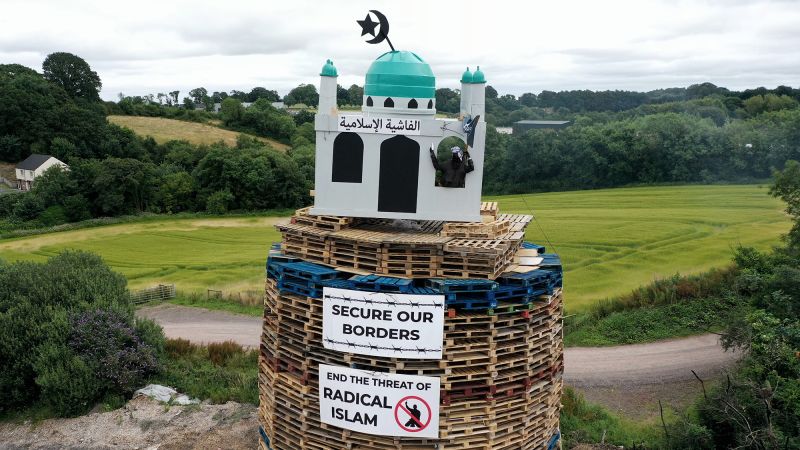
A 300 year old bonfire tradition – Residents of Moygashel in County Tyrone witnessed an unprecedented development in their centuries-old bonfire celebrations when a replica mosque was set ablaze on Thursday evening. The pyre, which has been ignited each July for over three centuries to commemorate the Battle of the Boyne, traditionally honors Protestant dominance following King William III’s 1690 triumph over Catholic monarch James II. However, this year’s flames directed their heat toward a different symbol entirely.
A Mosque Takes Center Stage
The structure that burned featured a figure clutching what looked like an ISIS banner, while towers displayed messages reading “Secure our borders” and “End the threat of radical Islam.” The Mogyashel Bonfire Association acknowledged that their presentation might “shock offend or outrage others,” attributing their actions to “uncontrolled illegal mass immigration” as the catalyst for their “protest.”
This event represents a significant shift from the customary Eleventh Night bonfires, which have long been associated with working-class Protestant communities on the eve of parades celebrating William III’s historic victory. While loyalists maintain that these pallet towers represent nothing more than cultural heritage and cherished tradition, Catholic and republican neighbors have frequently described the displays as intimidating.
Police Response and Legal Action
Authorities in Northern Ireland have classified the incident as a “hate motivated crime,” resulting in charges against a 56-year-old man for incitement to hatred. During Friday’s hearing, the accused denied all allegations and was denied bail. Chief Superintendent Norman Haslett of the Police Service of Northern Ireland explained: “Had the bonfire not been lit, police would have secured the site and removed the offending material and seized it as evidence.” He emphasized that “Hate crime has no place in our society and will not be tolerated.”
Rising Tensions Across the Region
The Moygashel bonfire arrives amid escalating anti-Muslim incidents throughout Northern Ireland and the broader United Kingdom. Amnesty International reported that race-related hate crimes have reached their peak since documentation began in 2004, describing the display as “a blatant attempt to stir up anti-Muslim hatred and intimidate local families.” The human rights organization further noted that permitting such spectacles has contributed to normalizing racism across the region.
According to the Muslim Council of Britain, an average of four to five anti-Muslim incidents occurred weekly during June alone, with over 40 percent involving arson or firebombing attacks. Naomi Green, the MCB’s assistant secretary general who resides in Northern Ireland, expressed that this week’s events were not unexpected. “People are welcome to celebrate their culture in whatever way they want,” she stated. “The problem, she added, was growing ‘expressions of hate’ and ‘incitement against certain groups.'”
Historical Context and Official Condemnation
The current controversy echoes similar events from the previous year, when the same Moygashel pyre consumed an effigy depicting migrants in a boat. Those figures represented people of color, with one appearing to wear Islamic clothing. “I felt physically sick,” Green recalled regarding the 2025 display, noting that the group has continued selling commemorative badges since then. “There’s not been any action taken… and that’s kind of enabled this year.”
Widespread condemnation followed the latest incident. The Church of Ireland and Catholic archbishops issued an uncommon joint statement on Thursday, labeling the display “grossly offensive.” Britain’s Northern Ireland Secretary, Hilary Benn, characterized it as a “sickening and cowardly act of intimidation.” Researchers and human rights monitors have identified a transformation in the region, where traditional sectarian hostility has evolved into racially motivated violence.
The Moygashel Bonfire Association maintained that their display constituted “lawful protected expression” and “political protest,” asserting that their opposition “is not to people, but rather to ideology and Government policy.” Green concluded that improved leadership and thoughtful dialogue remain essential for addressing these challenges.