NOAA’s Hurricane Hunter fleet is aging. Senators want to make it bigger and newer

NOAA’s Hurricane Hunter Fleet Needs Modernization, Senators Push for Expansion
NOAA s Hurricane Hunter fleet is aging – As extreme weather events grow more frequent and intense, U.S. senators are urging action to modernize NOAA’s Hurricane Hunter fleet. A bipartisan group has introduced legislation aimed at expanding the agency’s aircraft capabilities, ensuring it can keep up with the rising demands of hurricane research and forecasting. The bill includes $2.5 billion for new planes and $45 million annually to hire specialized pilots, addressing concerns about the aging aircraft and their operational limitations.
Aging Fleet and Operational Strains
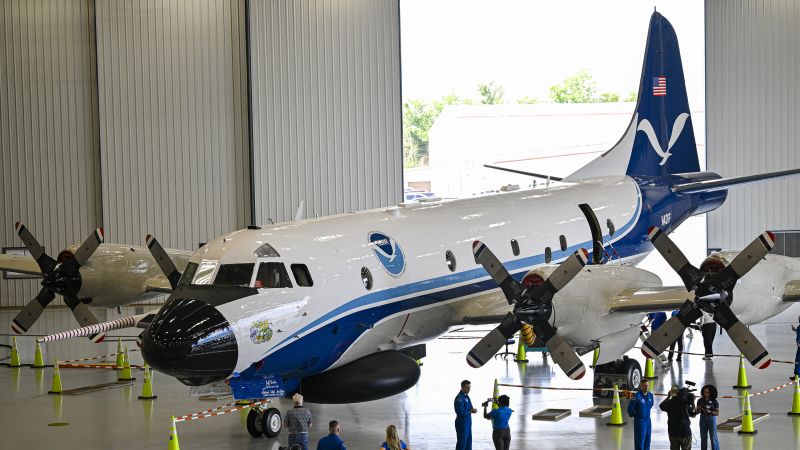
NOAA’s current fleet comprises three older planes, including the WP-3D Orions “Kermit” and “Miss Piggy,” and a modified Gulfstream jet named “Gonzo.” These aircraft, while vital for gathering critical data, are nearing the end of their service life by 2030. With climate change intensifying storm activity, the aging equipment risks reducing the accuracy of forecasts. Mechanical wear and turbulence during missions have already led to cancellations, underscoring the need for replacement.
The existing fleet’s limitations are particularly evident in real-time data collection. NOAA’s planes are equipped with advanced instruments that provide three-dimensional storm insights, unlike the U.S. Air Force’s C-130J aircraft. This data is crucial for predicting hurricane paths and intensification, which has become increasingly important as storms develop more rapidly. Without modernization, the agency may struggle to maintain its role in atmospheric reconnaissance.
Bipartisan Efforts and Legislative Support
Senators Ted Cruz (R-Texas) and Maria Cantwell (D-Washington), leaders of the Senate Commerce, Science and Transportation Committee, have championed the bill. Their collaboration highlights a rare alignment on climate resilience. Additional support from coastal state representatives signals broad agreement on the importance of NOAA’s work. The legislation also includes provisions for acquiring state-of-the-art tools, such as tail-mounted Doppler radars, to enhance predictive accuracy.
These upgrades are essential for tracking not only hurricanes but also atmospheric rivers—massive moisture plumes that drive extreme rainfall. Recent years have seen these events cause significant flooding in regions like the Pacific Northwest, emphasizing the need for reliable data. The bill seeks to establish NOAA’s responsibilities in weather monitoring as a legal priority, preventing shifts to other agencies.
Future-Proofing the Fleet
A major component of the bill is ensuring redundancy in operations. By requiring backup aircraft for every mission, NOAA can reduce risks tied to mechanical failures. This is especially important for refining predictive models, which rely on real-time data to improve forecast reliability. The proposed expansion would increase the fleet from three to six planes, doubling its current capacity.
NOAA has the authority to operate up to nine aircraft, but the bill aims to secure at least six as a baseline. This would better equip the agency to handle the growing demand for weather data. While Congress has not yet approved the funding, the legislation provides a clear roadmap for future investments, aligning with climate change adaptation goals.
Political and Scientific Backing
Cantwell, representing a state frequently hit by atmospheric river events, stressed the importance of NOAA’s role. “Communities in the Pacific Northwest depend on accurate forecasts to prepare for flooding,” she said. “Modernizing the fleet ensures we can respond effectively to these threats.” The bipartisan support suggests a consensus that NOAA’s research capabilities are non-negotiable in the face of climate challenges.
The bill also acknowledges the broader impact of improved forecasting on public safety and economic preparedness. With hurricanes and storms causing billions in damages annually, a more robust fleet could save lives and resources. Senators argue that investing in NOAA’s Hurricane Hunter program is a critical step toward building a resilient climate strategy for the future.