Liberia once offered Black Americans a new home. Decades on, it is receiving migrants the US wants out

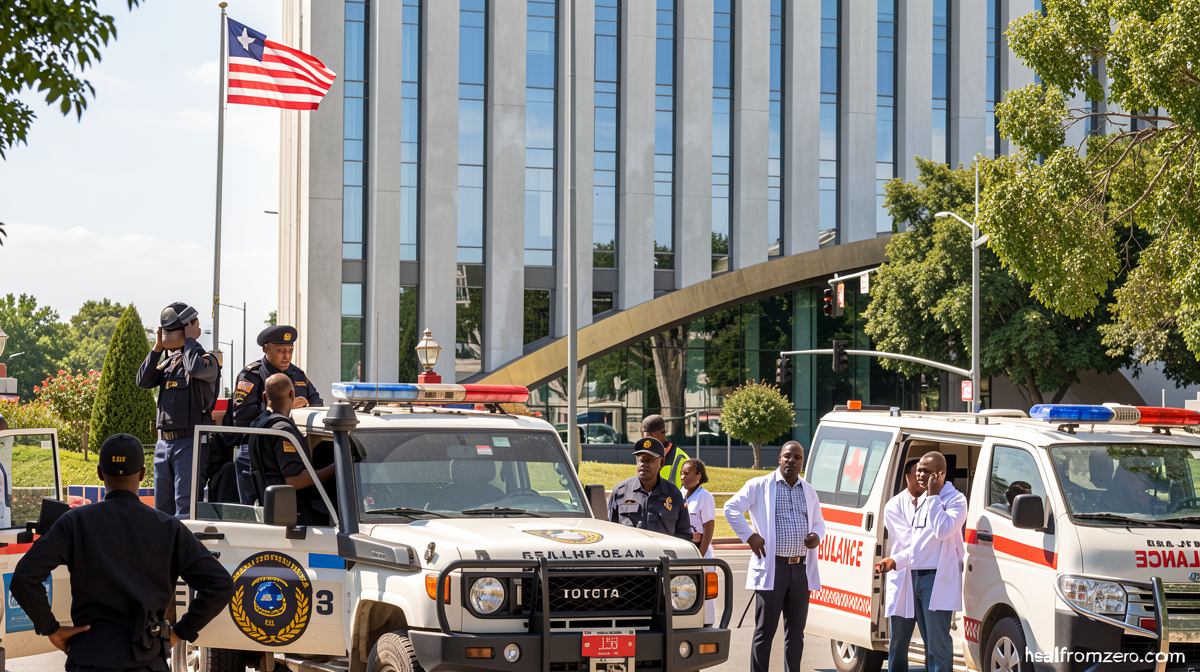
Liberia Receives US Deportees, Echoing Its Founding Story
Healfromzero.com – Twenty passengers stepped off a plane in Monrovia this week, and their arrival reopened a question that has shadowed West Africa’s smallest republic for nearly two centuries. Liberia once offered Black Americans a new home in the nineteenth century; now the same country is being asked to absorb migrants the United States wants removed. The first cohort under a bilateral deportation arrangement — one that could ultimately relocate as many as 1,200 people into a nation of fewer than six million — departed from Louisiana. Liberian officials described the arrivals as coming from “African and western hemisphere countries,” and the reception in the capital has split public opinion along fault lines that run straight back to the republic’s founding.
The Scale of the Arrangement
Liberia is among several nations that have agreed to take in migrants the Trump administration is removing under its sweeping enforcement campaign. The State Department has labeled execution of these deportation policies a “top priority” while declining to detail the private diplomatic channels through which individual transfers are negotiated. The Liberian information ministry has been approached for further terms but specifics remain thin. The arithmetic, however, is stark: a country still rebuilding after a 14-year civil war that ended in 2003 is being asked to absorb thousands of additional residents, many arriving with no established community ties.
The first transfer did not proceed without friction. Five migrants who declined to disembark upon landing in Monrovia were rerouted to Equatorial Guinea, where more than 30 previously deported individuals are already being held. The episode underscores that deportation logistics extend beyond a single destination, and Liberia’s role may be entangled with other African states serving as secondary holding points.
A Republic Built on Departure
To understand why these arrivals land so differently across Monrovia’s neighborhoods, one must look at how the country came to exist. In the early 1820s, the first groups of free Black Americans crossed the Atlantic and took root along the West African coast. Over the following decades, thousands more followed, guided in part by the American Colonization Society, which organized settlements and provided initial infrastructure. The State Department estimates that roughly 16,000 Black Americans made the journey during the nineteenth century, joined by Africans rescued from slave ships by the US Navy and deposited on the same shores.
The migration was never monolithic. Some emigrants saw the voyage as a genuine escape from American racism and a chance to build institutions of their own. Others rejected the premise entirely, arguing that free Black people owed nothing to a colonization project and should fight for their place in the United States rather than abandon it. The settlers who stayed eventually formed the Republic of Liberia, which declared independence in 1847. The name itself — “land of the free” — was chosen with deliberate irony, a declaration that freedom required a new geography.
The American imprint persists in everyday symbols. Liberia’s flag mirrors the stars-and-stripes design. The capital bears the name of James Monroe, America’s fifth president. Early legal and governmental structures were modeled on Washington’s. These are not abstract historical footnotes; they shape how Liberians parse every new gesture from the United States, whether it arrives as aid, investment, or deportation. Liberia once offered Black Americans a refuge when no other door would open, and that memory colors every subsequent interaction with the country that sent them.
Voices from the Diaspora and the Streets
Pheta Morris, 48, a descendant of the nineteenth-century Black American settlers, described the emotional whiplash of watching the first deportees land. She framed the moment through the lens of her own family’s story — people who had been turned away from one society and welcomed into another.
“I think about the Americo-Liberians — people who were rejected where they were and needed somewhere to go, and Liberia opened its arms to them. Back then, people needed somewhere they could be free, accepted and welcomed. Now, people are being rejected from the US, and Liberia is opening its doors to them.”
Yet Morris also voiced the anxiety that underlies much of the local debate. A nation still stitching itself back together after years of civil war is being asked to stretch its already thin resources further.
“This country is going through a lot, and having more people come in — can we handle all of this?”
Conmany Wesseh, a former member of Liberia’s legislature and a Unity Party figure who served as ambassador to the United States, weighed in on the practical questions surrounding the arrangement. His remarks, like those of many local commentators, focused less on ideology and more on capacity: housing, employment, healthcare, and the social fabric of communities already strained by post-war reconstruction.
FAQ
How many deportees is Liberia expected to receive? The bilateral arrangement could ultimately move as many as 1,200 individuals into the country, though the first cohort consisted of 20 passengers arriving from Louisiana.
Why is Liberia being asked to accept US deportees? The Trump administration has designated deportation enforcement a top State Department priority and has negotiated bilateral agreements with several nations, including Liberia, to serve as destinations for removed migrants.
What is the historical connection between Liberia and Black Americans? Beginning in the early 1820s, roughly 16,000 free Black Americans migrated to the West African coast under the auspices of the American Colonization Society. Those settlers founded the Republic of Liberia, which declared independence in 1847.
What happened to the five migrants who did not disembark in Monrovia? They were rerouted to Equatorial Guinea, where more than 30 previously deported individuals are already being held.