
Japan isn’t quite where it once was. Scientists say a newly recognized seismic event is to blame
Japan isn’t quite where it once was. Scientists say a newly recognized seismic event is to blame
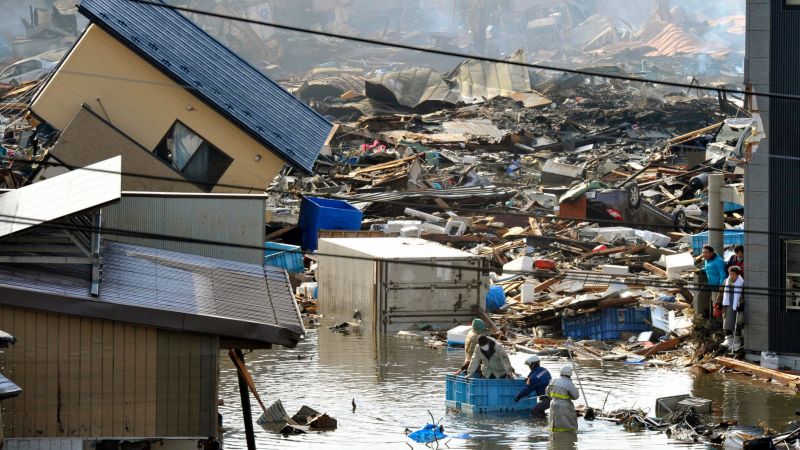
Japan isn t quite where it once – On March 11, 2011, a powerful 9.0 magnitude earthquake struck Japan, unleashing forces that reshaped the nation’s landscape in ways both immediate and enduring. While the primary tremors were felt instantly, data from GPS stations revealed an unexpected consequence: the entire country shifted eastward by a minuscule yet permanent margin. This movement, measured at 5 to 6 millimeters—roughly 0.20 to 0.24 inches—occurred approximately 15 minutes after the initial quake began at 2:46 p.m. local time, a detail that initially led many to dismiss it as a technical anomaly or minor observation.
A New Seismic Discovery
University of Chicago geophysicist Sunyoung Park, leading a team of researchers, identified the subtle displacement as evidence of an unprecedented seismic phenomenon. The shift, spanning the length of mainland Japan from Hokkaido to Kyushu—a region roughly 1,800 miles (3,000 kilometers) long—did not align with the timing of the main earthquake or its aftershocks. Instead, it appeared as if the entire country had moved in unison, a pattern that defied existing understanding of tectonic activity.
“What was unusual about this movement is basically the whole of Japan was moving nearly uniformly at the same time,” said Park, who led the research. “The displacement reflected an extraordinary and previously undocumented seismic phenomenon.”
The team’s analysis of GPS and seismic data revealed that the earthquake’s waves had penetrated deep into Earth’s core, rebounding back to the surface and triggering widespread displacement. This process, which involves seismic energy traveling through the planet’s layers and interacting with the outer core—a liquid metal layer—had not been recognized before. Park explained that such waves, known as core-reflected seismic waves, were able to reanimate faults across vast distances, even beyond the immediate rupture zone.
Energy Redistribution Across the Planet
Unlike typical seismic events, where energy is localized and concentrated, this phenomenon distributed its force over an extensive area. The displacement, though smaller in scale than the mainshock, released energy equivalent to a 7.5 magnitude earthquake. This suggests that the core’s role in amplifying seismic effects could be more significant than previously assumed.
“This rapid movement is what generated the ground shaking and the tsunami, and it also made the whole island of Honshu shift toward the East by 20 centimeters or so,” said Goran Ekstrom, a geophysicist at Columbia University, who was not involved in the study. “The mainshock’s energy was immense, but this core-related shift added another layer of complexity.”
The 2011 earthquake, which occurred 231 miles (372 kilometers) northeast of Tokyo, was one of the most devastating in history. It triggered a massive tsunami, a nuclear crisis at Fukushima, and an estimated 20,000 fatalities. Yet, the ground movement observed by Park and her colleagues, while subtle, provided new insight into how seismic waves can propagate beyond the immediate epicenter. “The wave’s journey to the core and back took about 15 minutes,” Park noted, highlighting the time delay that allowed the phenomenon to be detected and analyzed.
Revisiting Tectonic Plate Dynamics
The discovery challenged established theories about how seismic energy behaves. While seismologists had long known that large earthquakes could generate waves that travel through the Earth’s interior, they assumed these waves lost their potency before returning to the surface. Park’s study, however, demonstrated that the energy could re-emerge with enough force to influence multiple tectonic plate boundaries simultaneously.
“The energy dissipated before returning to Earth’s crust,” Park explained. “But this event is different—it’s not just a rebound, but a reactivation of faults across an entire country.”
The movement affected the intersections of the Pacific and Okhotsk tectonic plates, as well as the boundary between the Philippine Sea and Eurasian plates. Tectonic plates, which are massive segments of Earth’s rocky crust, typically move slowly over geological time. However, the core-reflected waves acted as a catalyst, causing sudden adjustments that had lasting implications for the region’s geology.
Broader Implications for Seismic Hazard
Park emphasized that this previously unknown mechanism could reshape how scientists and policymakers approach earthquake preparedness. Unlike aftershocks, which are unpredictable, the core-traveling waves follow a predictable pattern, offering a potential window for early warning systems. “If we can anticipate this kind of movement, we might be able to prepare for its effects,” she said.
The study also raised questions about the global prevalence of such phenomena. While Japan’s advanced monitoring network enabled the detection of this event, Lekić, a professor at the University of Maryland, suggested similar occurrences might go unnoticed in less instrumented regions. “Japan’s seismic infrastructure is unparalleled,” he remarked. “But this kind of phenomenon could be happening elsewhere without being recorded.”
Understanding the Shift in Context
The 2011 event’s impact extended beyond immediate damage. The core-reflected waves not only displaced the ground but also reactivated fault lines, potentially influencing future seismic activity. Ekstrom noted that the main earthquake’s initial shaking likely created conditions for the wave to reach the core and return with renewed force. “The energy from the main event set the stage for this secondary displacement,” he explained.
Although the shift was small compared to the mainshock’s 10-meter plate movement, its scale and uniformity were remarkable. The displacement occurred before any major aftershocks, suggesting that the core’s interaction with seismic waves could be a distinct phase of an earthquake’s lifecycle. This finding underscores the importance of continuous data collection and the need for models that account for such complex interactions.
Preparing for the Unseen
Park’s research highlights the potential for core-reflected waves to contribute to seismic hazards in ways that are not immediately obvious. “Even if there was any damage, it would likely be very difficult to distinguish it from damage caused by the mainshock and aftershocks,” she said. This could complicate efforts to assess the true impact of earthquakes, especially in regions with overlapping tectonic activity.
Despite the shift’s subtle nature, the event’s significance cannot be overstated. It demonstrated that seismic energy can traverse vast distances and affect regions far from the original rupture. “This opens new avenues for understanding how earthquakes influence the planet’s structure,” Park added. “It’s not just about the immediate impact—it’s about the global reach of seismic waves.”
As scientists continue to analyze the 2011 data, the implications for future research are clear. The study emphasizes the need to integrate core-reflected waves into existing models of seismic behavior. For Japan, a nation already well-versed in earthquake preparedness, the discovery serves as a reminder that even the most familiar phenomena can hide unexpected consequences. The nation’s extensive network of monitoring stations, which recorded the event in detail, may yet reveal more surprises about the planet’s dynamic inner workings.
In the broader context, this finding could lead to improved early warning systems and more accurate predictions of seismic activity. By understanding how energy is redistributed through the Earth’s layers, researchers may gain the tools to anticipate shifts that could affect entire regions. For now, the 2011 event stands as a testament to the complexity of seismic processes and the importance of vigilance in the face of nature’s forces.