Miraculous story of survival high on Everest as Sherpa guide missing for a week found alive

Miraculous Story of Survival High on Everest as Sherpa Guide Missing for a Week Found Alive
A Sherpa’s Unlikely Return from the Mountain’s Edge
Miraculous story of survival high on Everest – After a harrowing week stranded on the world’s highest peak, Hillary Dawa Sherpa, a 52-year-old climbing guide, was discovered alive and crawling toward Base Camp on Mount Everest. The dramatic rescue unfolded on Thursday, June 5, 2026, when a team of workers from the Sagarmatha Pollution Control Committee (SPCC) stumbled upon the exhausted climber in the Khumbu Icefall, a region notorious for its treacherous terrain. His survival defied expectations, as he had spent nearly seven days on the mountain without food or bottled oxygen, enduring extreme cold and isolation.
According to reports, Hillary Dawa was last seen on May 29, resting above Camp 3 at an elevation of 7,060 meters (23,163 feet). At that point, he had already separated from his client and the rest of his climbing team, who had descended earlier that day. The SPCC, which manages the mountain’s routes and waste removal, noted that the ladders in the Khumbu Icefall had been dismantled by then, leaving Hillary Dawa stranded with no immediate means of assistance. His family, unaware of his condition, had even begun preparations for his funeral, believing he was lost to the elements.
The Search for Hillary Dawa Sherpa
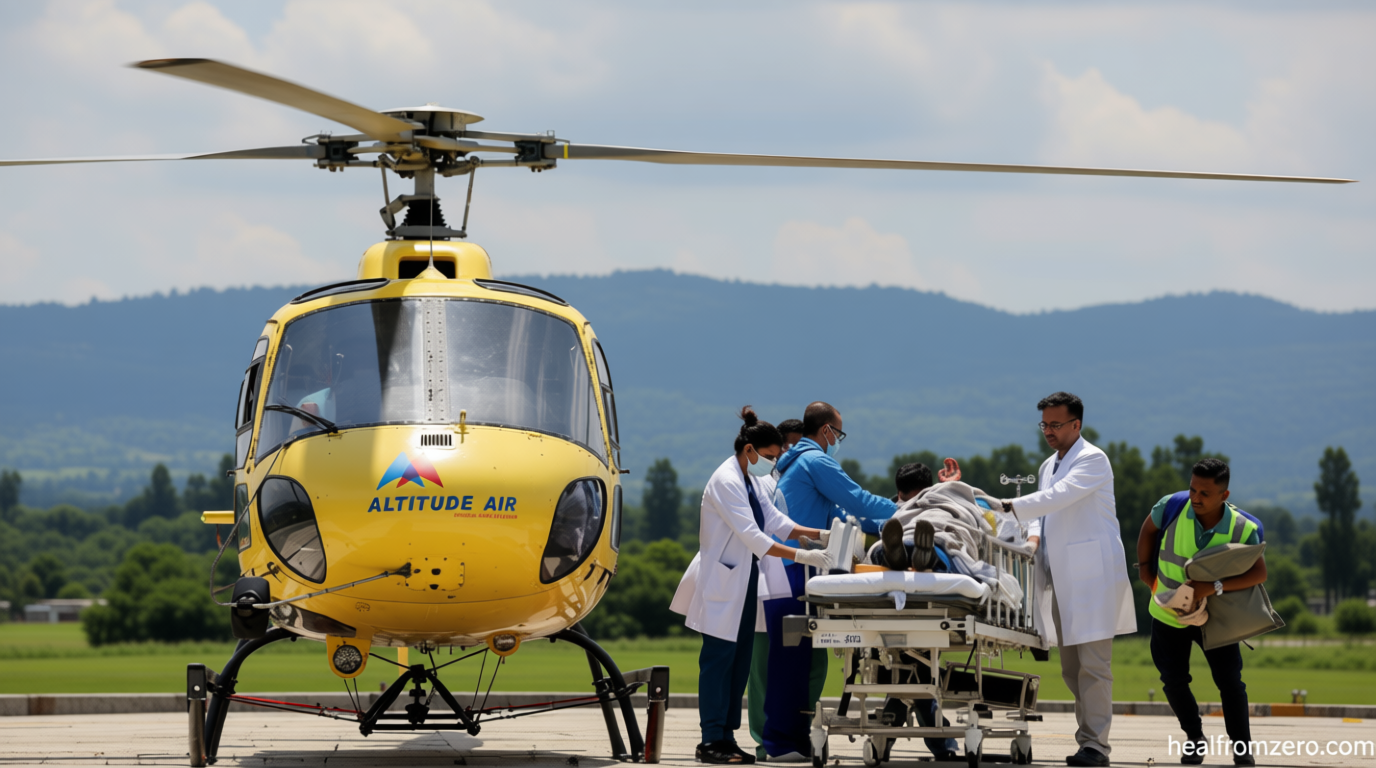
Despite the absence of radio contact and visible signs, the climbing community remained hopeful. The SPCC, tasked with maintaining Everest’s accessibility and safety, played a pivotal role in the search. Their team, accustomed to navigating the mountain’s challenges, identified Hillary Dawa’s location near the icefall and initiated the rescue. The climber, described as frostbitten and visibly weakened, was transported to Kathmandu’s HAMS hospital via helicopter, where he received emergency treatment for his injuries.
Video footage shared on social media captured the moment of his discovery. The footage shows Hillary Dawa, still clad in his yellow-and-blue climbing jacket, being carried by another climber through the rocky landscape. Later clips revealed him being wheeled on a trolley from the helipad at HAMS hospital, a stark contrast to his earlier state of distress. His survival has sparked widespread admiration, with many in the mountaineering world calling it nothing short of extraordinary.
Survival Against the Odds
“When we first heard about it, we could not be sure if that person was indeed our father,” said Hillary Dawa’s daughter, Mendo Lhamu, in an interview with the Associated Press. “So to be certain, we asked for photos to be sent and only then were we sure and very happy.”
Hillary Dawa’s ordeal began after he slipped and fell into a crevasse near Camp 1, approximately 6,000 meters (19,800 feet) above sea level, according to local media. He spent two days trapped in the icy fissure before managing to free himself, though he was left with severe frostbite and physical exhaustion. His Polish client, who had been descending Everest with him, was also battling cold-related injuries, but Hillary Dawa remained determined to make his way back to safety.
The climber’s resilience was underscored by his decision to continue the descent without immediate support. His last communication with his team came on May 29 as he rested at Camp 3, unaware that he would soon be alone. “I turned and said, ‘Hillary, are you okay, brother?’ And he replied, ‘Yes, fine, Chris, please go,’” shared British climber Chris Thrall, who had been traveling with Hillary Dawa and was the last person to see him before his disappearance. Thrall, a client of the Kathmandu-based Himalayan Traverse company, described his emotional reaction upon learning of the Sherpa’s survival.
A New Chapter in Everest’s History
This year marks the 30th anniversary of the ‘Into Thin Air’ disaster, a pivotal moment that reshaped climbing practices on Everest. While the mountain has become more accessible, its dangers persist, with weather, altitude, and human error remaining critical risks. The 2026 season, however, proved to be the busiest in Everest’s history, with over 1,000 climbers successfully reaching the summit. A record 274 climbers summited on May 20 alone, highlighting the mountain’s enduring allure despite the challenges.
Images of climbers queuing in the death zone—a term used to describe the region above 8,000 meters where oxygen levels are so low that even brief exposure can be life-threatening—have once again drawn global attention. These visuals, shared by media outlets, capture the intense competition and the physical toll of the ascent. The ‘Into Thin Air’ disaster, which claimed 15 lives in 1996, serves as a haunting reminder of Everest’s unpredictable nature. Yet, this year’s events suggest a shift in the mountain’s narrative, emphasizing both its beauty and the resilience of those who dare to conquer it.
Questions and Reflections on the Rescue
Hillary Dawa’s survival has raised questions about the effectiveness of search efforts during his disappearance. Despite being reported missing for a week, no immediate action was taken to locate him, with the Nepal Mount Everest company noting that search helicopters found no trace of the climber during their initial missions. This delay has led to speculation about the coordination between climbing teams and rescue services, especially as the mountain’s routes and ladders are removed at the end of each season.
The SPCC’s role in the rescue underscores their importance beyond route maintenance. Their team, responsible for clearing waste and setting up infrastructure, became the unlikely heroes in Hillary Dawa’s story. Lama Kazi Sherpa, a representative of the SPCC, confirmed that the climber was found near Base Camp, where he had been navigating the icefall with remarkable determination. His ability to traverse the region without assistance has been hailed as a testament to his experience and willpower.
As the climbing community reflects on this event, it serves as a reminder of the human spirit’s capacity to endure. Hillary Dawa’s journey from despair to survival mirrors the broader challenges of high-altitude exploration. His experience also highlights the evolving nature of Everest, where technological advancements and increased activity have changed the landscape but not the inherent risks. For many, his story is a beacon of hope, proving that even in the face of adversity, life can be reclaimed.
A Legacy of Courage and Resilience
Hillary Dawa’s tale is more than a personal triumph—it symbolizes the resilience of Sherpa guides, who have long been the backbone of Everest expeditions. Their expertise, combined with their deep connection to the mountain, often allows them to navigate its perils with extraordinary skill. This incident has reignited discussions about the role of Sherpa guides in modern mountaineering, particularly as the mountain becomes more crowded and the stakes higher.
While the record-breaking season and the success of hundreds of climbers have underscored Everest’s accessibility, Hillary Dawa’s survival reminds us of the mountain’s unyielding nature. His journey through the icefall, despite the odds, has become a powerful narrative of perseverance. As he recovers in Kathmandu, the story of his miraculous return continues to inspire, offering a glimpse into the delicate balance between human ambition and the raw power of nature. The SPCC’s involvement, along with the personal accounts of those who witnessed his ordeal, ensures that this event will be remembered as a defining moment in Everest’s history.