Somali referee denied entry to US for 2026 World Cup over ‘vetting concerns’

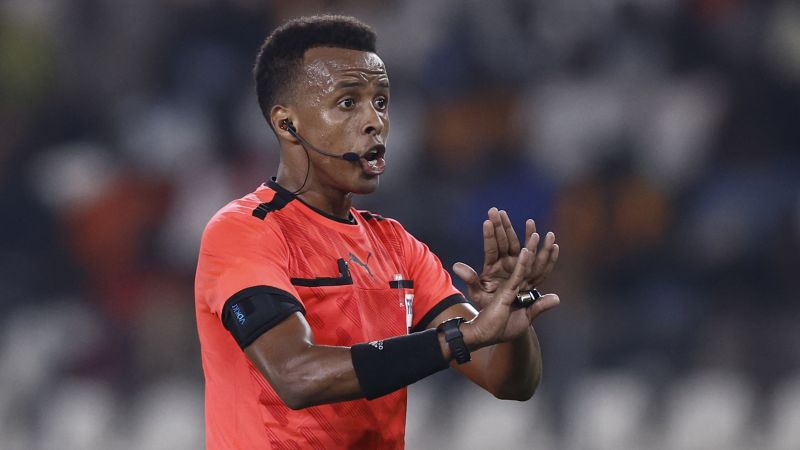
Somali Referee Omar Abdulkadir Artan Excluded from 2026 World Cup Amid Immigration Hurdles
Somali referee denied entry to US – FIFA has confirmed that Somali referee Omar Abdulkadir Artan will not officiate in the 2026 World Cup, which is set to take place in North America. The decision came after Artan was denied entry into the United States, the host nation of the tournament, upon his arrival in Miami from Istanbul. This marks a significant setback for the referee, who had been selected to participate in the global event. The incident highlights the growing scrutiny placed on international sports personnel under the current immigration protocols.
Additional Screening Sparks Controversy
According to a statement from the U.S. Customs and Border Protection (CBP), Artan faced extra checks upon landing in Miami. A spokesperson for the agency explained that the additional inspection was part of their standard procedures, used to verify information or confirm admissibility. “During processing, the traveler underwent additional inspection, a routine part of CBP’s inspection process when officers need to verify information or determine admissibility,” the official said. “Following inspection, the traveler, a referee for the FIFA World Cup, was determined to be inadmissible due to vetting concerns and was denied entry.”
“During processing, the traveler underwent additional inspection, a routine part of CBP’s inspection process when officers need to verify information or determine admissibility,” said a U.S. Customs and Border Protection spokesperson. “Following inspection, the traveler, a referee for the FIFA World Cup, was determined to be inadmissible due to vetting concerns and was denied entry.”
Artan’s exclusion is not an isolated case. Somalia, which is among the 39 countries affected by the Trump administration’s travel ban, has seen its citizens subjected to heightened scrutiny when entering the U.S. While the CBP did not specify the exact reason for Artan’s denial, the agency emphasized that nationals from the listed countries are often flagged for further review. This process has raised concerns about the fairness of the vetting system and its impact on international athletes and officials.
Artan’s Achievements and FIFA’s Role
Omar Abdulkadir Artan had previously earned recognition as Africa’s top male referee in 2025, a testament to his skill and dedication to the sport. His selection by the Confederation of African Football (CAF) for the 2026 World Cup underscored his importance to the global competition. However, FIFA has stated that it is not involved in the host country’s immigration decisions, including visa approvals. “FIFA is not involved in host country immigration processes, including visa adjudications, and has been informed by authorities that Mr. Artan’s status will not be changed at present,” said a FIFA spokesperson. “In line with previous FIFA events, a host government ultimately determines who receives a visa and who is admitted into their country.”
The 2026 World Cup, which is set to begin shortly, is the first time the event will be held in the United States, Canada, and Mexico. This shift in venue has brought new challenges, particularly for referees and officials from countries under the travel ban. The incident involving Artan adds to the growing list of concerns about how the U.S. immigration policies may affect the smooth operation of the tournament. While FIFA has stressed its role in organizing the event, it has left the final decisions to the host authorities, raising questions about the balance between security and accessibility for international participants.
Iran’s Experience with U.S. Entry Restrictions
Artan’s situation is part of a larger pattern affecting international sports teams and officials. Earlier this week, Iran also faced similar challenges, with reports suggesting that some of its management staff, media personnel, and an executive director were denied entry to the U.S. only hours before the tournament began. The Iranian Football Federation’s president, Mehdi Taj, confirmed that the national team had been granted permission to enter the country, but the timing of the approval has sparked accusations of unequal treatment. “Only one day before the match,” noted semi-official Iranian media, as Taj described the last-minute entry clearance for the team.
Amir Ghalenoei, Iran’s head coach, added that the delay in allowing certain personnel into the U.S. has created logistical complications. “Some management staff, media personnel, and an executive director have still not been granted permission to attend the tournament,” Ghalenoei said. This situation has drawn comparisons to Artan’s case, with critics arguing that the U.S. policies are being applied inconsistently across different nationalities and roles. The Iranian team’s participation, while secured, has been marred by the last-minute nature of their entry clearance, raising doubts about the effectiveness of the vetting process.
Broader Implications for International Sports
The challenges faced by Artan and his Iranian counterparts are emblematic of the broader impact of the travel ban on global sports. With the World Cup drawing closer, the exclusion of key referees and officials has forced FIFA and participating nations to navigate complex bureaucratic hurdles. For Artan, this means missing out on a historic opportunity to officiate in one of the most prestigious tournaments in the world. The decision has sparked debates about the influence of political policies on the neutral environment of sports.
While the U.S. government has defended its actions as necessary for national security, critics argue that the policies have disproportionately affected individuals from Muslim-majority countries. The 2026 World Cup, which is expected to showcase the best talents from across the globe, now faces the challenge of ensuring a fair and inclusive participation process. This has led to calls for more transparency in the vetting procedures and a reassessment of how these policies are applied to athletes and officials.
As the tournament approaches, the focus will shift to whether the host nations can overcome these obstacles and provide a seamless experience for all participants. The exclusion of Artan, along with the late entry of the Iranian team, has highlighted the need for a more streamlined and equitable approach to immigration for international sports events. FIFA, while not directly involved in visa decisions, will have to work closely with the U.S., Canada, and Mexico to ensure that the competition remains a showcase of global talent and unity.